
Probably too late. Have you looked at it?They have indeed backed themselves into a corner. If you are into such things, selling their stock short might well be a winning move.

Probably too late. Have you looked at it?They have indeed backed themselves into a corner. If you are into such things, selling their stock short might well be a winning move.
I briefly considered it, however, that is really not my investment style.Probably too late. Have you looked at it?


It isn't an admission of guilt. Yes, companies can improve their products at any time - depending upon if they exist in a regulated environment which could affect how they improve. Not BB's problem. The real problem is all about how to handle "public perception"...I am not familiar with the legal side of things, but why would a redesign of the buss bar set up be an "admission of guilt" ? Aren't companies free to improve the design of their products at any time?
The Battleborn 3000- Better, stronger, faster.
How is that worse than continuing to crank out a known flawed product?
If BB could add a bunch of features, say better comms, more capacity in the same size, internal Class T fuses, an upgraded BMS, etc they might be able to get away with it. On the other hand, just fixing the design issue and nothing else is tantamount to admitting the batteries were flawed and they would be providing evidence of the flaw in the lawsuits against them.I am not familiar with the legal side of things, but why would a redesign of the buss bar set up be an "admission of guilt" ? Aren't companies free to improve the design of their products at any time?
The Battleborn 3000- Better, stronger, faster.
How is that worse than continuing to crank out a known flawed product?
Well that depends upon if you are talking about a court of law or the court of public opinion. In a court of law, there are much bigger requirements to demonstrate a design deficiency or flaw. In the court of public opinion... well, there are no real "laws"...If BB could add a bunch of features, say better comms, more capacity in the same size, internal Class T fuses, an upgraded BMS, etc they might be able to get away with it. On the other hand, just fixing the design issue and nothing else is tantamount to admitting the batteries were flawed and they would be providing evidence of the flaw in the lawsuits against them.

They were done well before their design flaws caught up with them. You can't expect to sell a 100Ah battery for $800.00, with no Bluetooth, no heating etc. and stay in business when your competitors are selling 100Ah LFP batts, with better internal construction, & a 1.1C BMS for $179.00 with free shipping.. After meeting with the CEO in 2014, about becoming a dealer, I got one, cut it open and immediately decided not to partner with them. The sample I had, was relying on the plastic cases compressionfor the conductivity path cell to cell. The cells were only bolted at the tops. the bottoms were free floating like an accordion. Lithionics actually called them out on this design 8+ years ago..If BB could add a bunch of features, say better comms, more capacity in the same size, internal Class T fuses, an upgraded BMS, etc they might be able to get away with it. On the other hand, just fixing the design issue and nothing else is tantamount to admitting the batteries were flawed and they would be providing evidence of the flaw in the lawsuits against them.
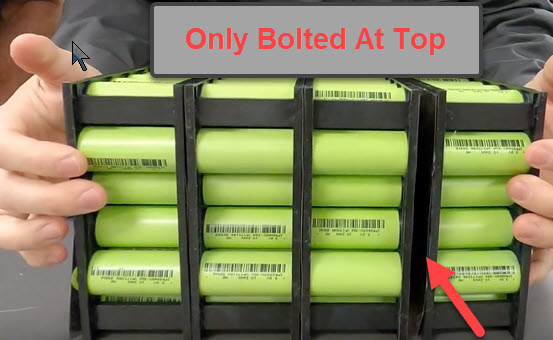
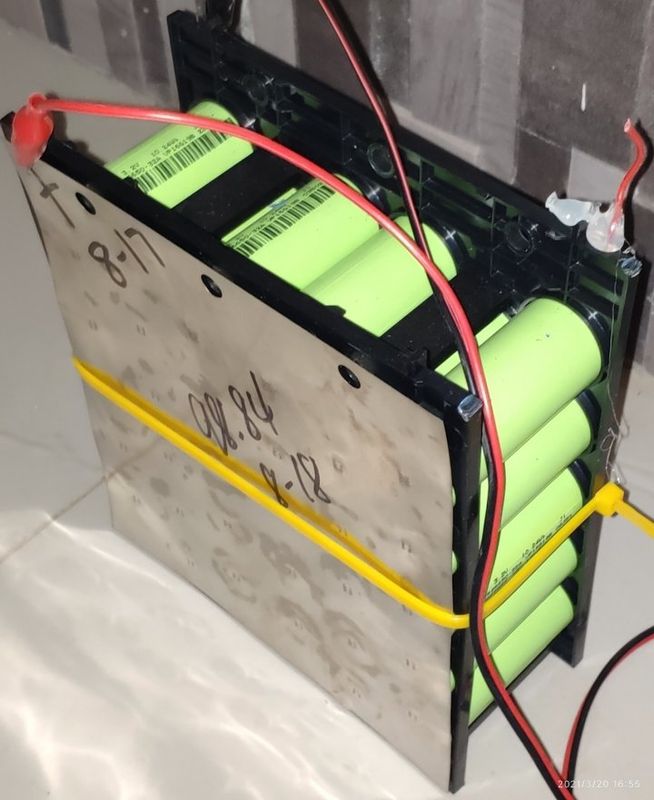
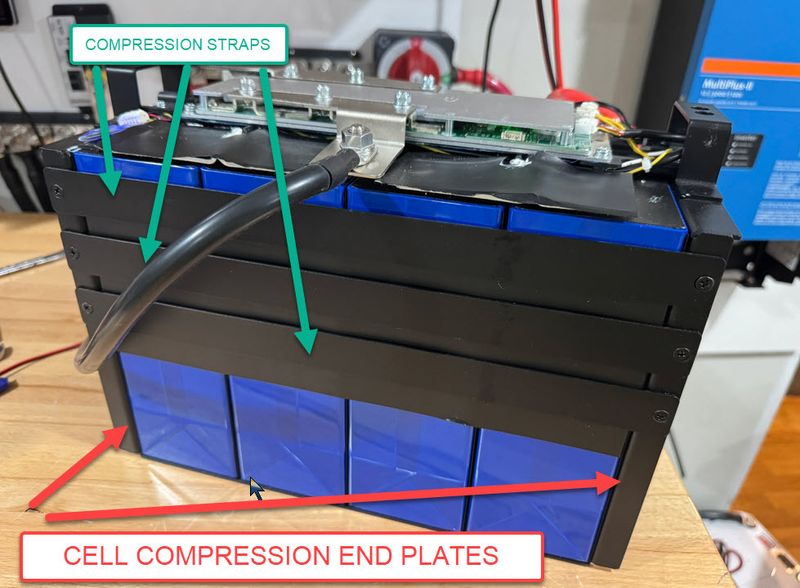
Based on the EOY letter from the CEO, Battle Born seems to be abandoning the marine market focusing instead on the trucking industry and the RV market. There is only one sentence about the marine market in his letter. They were almost delisted from NASDAQ last summer, because the stock price dropped below $1. There was debt restructuring and a reverse stock split to shore up the price.They were done well before their design flaws caught up with them. You can't expect to sell a 100Ah battery for $800.00, with no Bluetooth, no heating etc. and stay in business when your competitors are selling 100Ah LFP batts, with better internal construction, & a 1.1C BMS for $179.00 with free shipping.. After meeting with the CEO in 2014, about becoming a dealer, I got one, cut it open and immediately decided not to partner with them. The sample I had was relying on the plastic cases compression to create the conductivity path cell to cell. The cells were only bolted at the tops. the bottoms were free floating like an accordion.


 battlebornbatteries.com
It is my understanding the temperature rating has to do with the wire's insulation. Lower ampacity ratings for low temp wire are to reduce the heat build up which could melt the insulation.could you overheat the plastic in the battery that’s only rated for 85C and disable the battery?
Yep, that matches my understanding- basically that if an AWG 6 wire is carrying 120 amps it’ll heat up to some high temperature (let’s say 100C for discussion purposes), so you can use AWG 6 wire to carry that many amps only if its insulation can handle that temperature without melting. But if you connect your 6 AWG wire to your BB battery terminal, and the wire heats the terminal to 100C, the wire won’t fail, but the terminal might.It is my understanding the temperature rating has to do with the wire's insulation. Lower ampacity ratings for low temp wire are to reduce the heat build up which could melt the insulation.
Right, which sort of begs a bigger question, why even bother with low temp rated wire in any application?Yep, that matches my understanding- basically that if an AWG 6 wire is carrying 120 amps it’ll heat up to some high temperature (let’s say 100C for discussion purposes), so you can use AWG 6 wire to carry that many amps only if its insulation can handle that temperature without melting. But if you connect your 6 AWG wire to your BB battery terminal, and the wire heats the terminal to 100C, the wire won’t fail, but the terminal might.
I always assumed it was just a cost thing, but looking around at the typical sites I’d buy cable I only see 105C offered, so I can’t do a good cost comparison.Right, which sort of begs a bigger question, why even bother with low temp rated wire in any application?


The melting terminal may indeed have been an intentional design choice to address the UL 2054 9.10 single fault short circuit requirement, but that doesn't make it a good design, regardless of whether or not it achieved that purpose. It's like if I designed a car to protect against a brake failure by making the wheels fall off, and then told people that the wheels only fall off if you push the brake pedal hard to the floor, and besides the car is totally safe because it does stop.

The chart you're quoting is max ampacity not running ampacity. Running ampacity always includes volt drop calcs.. For anything connected to the battery you want 3% or less. 6AWG on a 20' circuit @ 100a exceeds 10%......Yesterday Battle Born provided a Technical Note in response to the criticism -
Technical Note on the Safety and Design of the Battle Born 100Ah Positive Terminal
This technical note describes the design and behavior of the positive terminal assembly used in Battle Born 100Ah batteries. It outlines how the terminal functions under normal operation and under sustained fault conditions, and clarifies the conditions required for its protective mechanism to...
To summarize - “It’s a feature, not a bug!”
It is a pretty interesting read explaining their design decisions, or a retroactive explanation backing into why their design could be considered safe. One thing I don’t understand, or maybe they get wrong - they show how the circuit cuts itself off if the wiring is “undersized”, but not if it’s connected with AWG 1/0 cable for its continuous load of 100 amps. But ABYC’s table says AWG 6 can be good for up to 120 amps, as long as it’s rated for 105 degrees C. So if you’re using AWG 6, not exceeding the 105 degree rating of the cable, could you overheat the plastic in the battery that’s only rated for 85C and disable the battery?
They claim their BMS is not "off the shelf". If that is true, they can add a few temp sensors for pennies. Place one on B+ and the other on B- inside the battery. Epoch does this for a lot less money..Did anyone else find their explanation electrically and chemically questionable of how the terminal is purposefully designed so that the aluminum bolt progressively converts its outer layer to aluminum oxide when over-heated, thus progressively cutting off its ability to carry current and shutting down the battery? And all the frantic and fantastical hand waving on how this happens in a very controlled manner?
I mean, that part was a hail Mary piece of absolute BS that is boarder line dangerous.
Mark

Yes, but on a short run from a charger to battery, say 10’ at 100 amps, you can use AWG 4 to be at 3% drop. That’s still lots smaller than the 1/0 that BB call out as adequate in their paper.The chart you're quoting is max ampacity not running ampacity. Running ampacity always includes volt drop calcs.. For anything connected to the battery you want 3% or less. 6AWG on a 20' circuit @ 100a exceeds 10%......

