Tappin' a fuel tank

Status
Not open for further replies.
Oct 2, 2008
3,811
Pearson/ 530 Strafford, NH
Hi all,
I would like to add a fuel polisher to an existing tank. I have a dual Racor filter system that I can switch, but was wondering if adding a polisher would help eliminate some stirred up sediments? Could I use one of those filters and just add a pump? Would tapping another hole in the aluminum tank suffice? The other option would be to have the fuel polished by a yard.
All U Get
 
Jun 6, 2006
6,990
currently boatless wishing Harrington Harbor North, MD
You do not need to tap the tank. Just tap into the existing lines with a Tee and some barbed hose adapters.
Tanksupply- tee-valve-pump-filter-tee-tank return
Then you can polish to your hearts content.
 

zeehag

.
Mar 26, 2009
3,198
1976 formosa 41 yankee clipper santa barbara. ca.(not there)
all ye need to polish fuel is more filters and a coupla more pumps..LOL.. is easy and cost effective --- just loop the fuel lines around your engine room and use 2 pumps and 2 more racor filtering systems and you have it..LOL that is all there is to it--i learned this when i paid 300 dollars to have fuel polished--i watched and asked questions and learned.
 
Nov 22, 2008
3,562
Endeavour 32 Portland, Maine
wondering if adding a polisher would help eliminate some stirred up sediments?
A polishing system will greatly extend the time before biofilm builds up on the walls and sediments collect in the bottom. However, if the tank is fouled enough that you are thinking of adding a polishing system, you need to have it cleaned first. Best way is hand scrubbing if you have sufficient access plates. If that isn't practical, you'll need to hire someone who does this as a service. There are two kinds. One just pumps the fuel around through filters. They are polishing your wallet; not your tank. You need one who sprays the fuel back into the tank under pressure with a wand like a pressure washer and physically blasts as much stuff off the sides as possible with fuel while sucking the fuel out and recirculating it. They also should be using a wand for suction so they can pull sediment out of all the corners they can reach.

Once everything is clean, then you can put in a polishing system that will keep it that way.

http://www.cruisingonstrider.us/FOpolishing.htm
 
Feb 6, 1998
11,760
Canadian Sailcraft 36T Casco Bay, ME
You don't want to just tap the tank. You buy weld-on tank fittings.

These are what they look like and are easy to install for any experienced welder.

http://www.pacificcustoms.com/BUNG14.html

If you want a high volume polishing system a return tapping with a dip tube is really a wise idea. For low flow then tapping into the existing feed & return can work. A dip tube on the return helps prevent foaming of the fuel. Dedicated tappings also prevents your smaller pump from having more head pressure on it by teeing off the feed tapping fora high flow re-circ pump....

Our polishing system is 72 GPH on a 35 gallon tank. Parker/Racor advised not tapping into the existing lines at this flow rate, but, we were making a new tank so adding bungs was easy & cheap. I wanted a high flow system so the decision for the extra tank bungs was easy.
 
Nov 22, 2008
3,562
Endeavour 32 Portland, Maine
Parker/Racor advised not tapping into the existing lines at this flow rate,
Standard and good advice which I experimented successfully with violating. Adding fittings to my tank would have required removal and major structural surgery.

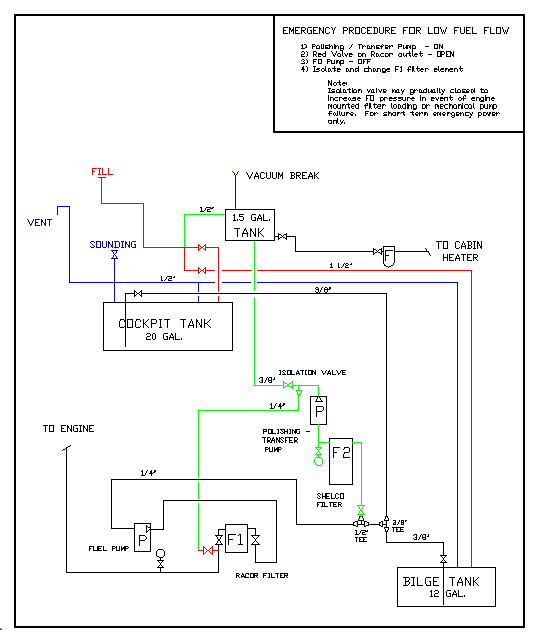
Our resident filter expert, Rich H, said that flow sufficient to pump the contents of the tank in about an hour would be sufficient and my experience has confirmed that. If you look closely at my schematics, you'll see that the Tee into the polishing system is larger than the hose size with three reducers down to the fuel line size. This provides an area of low flow for the polishing pump to draw from.

An electric lift pump for the engine is essential, even if the tank will gravity feed. You don't want the expensive little mechanical pump on your engine working against the polishing system pump.

The high flow created at the tank suction by either a dedicated higher flow suction such as Maine Sail has or by the high draw of my combined suction is an important part of the set up. The faster flow picks up stuff drifting around in the bottom of the tank and delivers it to the filters better than the very low flow of the engine alone.

My system has worked for three seasons with no problems.
 
Feb 6, 1998
11,760
Canadian Sailcraft 36T Casco Bay, ME
The high flow created at the tank suction by either a dedicated higher flow suction such as Maine Sail has or by the high draw of my combined suction is an important part of the set up. The faster flow picks up stuff drifting around in the bottom of the tank and delivers it to the filters better than the very low flow of the engine alone.

My system has worked for three seasons with no problems.
This is an excellent point and one I wanted to incorporate into my design while I could. With that in mind I was able to install the dedicated polishing pick up roughly 1/8" off the bottom of the tank at the absolute lowest point in the tank to cycle every last bit of crud that got there through the polishing system and remove it from the tank. I was then able to install the fuel pick up about 1.25" off the bottom of the tank thus keeping it clear of any "dirty" tank bottom contents and letting the polishing system keep the tank as clean as possible.

I was also able to return the fuel into a separate baffled compartment in the tank and aim the return tube to to create a swirling motion to keep the fuel moving.

If you don't have the ability to add dedicated tappings then a system like yours is a great option! What is your GPH? I wonder where the cut off is between ours, at 72 GPH, and yours? Parker was pretty adamant that I not tee in @ 72 GPH..
 
Nov 22, 2008
3,562
Endeavour 32 Portland, Maine
! What is your GPH? I wonder where the cut off is between ours, at 72 GPH, and yours?
Pretty low and this brings up an important point I may not have considered. My Yanmar does not return fuel to the tank. The injector bypass simply goes back to the engine mounted secondary fuel filter so fuel draw is exactly equal to engine consumption. My system might have problems on a typical diesel drawing significantly more fuel than it burns.

There is an answer for this though. I later added the small tank show on this schematic which serves two purposes. One is to gravity feed my diesel cabin heater. It is auto filled by the polishing system so I never have to worry about pumping it up. The second function is to provide an hour of clean reserve fuel when the red valve connecting the polishing and engine supply systems is opened.


Opening the red valve and closing the isolation valves on the Racor filter turns the polishing system into the fuel supply so the Racor element can be changed. If the polishing filter should load up, the system will continue to drain fuel back from the small tank with no further intervention.

Rich H is an advocate of installing such tanks even when they do not serve other purposes such as cabin heaters as they can buy you an hour or two of time to get anchored or out of danger before dealing with plugged filters.

If a Tee'd system had problems with the pumps fighting over fuel flow, you could simply replace the Tee at the bottom of polishing filter with an elbow and run the supply line to the fuel pump up to a Tee in the polishing system filter discharge just before the small tank. The Racor would then always be getting just polished fuel and automatic drain back in case of fuel supply interruption function would still work.

If if is financially and physically feasible to add separate suction and return for the polishing system, you absolutely should do so, however. This gives you some redundancy in case of blockage at the fuel pick up in the tank which has been known to happen. My tank is structurally glassed into the boat without sufficient clearance at the top to add fitting so I was stuck with my current arrangement.
 
Oct 2, 2008
3,811
Pearson/ 530 Strafford, NH
So in order to get the high flow, I'll have to measure the tank fittings and tee in to the lines if they're big enough? Then to get the crud off the bottom, I would need a pick-up tube that's nearly on the bottom. So Roger or Maine Sail that raises the question of how to weld, epoxy, or braize a new fitting on an existing tank. I've seen work done on full tanks that went smoothly, but some others have been very explosive. Would you mind a PM?
All U Get
 
Nov 22, 2008
3,562
Endeavour 32 Portland, Maine
I'll have to measure the tank fittings and tee in to the lines if they're big enough?
The problem is that no one really knows what "big enough" is. Filter and pump manufacturers will always give you the lowest common denominator answer that nothing is big enough because that advice will never come back to them.

There are so many variables in every installation that it the engineering to answer the question would probably cost more than installing additional fittings or a small reserve tank.

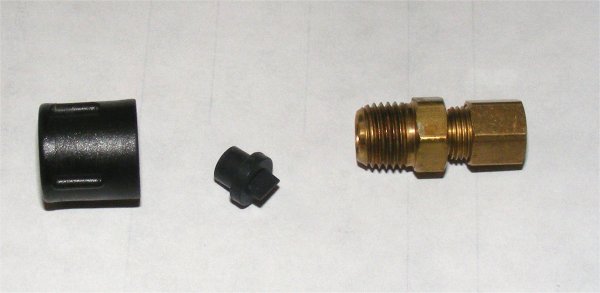
Even if I could put in the extra fittings for separate polishing circuit and didn't have a cabin heater, I'd still want the small tank. That extra hour to deal with a pump or filter problem in a dangerous spot is too good to pass up. BTW, here's the detail on the vac valve that makes it work.


A Forespar Marlon MF 841 Vent/Duck Bill replacement kit for their anti-siphon vent loops fits a 1/4" compression fitting like it was made for it. Another compression fitting goes on the tank and the copper tube is run as high as possible. Air trapped in the tank top and tube will keep fuel from reaching the valve.

 
Feb 6, 1998
11,760
Canadian Sailcraft 36T Casco Bay, ME
So in order to get the high flow, I'll have to measure the tank fittings and tee in to the lines if they're big enough? Then to get the crud off the bottom, I would need a pick-up tube that's nearly on the bottom. So Roger or Maine Sail that raises the question of how to weld, epoxy, or braize a new fitting on an existing tank. I've seen work done on full tanks that went smoothly, but some others have been very explosive. Would you mind a PM?
All U Get

Phil Daigle right across the harbor from you can weld tanks and fills them with an inert gas first to prevent the boom factor. He's very, very good. It is best however if the tank is out of the boat for this. Believe it or not your best option may be to buy a new tank from Catalina, your 81 tank is probably just about due anyway knowing how Catalina installed them.You could then install the new fittings into the new tank.

Catalina's tank prices are quite reasonable... For this season you can just use a smaller pump and tee in...
 
May 24, 2009
25
Hunter 380 Fort Myers Beach
I had my tank cleaned by FLorida Sludge Suckers in 1998 when I bought my 1984 Hunter. I have no idea when it was cleaned before that. I used the boat extensively and lived aboard for 5 years until I sold it in 2010. During that time I used Starbrite fuel treatment and cleaned it one other time myself.

Sludge Suckers said the best thing for their business is fuel treatments since owners tend to over treat causing a gel in the tank. Starbrite and some others, now, claim that you can over treat and it is OK. I under treat. Take your own chances.

That said, when I treated my tank I borrowed a filter and pump which had been mounted on a piece of plywood. I removed the input and output of the tank so I could insert the filter system intake and move it around. The filter system and I spent much of an afternoon in the lazerette (you can nap or read a magazine). I think it is good to insert a hose and move it around and up and down when you think you need to clean your fuel. If you use the existing takeup hose you might as well just take a boat ride and enjoy the day.

Starbrite is supposed to atomize the water in the fuel allowing your fuel system pull it out of the tank and up to your filter. Watching your filters closely, changing them often and, if you are really anal, filtering the fuel you put in the tank will probably suffice. I never filter my fuel (maybe too lazy or foolhardy) and take on fuel any place I need it. Bahamas, little used fuel stops in the Florida Keys or whatever. I have had one fuel related problem that occurred while sailing on my side (sudden squall) with low fuel. I changed the filter, shortened sail and restarted the engine.

When I cleaned my fuel I had noticed a little water in my filter. I believe that I could have eliminated all the water I pumped out of my tank with the polishing system by running the engine and changing my filter more often. The polishing system was free and I was curious as to how much 'stuff' was in the tank.

If, God forbid, you belong to a yacht club you might be able to interest your anal sailor friends to build a system for community use.
 
Oct 2, 2008
3,811
Pearson/ 530 Strafford, NH
Good thoughts

These are all good thoughts. I've been working out some minor issues with this "new to us" boat and gotta get back aboard to look it over again. I don't know if the PO had used it much beyond a quick day trip in the last few years. Moving it from RI to Maine stirred up the contents in the tank so a polish would help. Having our own polisher would help with an occasional cleaning or permanently mounted for continuous filtering.
All U Get
 

zeehag

.
Mar 26, 2009
3,198
1976 formosa 41 yankee clipper santa barbara. ca.(not there)
polishing=filtering.....is easy. second racor system and an electric fuel pump even will be enough, actually, and do clean your tank. polishing a tank=cleaning it. very simple, and saves grief.
 
Jun 7, 2004
11
Cabo Rico 36 Daytona Beach
Don't go overboard...

Many of the suggestions in this discussion will cost as much as a couple of fuel-polishings to implement. In over a decade of sailing, I've had the fuel in my tanks polished only twice: once on a 20-year old boat right after I bought it ... the tanks were filthy; the second time as a preventative measure after I'd put in some bad fuel (and failed to filter it as I put it in) ... truly my fault.

If you filter an suspect fuel with a Baja filter (or the like) when you put it in your tank and if you have a dual Raycor system (or just regularly check and change out fuel filters), you should never have to polish your fuel. These careful steps plus an occasional additive to break up algae build up (if you want to), are inexpensive and will work as well as installing "fuel polishing" systems. You don't need to go overboard with systems.
 
Nov 22, 2008
3,562
Endeavour 32 Portland, Maine
You don't need to go overboard with systems.
Obviously, since only about .02% of the boats out there have a polishing system and one or two Sea Tow boats can serve an entire section of the coast. However, some of the benefits are invisible. Filtering is a highly statistical process. Filters are not screens. Think of them of catching golf balls in a big pile of golf clubs. (Top 'o the hat to Rich H) Some of the balls will get through as will an occasional basketball. Your single pass through a Racor filter is letting a lot of stuff much larger than it's rating through which is wearing out your injectors. Multi pass filtering OTOH is removing stuff smaller than the filter's rating.

My system will cost about half of what a tank polishing will and I'm saving the cost of additives over the years. I'll probably never have to replace the 20 buck stone filter for my stove either. I also get the ability to keep running a couple different ways if a filter does load up without a second Racor just sitting there doing nothing except having its element aging in fuel "just in case". With my two tank arrangement, it's also a transfer system.
 

KandD

.
Jan 19, 2009
193
Hunter 40 Corpus Christi
Up above it was mentioned how a professional service will power wash (so to speak) the inside of the tank, a process that won't be accomplished by a built in system. I'm a day at the boat away from getting my system installed, and I'm going to use a bit of copper tubbing crimped a little at the end to accomplish this. I'll hook the hose onto the wand instead of return for the main cleaning and be going in through the fuel sender. I'll post pics later this week.
 
Mar 8, 2009
530
Catalina 22 Kemah,Texas
If I understand correctly you should not use copper or galvanized fitting on a diesel fuel system.
 

RichH

.
Feb 14, 2005
4,773
Tayana 37 cutter; I20/M20 SCOWS Worton Creek, MD
Hi all,
I would like to add a fuel polisher to an existing tank. I have a dual Racor filter system that I can switch, but was wondering if adding a polisher would help eliminate some stirred up sediments? Could I use one of those filters and just add a pump? Would tapping another hole in the aluminum tank suffice? The other option would be to have the fuel polished by a yard.
All U Get
Neither options will get what you want.

1. If you have sediment or a 'black scum' growing on the tank walls ... no polishing system will work, effectively. Recirculation polishing WILL NOT clean the tank walls / bottom !!!!!!!
What you need to do is get inside the tank and mechanically scrub ALL the debris to the bottom ... and discard the 'sludge' one 'handful of rags or paper towels' at a time.

2. The primary purpose of fuel polishing system is to *keep the sludges/growth, etc. from building up* ... a polishing system removes very small (essentially submicronic sized) particles continually thus removiing the 'nucleation site' upon which such particle agglomerate (grow in size). The typical 'boat system' recirculation polisher will be 'high turnover' (3 gpm / 100 gallon tank) using CHEAP filters of about 10-15µM ... filtering MANY MANY MANY times through such a large sized filter will ultimately reduce the 'particle distribution' down to optically clear (less than 5µM) in about 3-6 HOURS. Racors are EXPENSIVE and only hold about 25-35 grams of 'crud', dont use them in a recirculation polishing system.

3. EXPENSE. for a 50 gallon tank if you threw away or 'properly disposed' it $4.00 X 50 = $200.00 A recirculation polisher estimate cost for 50 gallon tank Pump - $150, Steel filter housing $90, 3pcs. depth type 2.5"Ø X 10in long filter $20 ea. X 3 = $60.00, SEPARATE piping system - Est. $50.00 ........ for a total of ~$450.00
Its much simpler and cheaper to: drain the tank, get INSIDE and clean the tank, burn the crud in your home heating furnace. Cost ... a couple of rolls of paper towels and gallon of STRONG detergent.

4. Tank taps ... DONT DO IT !!! will cost you a fortune if one of YOUR fittings 'gets loose' and fills the bilge and gets pumped overboard. Only 'tap a tank' through a TOP manhole or hand hole or other access port ... NEVER through the tank walls or bottom - or if you do 'pollute' your insurance carrier may not pay for the damages because YOUR modifications were not following 'state of the art' practices .... tap ONLY through the TOP of the TANK (through a reinforced 'plate'), not the walls nor the bottom.

A reciruclation polishing system should be TOTALLY INDEPENDENT of the fuel delivery system .... TANK recirculation loop DIP TUBE (to the VERY bottom of the tank) --> PUMP (with integral screen) --> filter housing ---> back to tank. You 'may' cross-valve connect to use the recirculation system in an EMERGENCY to 'pressurize' the main fuel distribution system ---- but otherwise if non-emergency should be 'locked out' and 'separate' from the MAIN FUEL DELIVER SYSTEM.

If you do a lot of long distance cruising or cruise in the 'remote' places of the planet and NEED an onboard recirc. polisher, we can help with your design ... otherwise I suggest you buy a 'case' of paper towels and a long handled scrub brush. If after tank cleaning the tank quickly (1-2 years) forms a lot of 'sludge', then consider to put on a recirculation polisher.

Rx: Clean the tank (as clean as your mothers dishes), then see how long it takes before you need to clean it again, then make a decision to add an onboard 'recirculation polisher'. Filters cannot 'clean out a tank', they only clean up the oil not the crud thats stuck to the tank walls.

;-)
 
Status
Not open for further replies.