Was Asbestos Used In Boat Construction..???

Status
Not open for further replies.
Feb 6, 1998
11,756
Canadian Sailcraft 36T Casco Bay, ME
This thread is to serve as a medium to discuss any knowledge, sources or data of the use of asbestos in boat construction.

It is also to discuss how best to protect yourself when doing work on the boat, if in fact asbestos or asbestos containing materials are found to have been used. We can also discuss protection for any kind of grinding, drilling or sanding work that relates to potential healt concerns.

It is known that some builders used Vermiculite which the EPA says can contain asbestos.

Please try to provide links to sources if you are going to be suggesting that a particular manufacturer used asbestos in resins, putty's etc..

If anyone has any information that can be substantiated please post it here.


NOTE:
This thread is to replace the thread which was closed due to massive thread drift.. We at SBO do not want to limit the conversation of asbestos that may have been used in boat construction because it is a very important topic for safety reasons.

 
Mar 1, 2012
2,182
1961 Rhodes Meridian 25 Texas coast
The Gougeon's (West Sys) used to sell powdered Asbestos for use as an additive in their epoxy. This would have been in the mid to late 70's. I used it on occasion and in fact still have a small amount out in the shop.

Of course, they no longer sell it. And I no longer use it.

I feel that it was normally used as an additive, like Cabosil, usually for higher temp situations. One place I recall using it was to glue a radiator filler neck back onto the radiator of an old van. This in the days of brass radiators and necks. Worked til I junked the van, maybe 3 years later.
 
Jan 4, 2006
7,577
Hunter 310 West Vancouver, B.C.
The best way to avoid itching, aggravation, health hazards and worse is to stop the air borne problem at the source. Keep it out of the air and it's problem solved.

Back before asbestos removal became the cash cow it is today, I can remember crews soaking friable asbestos insulation with a mixture of solvent and a small amount of #6 fuel oil (oil which is like tar when it's cold). This mixture was everywhere while they worked. It penetrated asbestos like water into a sponge and when dry, every fiber was coated in this heavy tar. Of course, working like this today would get you thrown in jail, but the idea still remains.

Rather than using heavy, black fuel oil on FG work, I always wet sand, drill, cut, etc. with a mixture of water and maybe 5 - 10% liquid, dishwashing, soap detergent. It keeps the dust from entering the air, and even if some of the water does escape into hidden locations, the liquid detergent encapsulates the offending particles after the water evaporates.

Problem solved :D.
 
Sep 25, 2008
7,668
Alden 50 Sarasota, Florida
From my EPA days, I offer the following comments-

Keep in mind there are two factors at play which determine a health hazard: toxicity which friable asbestos clearly has and an exposure route. It is that latter which is often highly exaggerated. As it relates to working on boat glass containing asbestos, it's a simple matter to protest yourself from any dust. By following a modicum of common sense, the route of exposure can be eliminated.

As to the potential for airborne friable asbestos, when at EPA, we conducted or oversaw close to 50 actions in which asbestos hazardous waste was cleaned up, often requiring heavy machinery and excavation. During all of those cleanups, we did aerial, perimeter and direct ambient air sampling and analysis.

In a few, we went to the extreme of attaching sampling monitors directly to the excavators.

In NONE of the hundreds of air samples analyzed did we ever find friable asbestos (which was present in the waste often in bulk quantities).

We continued using personnel protective equipment as standard procedure but never once found it necessary.

The punch line I am getting to is with some common sense, this issue is largely irrelevant.
 
Jul 25, 2007
320
-Irwin -Citation 40 Wilmington, NC
I would request anyone saying asbestos was used please provide the named brand or generic name of the product that it was in. If that is not know please provide some specific place used such as filler. Just saying it was used does no good unless we know what product it was used in. I was in boat building during these years and do not recall hearing of it but it could have been a product I used and was unaware. Lets try to stick to the facts

Thanks
 
May 27, 2012
1,152
Oday 222 Beaver Lake, Arkansas
How about everyone just assume that breathing sanding dust is really, really bad for your health. Fiberglass sanding dust, epoxy sanding dust, bondo/body filler sanding dust, paint sanding dust (as well as spray painting), sheetrock/plaster sanding dust. Whether any of that stuff has asbestos or lead or other dangerous chemicals or compounds is kind of moot if you not going to wear protection. The bottom line is, dont breath sanding dust.

I was talking to a guy in respiratory at the VA Hosp. I said something about smokers and he shook his head. No, he said, painters were the worst, and almost to a fault, none would wear a mask.
 
Jun 2, 2007
404
Beneteau First 375 Slidell, LA
I seem to recall from safety training at the refinery where I used to work, that smokers were something like nineteen times more likely to develop problems from asbestos exposure than non-smokers. FWIW.
 

Ross

.
Jun 15, 2004
14,693
Islander/Wayfairer 30 sail number 25 Perryville,Md.
There are about a million ways to generate dust and all of them are potentially harmful with long term exposure. If you ever lived on a gravel road then you know all about dust, If you ever stored hay in a barn or fed it during the winter then you know about dust. If there is enough to make you cough, you need protection! The kind of dust isn't as important as the quantity.
 
Jan 1, 2006
7,934
Slickcraft 26 Sailfish
My college roommate died from Mesothelioma. We had approximately the same asbestos exposure level for the 30 "Incubation" period. That is, if you go back the 30 years, we lived in the same place and had the same occupational risk - a risk that is alleged to have caused his illness. My wife, whom I met at that time and also worked in the same workplace, and is even more at risk (This has been shown by Occupational Hygienists) than either of us, is healthy too.
His widow is suing the asbestos industry. Her attorney, who is successful in these suits, told us that we shouldn't worry because it is now accepted that there is a genetic component to the development of this disease. You need the exposure and the genetic predisposition. The genetic predisposition is quite rare according to the lawyer.
Going back to other posts - that is why some workers wives get it while the worker doesn't. Or why with side by side workers one gets sick and the other doesn't.
We've been checked out and are so far OK. We are passing the 30 year period so maybe we'll be OK.
I offer this for those readers who may have had exposure, or even think they may have, and are freaked out by the possibility of getting sick. Please get yourself checked. Tell your doctor about your potential exposure (Without my friend's death we would never have believed our exposure, which we knew of, could be significant). But remember, a lawyer who makes his living from trying cases against the asbestos industry, admits that few cases of exposure result in illness.
And, yeah, I miss my pal a lot. Good pals who remain friends for 30 years are hard to replace.
 
May 27, 2012
1,152
Oday 222 Beaver Lake, Arkansas
Your still forgetting that as you go back in time, more than half of factory workers refused to wear any protection, respirators, safety glasses. When I started working 40 years ago, everyone chuckled at you if you protected yourself. Now their sick and want to sue everyone, and it seems to be working for them. Guess I would rather be poor and healthy, rather than wealthy and sick. I'm not saying that is the case for everyone, but probably most of those effected, simply did not do what was suggested to protect themselves. Sadly, it took huge court settlements to get the companies attention to make workers suit up. Gotta hold everyone's hand I guess.
 
Jan 19, 2010
12,887
Hobie 16 & Rhodes 22 Skeeter Charleston
... toxicity which friable asbestos clearly has ...
You are right of course but just for the sake of precision..asbestos is not "toxic" in the traditional sense of the word. In fact it is completely inert in biological systems (like the human body). If inhaled it will remain in the lungs and persist as an irritant indefinitely and the presence of the irritant increases the risk of a malignancy.

So handling asbestos (say an old asbestos shingle or tile) is perfectly safe. You just don't want to breath asbestos dust.
 

kenn

.
Apr 18, 2009
1,271
CL Sandpiper 565 Toronto
From my EPA days ...
Don, from your time with the EPA, what was the level of hazard presented by removing asbestos-containing materials from confined spaces? And what is the recommended level of personal protection?

In buildings the examples would be removing masonry parging, blown insulation, old boilers, pipe-wrapping, etc. In a old boat, it would be old lagging on exhaust pipes, or maybe the soundproofing or heat shielding in an engine compartment?

Thanks.
 
Sep 25, 2008
7,668
Alden 50 Sarasota, Florida
Don, from your time with the EPA, what was the level of hazard presented by removing asbestos-containing materials from confined spaces? And what is the recommended level of personal protection?

In buildings the examples would be removing masonry parging, blown insulation, old boilers, pipe-wrapping, etc. In a old boat, it would be old lagging on exhaust pipes, or maybe the soundproofing or heat shielding in an engine compartment?

Thanks.
Kenn
My experience is limited to large construction and demolition of hazardous waste sites including area-wide asbestos contamination such as the mountain of asbestos in Vergennce, Vermont, abandoned commercial properties, mitigation of the debris piles at the World Trade Center, and area-wide residential neighborhoods in which ACM was used as fill material.
Ill leave it to those with experience in asbestos abatement in confined spaces to give you a better answer.

We always used level C or D PPE at a minimum as we were more concerned about mixed waste.
 
Nov 18, 2010
2,441
Catalina 310 Hingham, MA
Below are my thoughts on this subject. Just to give some background for my opinions below, I have worked in the environmental consulting industry since I graduated from college in 1998 with degrees in geology and chemistry. Most of my work has been related to the redevelopment of older buildings including schools, mills, factories, etc. and the cleanup after a couple of major oil companies. I have been licensed in all disciplines of asbestos consulting (inspection, project monitoring, management planning, project designing) in Massachusetts, Rhode Island, Connecticut, Maine, New Hampshire and Vermont. I have also been certified in Massachusetts to train others relative to asbestos consulting and health effects of exposure. Whoever said that the asbestos industry is a "cash cow" has outdated information, perhaps in the 1980's-early 1990's. Now it is mainly a side note for most construction and environmental projects.
Asbestos was considered the wonder mineral because of the physical properties of the mineral. It is strong, highly resistant to heat, chemicals (mainly acids), abrasion and it is stable over the long term. Because of this, it was put into a large variety of products. I have seen asbestos in just about anything you can imagine: kids pajamas; cigarette filters; wall paper; drinking water filters; Space Shuttle Solid Rocket Boosters; etc. To be honest, in many applications you can't get a better or even similar performing material as you get from one that is asbestos-containing. Here is a partial list of where asbestos can be found and here is a list that claims to be complete. Shipyards are specifically mentioned in the US EPA regulations on asbestos but that is more intended to address thermal system insulation that was used in large naval and cargo ships rather than fiberglass boats.
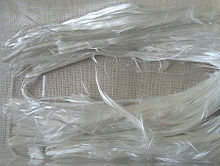
Chrysotile Fibers
Asbestos is still available commercially today. You can find products on the shelves of local home stores that will list asbestos on the labels. A trick often used is to list the mineral name (chrysotile and amosite are often listed) or a trade name (Rockbestos is a popular one). Asbestos is still mined in Canada and shipped to the US in large quantities. Chances are that you come in contact with asbestos-containing materials every day.

From an exposure/health aspect, the largest danger is being exposed to loose, airborne fibers. Significant exposure (long durations to high concentrations of airborne fibers) can cause asbestosis, a debilitating lung disease. Short term exposures can cause mesothelioma however there is some evidence that there may be a genetic component to this disease as well. The most significant risk from exposure it to smokers. Asbestos and smoking has a synergistic relationship and you are 50-90 percent more likely to develop lung cancer if you smoke and are exposed to asbestos. With all asbestos-related health effects the biggest problem is that there is a latency period of 5-30 years from exposure until the health effects are manifested. This typically makes determining the source of exposure difficult.

Most exposures are occupational related. If the asbestos-containing material is in good condition, there is no exposure to the asbestos. It doesn’t leach out or off-gas from the material. Generally, exposure only occurs when the material is damaged or disturbed intentionally. You should not be afraid to be in a boat or a building that has asbestos-containing materials.

As a boater who does his own maintenance, you should be aware of where you may encounter asbestos in your boat. Common items that could contain asbestos include caulking, sealant, bedding compound, adhesives, exhaust riser insulation, electrical wire insulation (cloth style, not plastic), and gaskets. We have also seen anecdotal information that asbestos was used as a thickening agent for resins. If you're lucky enough to find copies of the original design plans you might be able to find out exactly where asbestos was used on your boat. But most aren't that lucky. Also, you will likely never know what previous owners or workers used during repairs or maintenance.

Vermiculite has been mention as being used in some boats. Vermiculite itself is not asbestos, however it is often contaminated with asbestos during natural mineral formation. It may also be called Zonolite, the trade name used by W.R. Grace. It would be prudent to treat all vermiculite as asbestos since the fast majority of vermiculite came from the W.R. Grace mine in Libby, Montana that is contaminated with asbestos.

So does this mean you should not work on your own boat unless you are dressed in an outbreak-suite?

Not in my opinion. But everyone is responsible for assessing their own tolerance for risk.*
Here is what I would do.*

Fiberglass, silica and even wood dust have been found to have similar effects as asbestos. And really dust is the issue. So control the dust and protect yourself from exposure while generating dust.
  • Wet down the area of cutting or grinding. I typically use a spray bottle with water. You can add some dish soap but that foams and can be difficult. Another good option is windshield washing fluid. But just water and work great. I use a cheap $1 spray bottle for small jobs and a garden sprayer for larger jobs.
  • Use HEPA filters in your shop vacuum. HEPA stands for high-efficiency particulate air. At Home Depot, a true HEPA filter will cost you $130, a “HEPA-rated material” filter will cost you $30 and a standard filter will cost you $17. It’s up to you which one to choose, but I don’t use anything less than the $30 filter myself. I have the shop vacuum on with the nozzle by the cut area while working. A large portion of the dust and debris will be sucked up right away. When you go to empty the vacuum or wash the filter, keep it wet and wear your respirator (see below).
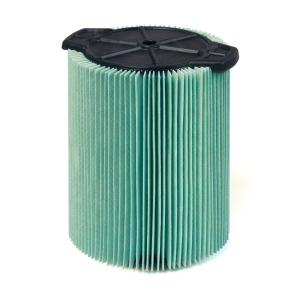
HEPA-related material filter from Home Depot
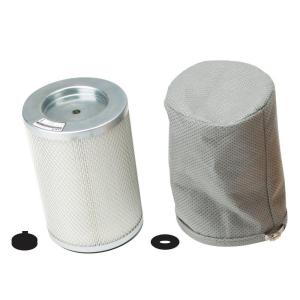
HEPA filter from Home Depot
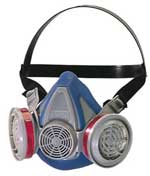
  • Buy a good respirator, the appropriate filters and use it. The brand I prefer is MSA and a half-face respirator from Home Depot is $50. The filter cartridges you want for most applications will be the P100, but I would go with the multi-purpose filter so it would cover you for most of what you would come in come across working on your boat. Two things related to respirators, if you are going to wear one make sure you are OK'd by your doctor (when worn for a job you must have a pulmonary function test) and learn how to wear it and care for it properly.

If you are ever truly concerned if asbestos in present, you can collect a sample of the material and submit it to a local laboratory for asbestos testing. It shouldn't cost any more than $25 per sample and take about two weeks for the results. But keep in mind that if you confirm that asbestos is present you might be obligated to follow regulations and laws regarding the disposal of the waste and work practices.

I would dispose of small amounts of waste with my household trash. Place it in one garbage bag with water than seal the bag with duct tape. Then place that bag in a second bag and seal that one with duct tape as well.

*Disclaimer. This is just my thoughts and likely do not comply with recommendations you would get from your doctor or regulatory authorities. Follow at your own risk.

Cross posted on my blog (http://svsmitty.wordpress.com/2013/04/08/asbestos-in-boats/).
 
Last edited:

Gunni

.
Mar 16, 2010
5,937
Beneteau 411 Oceanis Annapolis
It might be useful to remember that "Asbestos" is actually a family of fibrous minerals. As I remember they start getting regulated when the crystalline form assumes a 3:1 length:width ratio. What this means is that they have the potential to become microscopically airborne, and cling to clothing and other surfaces.

Not all these asbestos variants are equal. Chrysotile in particular can remain airborne indefinitely due to it's exceptionally long fibrous habit. It is a surface area to weight thing. Tremolite, at barely 3:1 form, not so much.

The ability to stay airborne well beyond normal carpentry dust, and the exceptionally small elemental particulate size require special air purification. Well beyond the average Joe's PPE kit. You need a quality P100 filter respirator, or better. Most tradesmen and homeowners don't have the training or skill to properly manage air hazards or the related PPE
 
Sep 25, 2003
100
Beneteau Oceanis 48 Casco Bay, ME
The Answer: Yes!

OK "Was asbestos used in boat construction?"... ABSOLUTELY in our nations shipyards - it was part of the government specs as asbestos has such great properties. For commercial sailboats, especially older ones, more than likely yes and a bit of research into the MSDS sheets for caulking, mastics, and sealants as a starting point for what was used by any specific manufacturer could lead you to definitive results. Keep this in mind: asbestos was used in hundreds of common building products and related materials. Having completed hazardous material surveys for over 20 years, trust me - give me a few old boats and I will find asbestos somewhere on them! The only way to know for sure - even with as-builts - is to extract a piece of material and have it analyzed at an NVLAP accredited laboratory.

Now...and old adage we use here in Maine a lot: "If it ain’t broken, don't fix it" applies to asbestos. As long as it is not getting airborne, it is probably doing a fine job of what it was intended for.

Some asbestos is still available for purchase today. Often discreetly labeled as "encapsulated chrysotile", for example, with chrysotile just one of a few of the types. Check out your local home depot. It is commonly still present in caulking, mastics and sealants as it was not banned for these applications. And yes, vermiculite requires certain mineral/geological conditions to be created...very similar to locations one might find asbestos - hence natural contamination in the vermiculite. Just do a search of asbestos and Libby Montana.

I agree with most of the posts that if you protect against general dust exposure, you will likely be doing OK relative to asbestos. However - it is important to note that asbestos does require more than a dust mask, as others have posted. You do need the magenta colored filters, and...if you have a beard...the typical 1/2 face respirator will not keep an adequate seal. Asbestos also needs to be wetted to minimize emissions into the air when disturbed.

Asbestos will remain airborne for extensive periods of time and once settled on surfaces, can easily become airborne again with very little disturbance. One person may be exposed to asbestos - and smoke 10 packs of camel unfiltered cigarettes a day - and still not get cancer or other asbestos related diseases. This does not mean asbestos is not hazardous to health - but it does mean that genetic disposition plays a very important role! Keep this in mind - you may be lucky with those cards, but perhaps your wife or kids or people around may not be and if you track the dust home or into your car etc...others will get exposed to it too.
 
Last edited:
Sep 25, 2003
100
Beneteau Oceanis 48 Casco Bay, ME
Link for Maine Sail

There was a request for specific links/references - just quickly a couple -

http://www.flickr.com/photos/asbestos_pix/sets/72157614455320652/detail/?page=5

Also, for caulking, it is known (search law suits!) that these guys all put asbestos in their caulking products: 3M, HB Fuller, Johns Manville, Mobile, National Gypsum and there are others.

http://www.classicglastron.com/gl-tips-and-hints.html

http://www.ericsonyachts.org/infoexchange/archive/index.php/t-4397.html

Here is a more current reference - yanmar engine gaskets - gaskets and the like (break pads too) known to have asbestos today still:

http://aiks-parts.en.alibaba.com/pr..._Asbestos_for_YANMAR_4TNE88_engine_parts.html


It looks like there have been a few folks questioning this over the years based on 5 minutes of poking around on line.
 
Status
Not open for further replies.