PSS dripless design concerns/redesign

Status
Not open for further replies.
Dec 25, 2008
1,580
catalina 310 Elk River
I talked about this in my post about using a grease fitting in a standard stuffing box.
I have some concerns about the design based on the following facts:
1) The bellows is vulnerable to distortion or damage from an inadvertent object applying pressure to the side. This could cause the bearing or bellows to pass water in an excessive manner.
2) Failure of the bellows could be catastrophic.
3) Any longitudinal movement in the shaft could cause failure due to the pressure needed on the bearing surface being relieved.
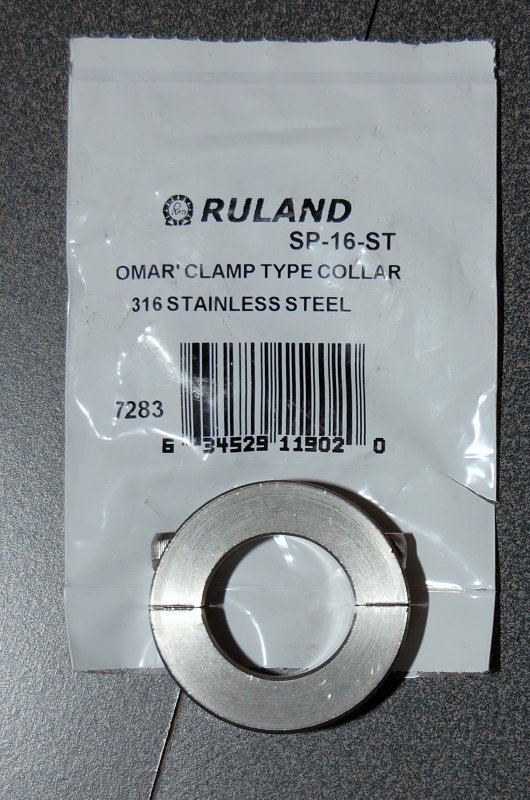
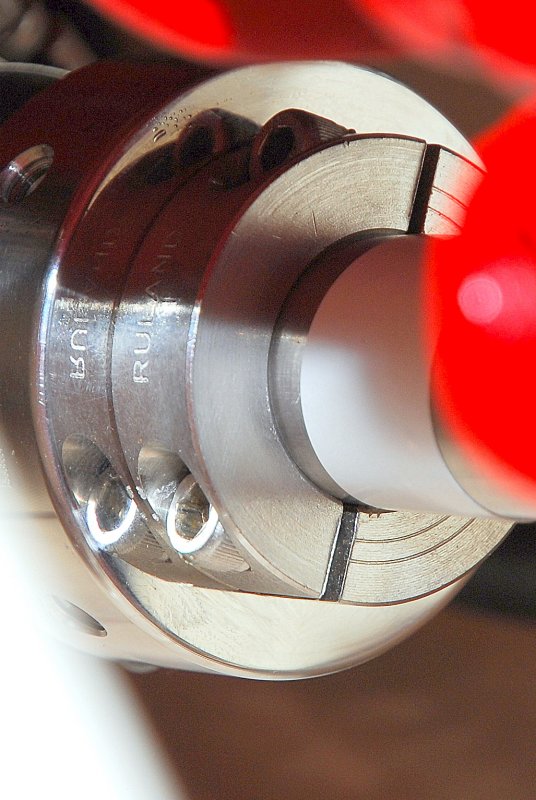
4) The SS collar's set screws need to be maintained. This is not obvious to the casual user.

I purpose the following design changes to mitigate these vulnerabilities:


1) The bellows would be replaced with a standard ridged shaft log.
2) Instead of using a bellows to provide the needed pressure, use a SS spring.
3) This SS spring would apply the needed pressure from the opposite direction backing against a standard halved bolt on collar.
4) The existing SS sealing collar would not have any set screws to become loose, rather just float on the existing O-rings.
5) The SS spring would be placed between the new bolt on collar and the existing sealing SS collar and be held in place by a concentric grove milled in each of the collars.

See attached drawing:

I realize this approach would not completely alleviate the possibility of failure due to the inadvertent longitudinal movement of the shaft, such as movement of the coupling/shaft interface, but I believe is would reduce the chance of failure due to the set screws becoming loose and the other risks I have outlined above. Also, by not having setscrews you would not be marring the shaft possibly in the very place the standard stuffing box would need to make it's seal if you ever wanted to revert back.

I enjoy throwing my ideas out to the competent members of this wonderful forum for comment. It is this very process that innovates and moves us forward.
 

Attachments

Oct 2, 2006
1,517
Jboat J24 commack
From my POV as a seal guy on land who deals with leaking ones all the time it really does NOT matter what you change they wear out in time X and can fail even the 7000 dollar ones from Cherta

That being said IMHP the PSS is a pretty good all around design and the bellows are nessary to allow the seal faces to stay Parallel during normal motor movment


On my own boat i will stick with a BOX with low drip packing
 

Ross

.
Jun 15, 2004
14,693
Islander/Wayfairer 30 sail number 25 Perryville,Md.
In answer to your concerns. The shaft seal is not inside a storage space where foreign objects may fall on it. The set screws are doubled in each hole and come with blue locktite. The shaft is in a coupling that is bolted to the transmission that is bolted to the engine that is bolted to the boat. If the shaft pulls out of the coupling it further compresses the bellows and stops turning
 
Dec 25, 2008
1,580
catalina 310 Elk River
The shaft is more likely to push in, not out, since most of the time you are propelling forward. This has the effect of removing the pressure on the seal bearing.
I hear you about the track record of this type of seal, and yes the seal is usually closed up and could be covered the protect it further, but tools can get left in proximity inadvertently. I also hear horror stories when they fail. We are not talking about dripping we're talking about gushing. I generally like their design, I just think it can be improved, to reduce risk. My design should keep equal pressure, just like the bellows, but just from the opposite direction.
 
Last edited:
Sep 25, 2008
2,288
C30 Event Horizon Port Aransas
I would be concerned with a floating collar on grooves. When things start to grow in there, it may not be floating very well anymore.
I think it is a better design to fix the collar and have the carbon bearing which is not so tight on the shaft float. Also if the collar has Orings in it, they will bind it to the shaft pretty well since there isn't a lot of axial movement to keep them free. You would need a substantial spring to overcome that, which would cause alot of wear in your carbon bearing.
I am not that farmiliar with pss seals. I have just messed around with the regular old seals. I did install gore, and it leaks so little I don't think it will ever get changed.
I like moving forward with new ideas as well, it's what I do for a living.
 
Dec 25, 2008
1,580
catalina 310 Elk River
The carbon bearing already is floating, it does not touch the shaft. The floating collar is the same as in their design, it just doesn't use the set screws. I do have concerns that over time small movements due to runout may cause premature wear on the o-rings and they may be subject to weapage.
 

Ross

.
Jun 15, 2004
14,693
Islander/Wayfairer 30 sail number 25 Perryville,Md.
There is no torsional load on the collar. The set screws are properly located at 90 degrees. I had been running one for ten years that I personally installed. I inspect it every year and wipe the engine each time I return to it and each time I finish with it. A part of that wipe down is to look for spray patterns in the engine compartment that would indicate the least leak.
 
Dec 2, 2003
1,637
Hunter 376 Warsash, England --
Me Not too sure!

Am concerned that the two 'O' rings in the floating collar will have a great deal of very rapid movement to absorb due to the pulsating nature of engine and prop.
The floating collar will need to absorb 'wobble' as well as longditudinal.
If the collar cannot keep up with the movement the seal will cause a fine radial spray of seawater.
There appears to be no accommodation of any shaft flexing or engine misalignment whilst vibrating, but which a rubber coupling accepts without losing the sealing.
Those 'O' rings will be a bugger to change out.
The sliding collar will need something to maintain it stationary with the shaft. i.e. to rotate with the shaft and not tend to stick to the stator seal.
Am aware that the exposed rotating spring is just waiting to catch something and cause catastrophic failure of the sealing system.
I realise the PSS bellows is at similar risk of failure to the conventional seal having a similar length of rubber hose but have never heard of one of these failing.

BTW my 1996 PSS is still going strong without any maintenance whatsoever.
I did drill dimples into the shaft to locate the collar before using two grub screws plus loctite on each.
 
Sep 28, 2006
45
- - -
I had the set screws come loose and it could have easily sank the boat. Yes there are two set screws in each hole but the first one needs to be very tight as well as the second set screw. Using lock tight is a good idea. I also put double hose clamps on the shaft to insure that the collar doesn't slip again.
 
Feb 6, 1998
11,760
Canadian Sailcraft 36T Casco Bay, ME
I use one of these behind the stainless collar as added insurance.


The grub screws should be tightened only ONCE this includes making fine adjustments during installation. PSS say's maybe twice or three times but seeing that most Nitronic 50 or Aqualoy shafts are a harder material than the 18/8 set screws I do tend to disagree with their sentiment, on more than one use, as I have seen one use round over the head. You are entirely dependent upon the sharpness of the volcano head when setting the screw into a hard shaft, if dull, no bite and potential for the stainless rotor sliding......

I never move the stainless rotor without new set screws and keep about half a dozen on hand at all times. Good cheap insurance just as the clamp collar is. The most common issue I have come across with PSS's is installer error and re-use or improper torquing of the set screws. The screws are coated by the factory with thread locker. This creates quite a bit of resistance so you need to tighten more than you would think. I suspect many folks back off the allen wrench too soon because of the added resistance caused by the factory thread locker.

There are one or two "failure" stories that keep getting recycled on the net but I have not seen much if any real data, with photos, by a PSS owner of more than one or two issues. The USCG chooses PSS seals on some of their own craft and we all know the hoops you must jump though for a mill spec approval.

Over the years I have seen perhaps seen twenty times the rate of issues with traditional stuffing boxes than I have with properly installed PSS's. I have seen two local boats sunk due to traditional boxes and one that was "just adjusted" sink in the slip when the improperly tightened nuts backed off the stern gland when it was put in reverse.. They are all holes in the bottom of a boat and none are without potential for issues.

CS Yachts, the makers of my boat, advised replacing the traditional stuffing box hose yearly. While that might be over kill there are LOTS of boats our there at 30 years old still using the original hose and some are beginning to fail. The stuffing box hose on my early 80's C-30 had a large crack in it and was weeping at about 16 years old when I replaced it..

The PSS seals are very, very reliable if installed correctly and the bellows replaced on schedule as suggested by the manufacturer. When I bought our current boat the motor had 2600 hours on it and the PSS seal that was installed at the same time as the engine. I removed that seal and sent the bellows to PSS. It measured in elasticity just as new even after 2600 hours of use. I still replaced it, with new, but do have the old bellows as a spare just in-case.

If you are that concerened about the design DON'T BUY ONE........;)
 
Dec 25, 2008
1,580
catalina 310 Elk River
So, how do you design a floating collar that will deal with the vibrational movement and still seal?

To address your concerns regarding any possibility of the floating collar sticking to the bearing, the spring could also be keyed to the floating collar.
The exposed area of the spring is much less that the bellows, so in my mind it is less risk.
 
Feb 6, 1998
11,760
Canadian Sailcraft 36T Casco Bay, ME
So, how do you design a floating collar that will deal with the vibrational movement and still seal?

To address your concerns regarding any possibility of the floating collar sticking to the bearing, the spring could also be keyed to the floating collar.
The exposed area of the spring is much less that the bellows, so in my mind it is less risk.
From the drawing it looks to me like possibly more risk as the bellows does not spin and the exposed area of the bellows when compressed is not much at all. The spring could potentially catch on anything from a strap of a life jacket to a piece of spare line..

There are millions & millions of hours of combined use on PSS seals world wide and very few failures. If PSS failures were even half as common as leaks, failure or issues of traditional stuffing boxes PYI would have probably been out of business long ago. I think to design a new type of shaft seal it would have to be better than the PSS's reliability and also have a sales approach as to why it is better..

Why don't you continue to design this product, thoroughly field test it, and take it to market, you may have a good design.

The PSS has been field proven to work, work reliably and it does. This may prove tough to do better, but there is no doubt it probably could, but at what cost to benefit ratio?

As I mentioned above nothing on a boat is failure proof but an open rotating spring would probably not make me very comfortable. Again, if a PSS won't give you piece of mind then I would not advise using one as I tend to find you need piece of mind at sea, at least I do.

Gore GFO is a great product and makes a traditional stuffing box nearly drip free and reliable for years and years before re-packing is necessary. There are always options. You might also check out Las-Drop seals and the Volvo seals..
 
Dec 25, 2008
1,580
catalina 310 Elk River
Remember, I'm just spinning ideas to get everyone thinking "is there a better way".
No need to get defensive.
-The spring could easily have a shield over it.
The real potential problem as I see it is the very small repeated movements of the o-rings. Interesting problem to solve, how to design a seal that can withstand these movements.
 

Ross

.
Jun 15, 2004
14,693
Islander/Wayfairer 30 sail number 25 Perryville,Md.
O-rings are also used as piston rings.
 
Aug 5, 2006
121
Hunter 33 brisbane
There are millions & millions of hours of combined use on PSS seals world wide and very few failures. If PSS failures were even half as common as leaks, failure or issues of traditional stuffing boxes PYI would have probably been out of business long ago. I think to design a new type of shaft seal it would have to be better than the PSS's reliability and also have a sales approach as to why it is better..
The PSS has been field proven to work, work reliably and it does. This may prove tough to do better, but there is no doubt it probably could, but at what cost to benefit ratio?

quote]

I couldn't agree more and I don't know why this topic keeps coming up. The PSS seal is one of the most reliable components on a yacht and in fact they are mandatory on charter boats in New South Wales. You are at far greater risk of sinking from a through hull valve failure than a PSS seal but you don't see people trying to redesign them or their fixings. On a personal level I have had 15 years with PSS seals over two boats and have never had to ever do anything to them except a visually check whenever I check the cooling water level which happens to be close by.
If you really want to get stuck into redesigning kit on a boat I would start with Yanmar and possible other diesel engines. Exhaust elbows, Cooling water pumps, Belt adjusting, Engine mountings, Shaft alignment, Fuel filtration and water separation, Removal of lube oil are things that immediately spring to mind as in major need of some practical redesign. No one would put up with half the problems we have with marine diesels in they were in an automobile. I sometimes think that their design is "not fit for purpose"
 
Oct 22, 2008
3,502
- Telstar 28 Buzzards Bay
This is one reason the Beta Marine Kubota block marine diesels command a premium price IMHO. They are designed to be far more easily serviceable than most other marine diesels.
If you really want to get stuck into redesigning kit on a boat I would start with Yanmar and possible other diesel engines. Exhaust elbows, Cooling water pumps, Belt adjusting, Engine mountings, Shaft alignment, Fuel filtration and water separation, Removal of lube oil are things that immediately spring to mind as in major need of some practical redesign. No one would put up with half the problems we have with marine diesels in they were in an automobile. I sometimes think that their design is "not fit for purpose"
 
Dec 25, 2008
1,580
catalina 310 Elk River
I hear you Nick on the Diesel maintenance issues. Much of this is as a result of the environment and lack of access. There is much need for improvement on many other marine systems as well. I'm picking on the PSS because I was considering on installing one since my boat is apart and it is in my nature to analyze. If I were to install one I would be using the backup clamp Maine uses and would design a shield to prevent anything from inadvertently applying pressure the the side of the bellows, those are the two main risks to this system as I see it. I have no intention of going into business to compete with PSS. I just like spinning and sharing ideas and get people thinking "is there a better way". After all isn't that one of the main reasons for sharing ideas on a forum?

-so Ross, you don't believe the vibrational movements the o-rings would be a problem because they use them as piston rings? What material do they use for the o-rings in those application? Could you achieve the desired seal and flexibility using a ring that would be thicker or have more contact surface area than the conventional round cross section? This may have the desired effect of not have any movement on the contact surfaces, but facilitate the necessary vibrational movement within the body of the material itself.
 
Last edited:

Ross

.
Jun 15, 2004
14,693
Islander/Wayfairer 30 sail number 25 Perryville,Md.
I hear you Nick on the Diesel maintenance issues. Much of this is as a result of the environment and lack of access. There is much need for improvement on many other marine systems as well. I'm picking on the PSS because I was considering on installing one since my boat is apart and it is in my nature to analyze. If I were to install one I would be using the backup clamp Maine uses and would design a shield to prevent anything from inadvertently applying pressure the the side of the bellows, those are the two main risks to this system as I see it. I have no intention of going into business to compete with PSS. I just like to spinning and sharing ideas and get people thinking "is there a better way". After all isn't that one of the main reasons for sharing ideas on a forum?
-so Ross, you don't believe the vibrational movements the o-rings would be a problem because they use them as piston rings? What material do they use for the o-rings in those application? Could you achieve the desired seal and felxibility using a ring that would be thicker or have more contact surface area than the conventional round cross section? This may have the desired effect of not have any movement on the contact surfaces, but the necessary vibrational movement withing the body of the material itself.
You worry too much!
 
Dec 25, 2008
1,580
catalina 310 Elk River
Maybe so, you would not be the first to tell me that... BTW how's your back, or that something that was causing you to be out of the game recently?
 

Ross

.
Jun 15, 2004
14,693
Islander/Wayfairer 30 sail number 25 Perryville,Md.
Maybe so, you would not be the first to tell me that... BTW how's your back, or that something that was causing you to be out of the game recently?
Had surgery one week ago today. Much better thank you. Off the narcotics as of Sunday.
Consider all of the applications for o-rings, the failure rate is very low.
 
Status
Not open for further replies.