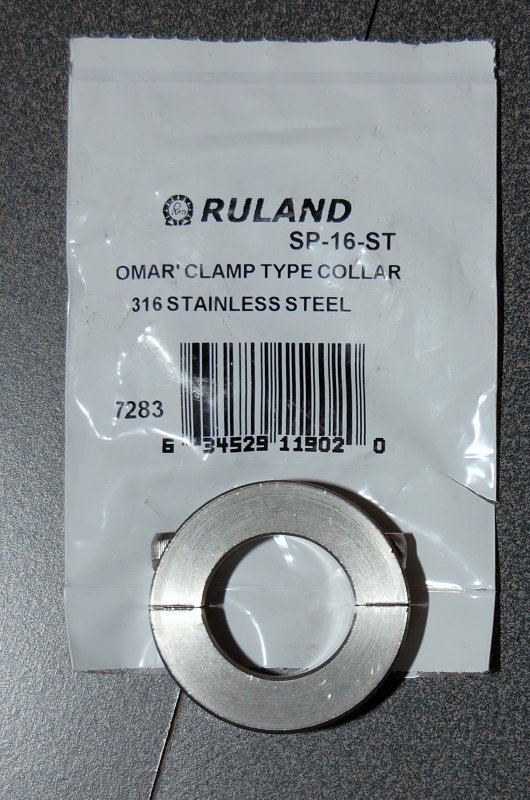
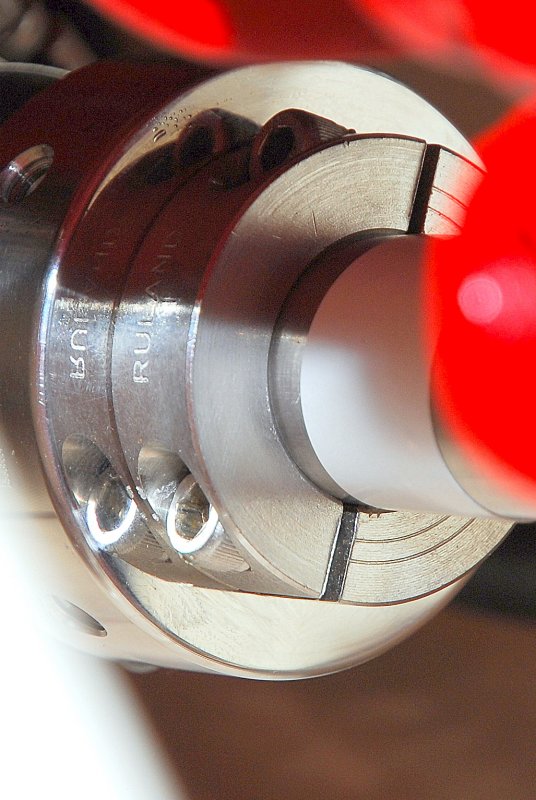
I talked about this in my post about using a grease fitting in a standard stuffing box.
I have some concerns about the design based on the following facts:
1) The bellows is vulnerable to distortion or damage from an inadvertent object applying pressure to the side. This could cause the bearing or bellows to pass water in an excessive manner.
2) Failure of the bellows could be catastrophic.
3) Any longitudinal movement in the shaft could cause failure due to the pressure needed on the bearing surface being relieved.
4) The SS collar's set screws need to be maintained. This is not obvious to the casual user.
I purpose the following design changes to mitigate these vulnerabilities:
1) The bellows would be replaced with a standard ridged shaft log.
2) Instead of using a bellows to provide the needed pressure, use a SS spring.
3) This SS spring would apply the needed pressure from the opposite direction backing against a standard halved bolt on collar.
4) The existing SS sealing collar would not have any set screws to become loose, rather just float on the existing O-rings.
5) The SS spring would be placed between the new bolt on collar and the existing sealing SS collar and be held in place by a concentric grove milled in each of the collars.
See attached drawing:
I realize this approach would not completely alleviate the possibility of failure due to the inadvertent longitudinal movement of the shaft, such as movement of the coupling/shaft interface, but I believe is would reduce the chance of failure due to the set screws becoming loose and the other risks I have outlined above. Also, by not having setscrews you would not be marring the shaft possibly in the very place the standard stuffing box would need to make it's seal if you ever wanted to revert back.
I enjoy throwing my ideas out to the competent members of this wonderful forum for comment. It is this very process that innovates and moves us forward.
I have some concerns about the design based on the following facts:
1) The bellows is vulnerable to distortion or damage from an inadvertent object applying pressure to the side. This could cause the bearing or bellows to pass water in an excessive manner.
2) Failure of the bellows could be catastrophic.
3) Any longitudinal movement in the shaft could cause failure due to the pressure needed on the bearing surface being relieved.
4) The SS collar's set screws need to be maintained. This is not obvious to the casual user.
I purpose the following design changes to mitigate these vulnerabilities:
1) The bellows would be replaced with a standard ridged shaft log.
2) Instead of using a bellows to provide the needed pressure, use a SS spring.
3) This SS spring would apply the needed pressure from the opposite direction backing against a standard halved bolt on collar.
4) The existing SS sealing collar would not have any set screws to become loose, rather just float on the existing O-rings.
5) The SS spring would be placed between the new bolt on collar and the existing sealing SS collar and be held in place by a concentric grove milled in each of the collars.
See attached drawing:
I realize this approach would not completely alleviate the possibility of failure due to the inadvertent longitudinal movement of the shaft, such as movement of the coupling/shaft interface, but I believe is would reduce the chance of failure due to the set screws becoming loose and the other risks I have outlined above. Also, by not having setscrews you would not be marring the shaft possibly in the very place the standard stuffing box would need to make it's seal if you ever wanted to revert back.
I enjoy throwing my ideas out to the competent members of this wonderful forum for comment. It is this very process that innovates and moves us forward.
Attachments
-
 18.4 KB Views: 396