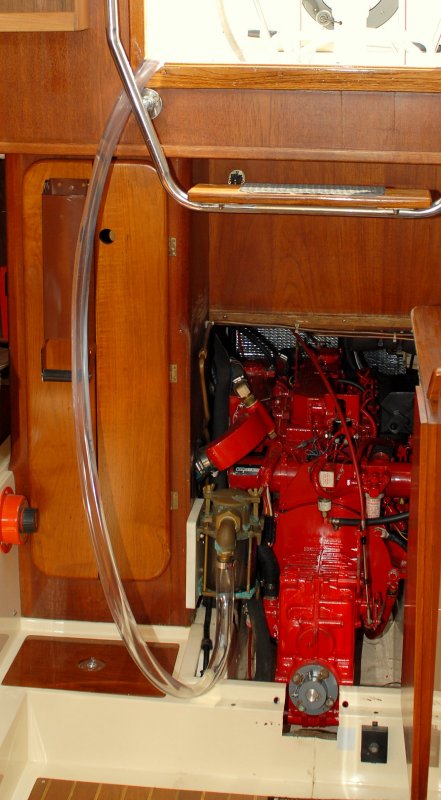
Having done this job...
Having done this job..
#1 Open pet cock or drain on waterlift muffler, drain it and re-install plug.
#2 Remove each injector & turn motor over by hand to expel water
#3 Drain crank case oil THERE WILL BE WATER IN THE CRANK CASE and change it with new filter.
#4 Crank engine with injectors out to clear cylinders of any remaining water
#5 Buy about five to eight oil changes worth of cheap auto grade 15/40 LOTS OF IT and the cheapest oil filters you can find 5-8 of them.
#6 Remove valve cover and absorb any water trapped in nooks and crannies with an absorbent rag then replace valve cover.
#7 Re-install injectors and start motor. Let run for a a couple minutes then shut down and do a full oil & filter change. DO NOT do a suck it out through the dip tube oil change! You must pull the drain plug on the pan or let the drain hose, if equipped, lay in the bilge on oil absorbing pads to get every last drop out of the pan. The oil will most likely still be grayish black at this point.
#8 Repeat this step until oil is perfectly clear and shows NO signs of water. Once clear do a final oil change with diesel grade 15/40 like Rotella or Delo and your usual filter and run the engine for an hour or more under load to burn/evaporate off of any residual trapped moisture.
#9 Buy a rebuild kit and rebuild your raw water pump. It is very likely that the pressurized water blew out the seals in the pump.
This is why we have threads hear all the time that say NEVER CONNECT PRESSURIZED WATER TO YOUR ENGINE !!!!!!!!!!!!!!!!!!!!!!!!!!!!!!!

I doubt you did any engine damage but if any did occur it may become evident in the form of a starter failure in the near future. If you had started it first then turned on the hose you would have likely toasted the motor. You got lucky..sort of..
Always use an in/out bucket and never, ever connect pressurized water of any sort directly to the raw water circuit!!!!!!!
Using an in/out bucket is EASY!
Hose to in/out bucket:
Feed hose & engine intake hose (the clamps help keep the hoses in place):
Setting up an in out bucket takes less than a minute and a half.
A) Close seacock if you are still in the water.
B) Loosen the two hose clamps on the intake side of the strainer.
C) Pull off the hose.
D) Connect hose to in/out bucket and snug up with one hose clamp.
Running the engine:
1) Insert garden hose into 5 gal bucket, fill it, and leave it running. The bucket will over flow and drain out the cockpit drains.
2) Start engine & then very quickly stick hose leading to the engine to bottom of bucket and make sure the hose primes.
3) Run engine. Moving the throttle up will increase suction and water use moving it to idle will slow it.
4) Pull engine hose from bucket then wait about 10 seconds pull the stop lever. This clears the intake hose to prevent siphoning but does not run the impeller dry..
Done..
Some words of caution:
#1 If your 5 gal bucket is located higher than your engines siphon-break, NEVER, DON'T & DO NOT shut the engine off without pulling the intake/sea strainer hose from the bucket and letting it suck dry or down below the level of the siphon break!!
Always pull the hose and let the impeller suck the remaining water from the hose before shutting down the engine.
Why?
If your bucket is above the engines siphon break your engine can, and will, fill with water and you will hydro-lock it. This is not good and will require many, many oil changes, like seven to ten, with filters, to get rid of all the water in the engine. It may not happen the first time but it will and can eventually happen.
Please do yourself a favor and remove the hose from the bucket before you shut down if your bucket is ABOVE the engines siphon break!!!
Raw water pumps are NOT valves, are NOT a positive shut off and they do not stop gravity or siphoning. If your bucket is above the engines siphon break it will siphon and you can and will eventually have a hydro-lock situation where your cylinders fill with water.
If you do this in the cockpit, as most of us do, there is a very high likely hood that your engines siphon break is below the siphoning level of the bucket.. Please be careful running your engine on the hard.
#2 Never, ever connect a garden hose straight to your engine. The street pressure will not only blow out the seals of the water pump, but within seconds, even when running, it can hydro-lock an engine. Hydro locking is when the water in the exhaust system fills up and backs up into the engines cylinders! Water is NOT compressible like air.. Municipal water supplies can have street pressures as high as 100 psi. Use an in/out bucket to avoid serious damage!
This is an engine siphon break. If your in/out bucket is higher than the siphon break it can not break or stop the siphoning!!!! Pull the hose before shut down!!!