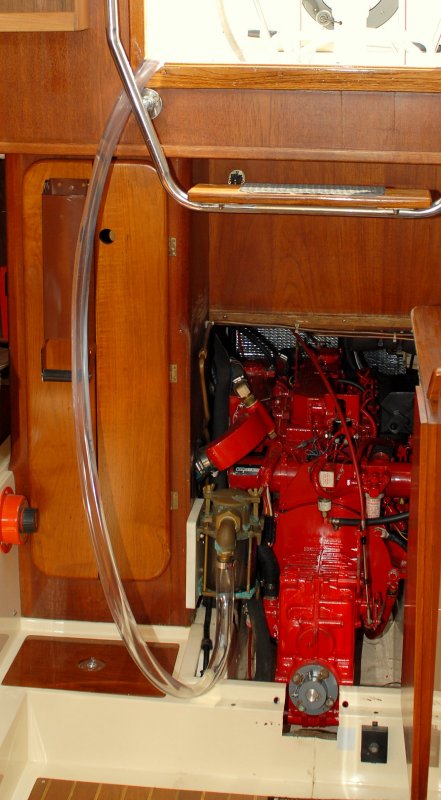
Need Help Possible water in Engine Head

Status
Not open for further replies.
Feb 17, 2005
44
- - Long Beach
Hello everyone,

I had to create a new user name since I couldnt find my old one so please take note of the new user name (the old one was Alopez865).

We are currently on the hard in Panama and are trying to get Nepenthe back in the water. Nepenthe is equipped with a Yanmar 3GM30F. I wanted to run the engine to make sure we could get her started before getting splashed so I replaced the impeller and greased the housing well. I then hooked up a fresh water garden hose to the raw water strainer on the boat in order to get water flowing through the engine at start up.

After climbing back up the ladder I tried to turn over the engine a couple of times (very briefly) and the engine would turn over but not start. It did not sound right so I went below to see if there was anything obviously wrong.

I immediatley noticed that fresh clean water was flowing out of the air intake cover attached to the side of the head. I turned of the water and began having daymares/nightmares.

Can anyone please offer there advice on what need to do to remedy what I have done to my poor engine?

Thank you,

Alex
 
Jul 12, 2006
85
- - nc
Lopez, Sorry ot hear of your problem. Might not be that bad yet. You cannot hook up a pressurized water source to the impeller. The water will run through the heat exchanger into the exhaust and without the engine running there is no force to push the water out (of the water lift muffler)and it will backflow into the engine via the exhaust valve(s) till the cylinder(s) are full then in your case out an open intake valve and out the air intake. You will need to remove the injectors and slowly turn the engine over (by hand) to push the water out slowly numerous times, then you can use the starter to spin it fast and push more out. This all assumes you have not bent a connecting rod trying to turn it over when the cylinders were full of water. I would say chances are low. Once you are confident you cannot get any more water out of the cylinders, reinstall the injectors and try to start (with impeller removed if you are still on the hard). Once it starts run it just a bit then shut down, install impeller and use a bucket with a hose and allow the hose off the impeller pump to suck water out of the bucket. In the future, even if you are in the water and the engine won't start you can have the same situation happen, the fix is if your engine won't start don't keep cranking till you close the thru hull valve. Keep us posted and good luck, I'd rather be where you are with a problem than here in the cold w/o a prob. Mike
 
Jan 2, 2008
547
Hunter 33 (Cherubini design Forked River, Barnegat Bay, NJ
More on Water Logged engine

You should do just as well emptying the cylinders by flipping the decompression levers and spinning the engine. Once you are certain you have the water out of the cylinders and start the engine SHUT IT DOWN. change the oil. Run it warm for a good while, shut it down and change the oil. Repeat this process till the oil comes out dead clear with no sign of water. Do not ask how I know this will work.

P. S. Make sure the bucket your raw water pump is drawing from is at or below the level of the pump. Very important.
 
Sep 25, 2008
1,096
CS 30 Toronto
There is a drain cock on the water muffler. In the future, even on the water, if you crank the engine a few time and she won't start, you must drain the muffler before you try again.

Water won't compress inside a cylinder. It will cause sever damage.
 
Dec 2, 2003
1,637
Hunter 376 Warsash, England --
You may just still be lucky. Be quick before any rusting begins.
I guess the water pressure forced through the raw water pump and filled the exhaust - is it plugged? Then it came back up the exhaust manifold and through any valves which were open. Maybe forced open others that were not. Then flowed out through any inlet valves which were open and out through the inlet silencer.
Okay, if my surmise is correct the water should not yet have gotten past the piston rings.
What I would do if it were my engine is as follows:-
CAUTION - The procedure below may make the situation worse and, in extremis damage the engine. The correct procedure is to remove the cylinder head and then the oilpan and give the head and cylinders a thorough blow out on an air line.
I guess these actions may not be available to you at this point.
So:-
1) Check nothing is blocking the exhaust outlet in the hull.
2) Open the inlet silencer and dry it out, including any filter or foam.
3) Dip the oil several times and look if any water is on the dipstick. If water is present then the oilpan needs to come off. This usually means taking the engine out of the boat. If no water present then continue.
4) Open all 3 decompressors and, using a wrench on the nut on the crankshaft GENTLY rotate the engine and see if water is forced out of the decompressors. If serious resistance is felt do not force the wrench.
5) If the engine turns reasonably easily carry on turning for five minutes to expel as much water as possible. Tedious and hard work but necessary.
6) With the decompressors still open very briefly try the starter.
7) If the engine turns on the starter then try it again briefly. STOP if the engine suddenly comes to a stop. There may be puddles in the intake manifold if the designer forgot to make it self draining! You don't want to ingest solid water into the cylinders whilst the engine is turning at speed. This is the main risk at this point as water is incompressible but to cause damage it would take a solid lump of H2O larger than the compression volume.
8) If all is still okay run the starter for 10 seconds then stop.
9) Let starter and battery rest for 5 minutes.
10) Release the decompressors and see if she will start.
11) If so stop after 5 seconds and make new arrangements for the cooling water.
To do this put a tight fitting hose up the hull inlet and the other end into a bucket on the ground. Run the yard hose into this bucket and when full start the engine again. Make sure the yard hose is supplying more water than the engine is drawing. This is what should have been done originally.
CHECK WATER IS COMING OUT OF THE EXHAUST IN THE NORMAL WAY. We don't want to cook the engine having just rescued it from a watery grave. If no water STOP again and see why the raw water pump is not doing its stuff. There may be an air leak at your feed hose thru hull.
Run engine gently until thoroughly warm. e.g. 30 minutes.
Then give it an oil change just to show you really do love it.

And good luck.

Failing success of the above find an engineer, call your bank and cancel all future plans for the next month or so.
 
Feb 6, 1998
11,759
Canadian Sailcraft 36T Casco Bay, ME
Having done this job...

Having done this job..

#1 Open pet cock or drain on waterlift muffler, drain it and re-install plug.

#2 Remove each injector & turn motor over by hand to expel water

#3 Drain crank case oil THERE WILL BE WATER IN THE CRANK CASE and change it with new filter.

#4 Crank engine with injectors out to clear cylinders of any remaining water

#5 Buy about five to eight oil changes worth of cheap auto grade 15/40 LOTS OF IT and the cheapest oil filters you can find 5-8 of them.

#6 Remove valve cover and absorb any water trapped in nooks and crannies with an absorbent rag then replace valve cover.

#7 Re-install injectors and start motor. Let run for a a couple minutes then shut down and do a full oil & filter change. DO NOT do a suck it out through the dip tube oil change! You must pull the drain plug on the pan or let the drain hose, if equipped, lay in the bilge on oil absorbing pads to get every last drop out of the pan. The oil will most likely still be grayish black at this point.

#8 Repeat this step until oil is perfectly clear and shows NO signs of water. Once clear do a final oil change with diesel grade 15/40 like Rotella or Delo and your usual filter and run the engine for an hour or more under load to burn/evaporate off of any residual trapped moisture.

#9 Buy a rebuild kit and rebuild your raw water pump. It is very likely that the pressurized water blew out the seals in the pump.

This is why we have threads hear all the time that say NEVER CONNECT PRESSURIZED WATER TO YOUR ENGINE !!!!!!!!!!!!!!!!!!!!!!!!!!!!!!!:doh::doh::doh::doh:

I doubt you did any engine damage but if any did occur it may become evident in the form of a starter failure in the near future. If you had started it first then turned on the hose you would have likely toasted the motor. You got lucky..sort of..

Always use an in/out bucket and never, ever connect pressurized water of any sort directly to the raw water circuit!!!!!!!

Using an in/out bucket is EASY!

Hose to in/out bucket:


Feed hose & engine intake hose (the clamps help keep the hoses in place):


Setting up an in out bucket takes less than a minute and a half.

A) Close seacock if you are still in the water.

B) Loosen the two hose clamps on the intake side of the strainer.

C) Pull off the hose.

D) Connect hose to in/out bucket and snug up with one hose clamp.

Running the engine:


1) Insert garden hose into 5 gal bucket, fill it, and leave it running. The bucket will over flow and drain out the cockpit drains.

2) Start engine & then very quickly stick hose leading to the engine to bottom of bucket and make sure the hose primes.

3) Run engine. Moving the throttle up will increase suction and water use moving it to idle will slow it.

4) Pull engine hose from bucket then wait about 10 seconds pull the stop lever. This clears the intake hose to prevent siphoning but does not run the impeller dry..

Done..

Some words of caution:


#1 If your 5 gal bucket is located higher than your engines siphon-break, NEVER, DON'T & DO NOT shut the engine off without pulling the intake/sea strainer hose from the bucket and letting it suck dry or down below the level of the siphon break!!

Always pull the hose and let the impeller suck the remaining water from the hose before shutting down the engine.

Why?

If your bucket is above the engines siphon break your engine can, and will, fill with water and you will hydro-lock it. This is not good and will require many, many oil changes, like seven to ten, with filters, to get rid of all the water in the engine. It may not happen the first time but it will and can eventually happen.

Please do yourself a favor and remove the hose from the bucket before you shut down if your bucket is ABOVE the engines siphon break!!!

Raw water pumps are NOT valves, are NOT a positive shut off and they do not stop gravity or siphoning. If your bucket is above the engines siphon break it will siphon and you can and will eventually have a hydro-lock situation where your cylinders fill with water.

If you do this in the cockpit, as most of us do, there is a very high likely hood that your engines siphon break is below the siphoning level of the bucket.. Please be careful running your engine on the hard.

#2 Never, ever connect a garden hose straight to your engine. The street pressure will not only blow out the seals of the water pump, but within seconds, even when running, it can hydro-lock an engine. Hydro locking is when the water in the exhaust system fills up and backs up into the engines cylinders! Water is NOT compressible like air.. Municipal water supplies can have street pressures as high as 100 psi. Use an in/out bucket to avoid serious damage!

This is an engine siphon break. If your in/out bucket is higher than the siphon break it can not break or stop the siphoning!!!! Pull the hose before shut down!!!

 
Nov 6, 2006
10,216
Hunter 34 Mandeville Louisiana
With a very embarrassed look, the owner of my boat did this same thing by attempting to bleed the diesel system of the 3 GMF by spinning with starter and no compression and not disconnecting the bayou water inlet. The bayou water, as is the case with hose supplied water, is not salt carrying so it will not make as much a mess with corrosion. I had water leaking out of the intake. No water showed up on the dipstick and the oil level did not rise . I took off the air cleaner and then took off the exhaust elbow (4 bolts hold the casting on) at the rear of the exhaust manifold. There is no low point drain on the exhaust gas side in the manifold. The exhaust manifold will continue to hold water unless the rear casting that the ell screws into is removed. With the decompress levers on, I turned it over until the water quit coming out of both sides.. Then with the compression back on, turned it over by hand a couple of times to make sure it was clear. I started it with the exhaust ell off and blew the water out of the manifold for about 5 seconds. Then put the ell back on reconnected the water and started it and ran it until it was fully warmed up. No water showed up in the oil, but I did not let it sit any time from the time it became evident that water was in the engine. I think the key is to drain the exhaust side, clear the intake side, turn it over by hand to make sure it is clear then start it and let it run to evaporate the water out of it, given that I had no water in the oil pan. Good luck with it, Alex.
 
Feb 17, 2005
44
- - Long Beach
Thank you all for the rescue help

Big thanks to everyone who replied to offer advice on how to get out of the situation I got myself in. I have gone through the procedures described (as applicable) and was able to get her started late last night using the bucket method to provide water.

I was able to evacuate the water from the cylinder heads and get the engine operational once again. There was no evidence of water in the oil however I will give her plenty of new oile to say Im sorry.

Again thanks to all of you for the great response!
 
Status
Not open for further replies.