While I think that the hulls which are compounded prior to waxing look great. I think that I would go easy on the compounding. You see all over the streats of california cars that were overly compounded and waxed. they are down to their prime coatusually on the hood and rooftop.
Auto paint and clearcoat is header then Gelcoat.
So be carefull.
Contrary to popular misconceptions gelcoat is very, very thick comparatively speaking and most of the products most often used are also used on far thinner and far less durable automotive clear coats every day of the week by automotive body shop & detailing professionals. I've done lots different hulls and never once burned through gelcoat even on boats 40+ years old that have been buffed 20+ times. My neighbors O'Day Mariner has been buffed/waxed nearly every season since the early 70's and despite the olive green color it still looks fabulous. I grew up buffing and prepping antique cars for concourse shows, "trailer queens". Some of these nitrocellulose lacquer paint jobs were $20k+ and polishing products with the same or similar grit levels to what we use to polish gelcoat were used.
I've never even burned through a clear coat and these are on order of about 16-40+ times less thick than a typical gelcoat.
Keep in mind that most automotive clear coats from the auto manufacturers are 1-2 mils thick (.001 to .002) the average gelcoat is normally multiples that thickness (.016-.040+). All of the Presta products, except for the Gelocat Compound, plus Finesse-It, Meguiars #9 and others, for example, are used primarily in the automotive industry on finishes .001 to .002 thick not finishes .016 to .040+ thick. Cape Dory for instance used to lay on gel at about .035 to .045. This is actually too thick and has led to lots of crazing but that's another subject for another day. To try and put it in perspective your transmission coupling is normally aligned to .003. If you were at anywhere near .040 you'd knock your kidneys into your lungs..

This was a section of a hull that was detailed once per season for over 11 years including starting with a 600 grit wet sanding and building up to 2000 at the beginning because it was so badly oxidized. This sample was cut for a radar pole install and the owner, who was always concerned about his gelcoat thickness, had a real "awakening" and showed me this piece.
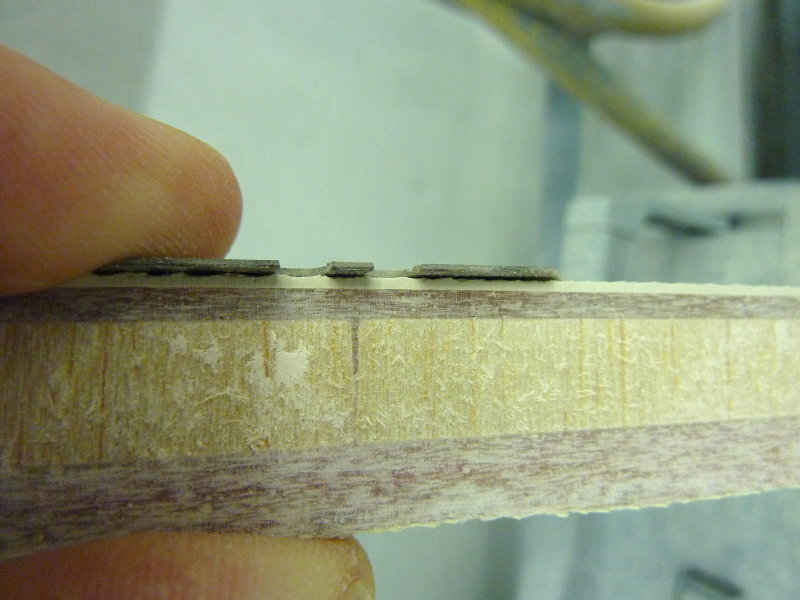
As you can see the gelcoat is still thicker than the dull side of a box cutter blade! Boat was over 30 years old when that photo was taken. Also keep in mind that new boats are usually prepped, per manufacturer instructions, for bottom paint or barrier coats with an 80 grit paper on a RO or DA sander. Again never once sanded through gelcoat even using 80 grit on an RO or DA on the many new boat preps I undertook when working in boat yards, in my younger days.
Allowing oxidation can actually remove or slough as much or more gelcoat than keeping it properly polished. I have rubbed more than a few boats over the years and might as well have been sticking my hand in baby powder the gelcoat was so badly oxidized and sloughing very badly.
As you said, "be careful", but comparing auto paint to gelcoat is like comparing Janet Reno to Michael Jordan in a game of basketball...

Not quite the same thicknesses..


