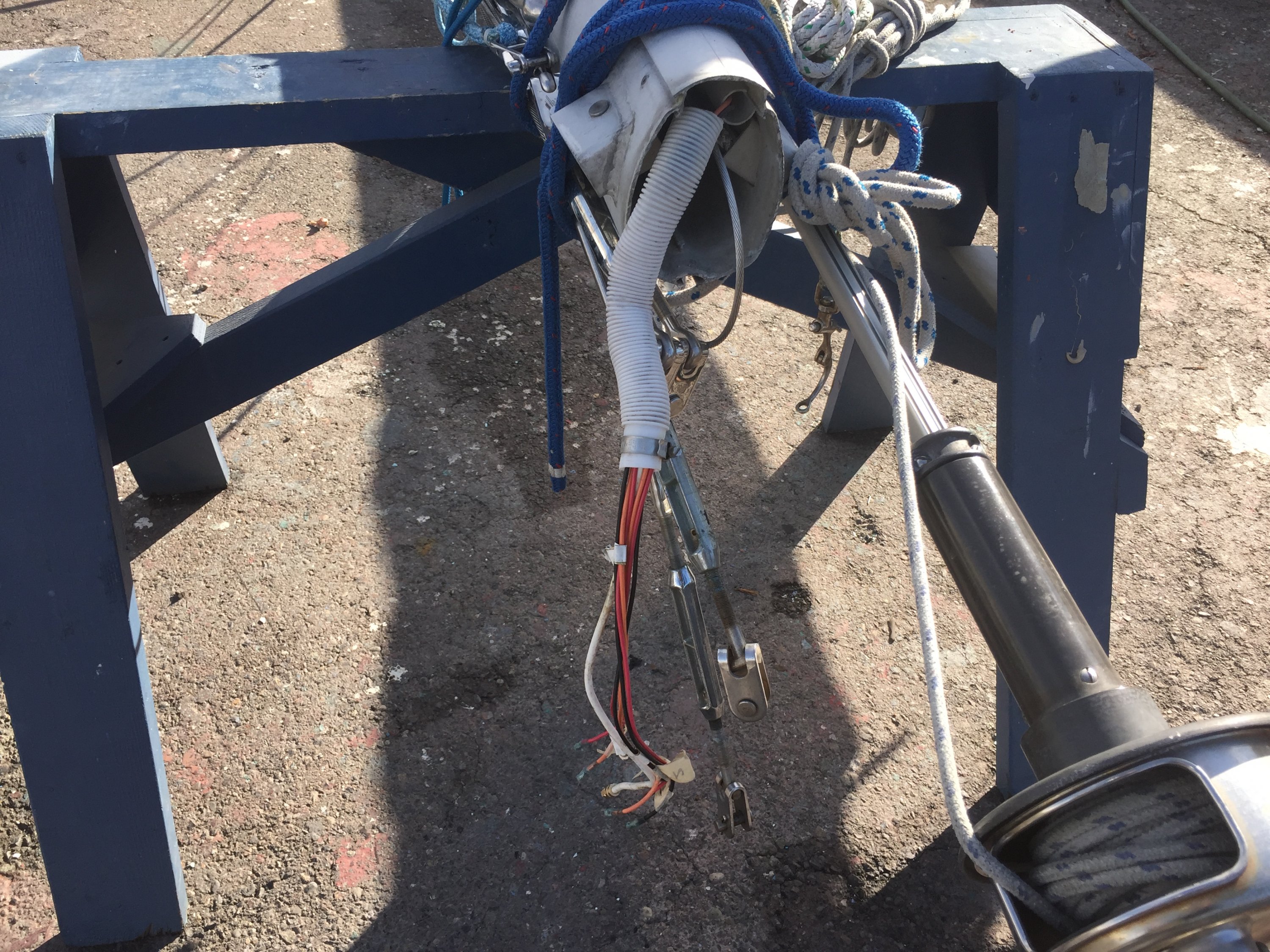
1987 Hunter 31 Mast Step and Deck Damage

Oct 20, 2016
56
Hunter 31 Seattle
I have finished an investigation of the deck and found the following:

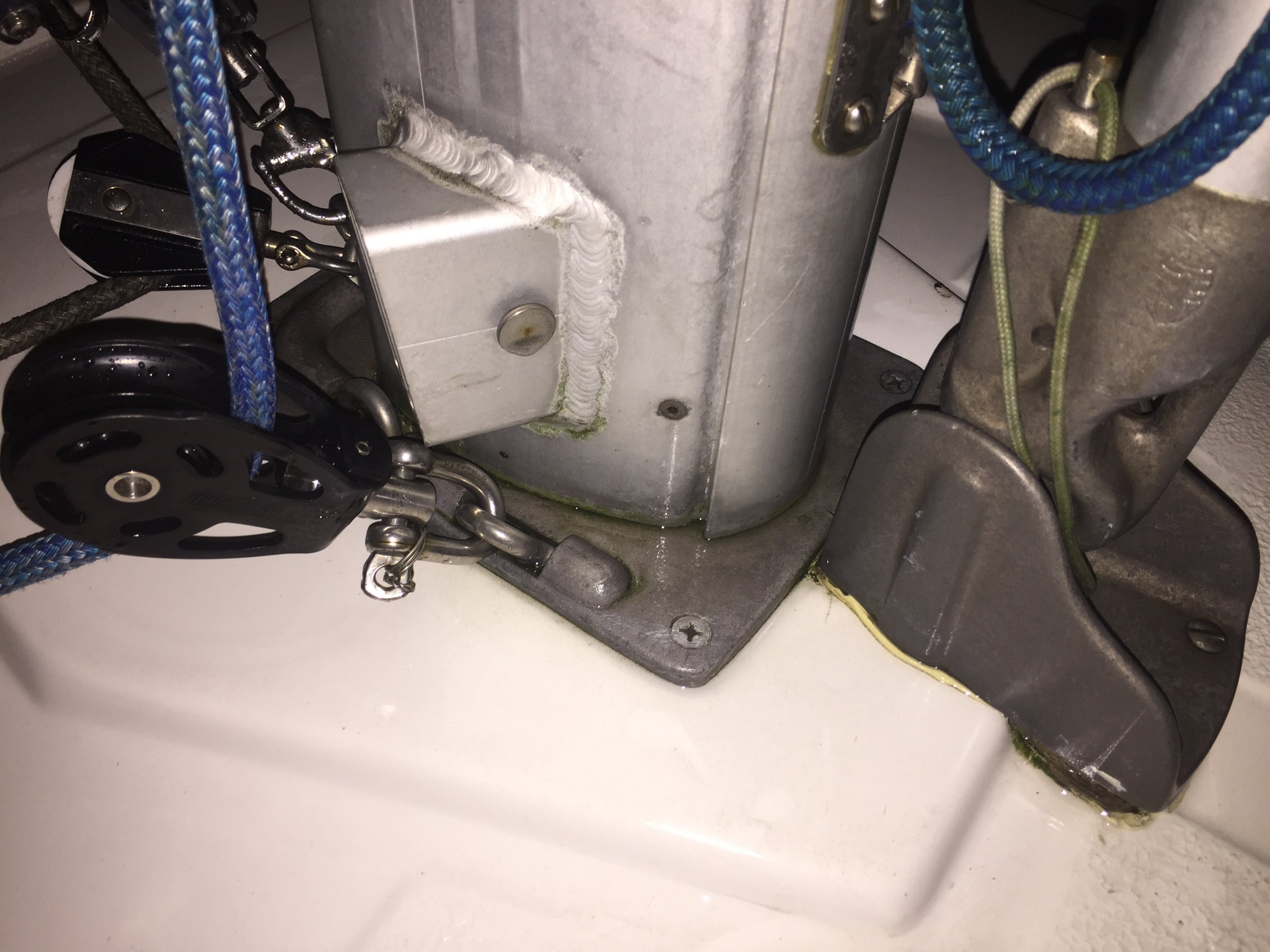
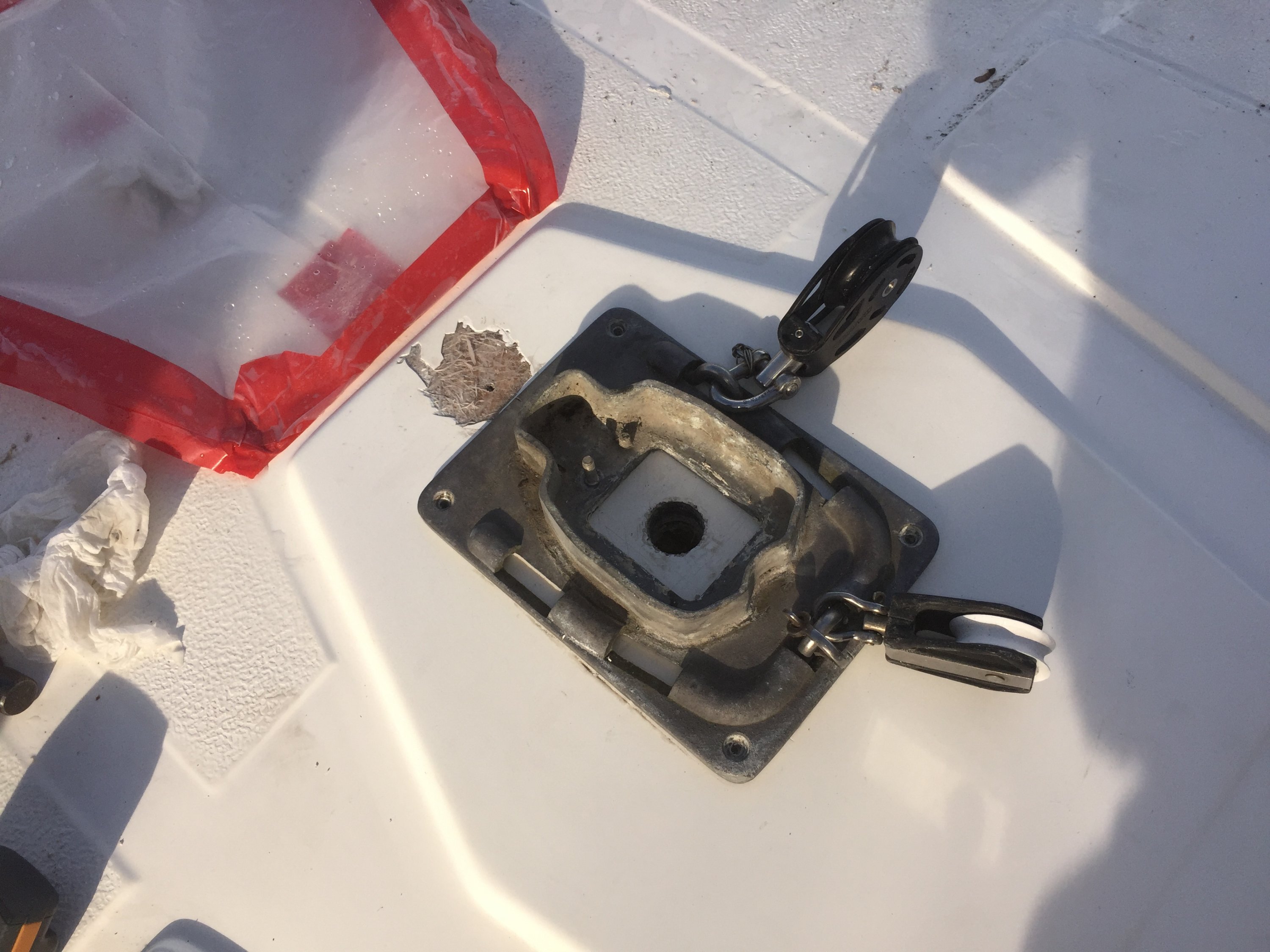
1. The single drainage path in the mast step had been filled with sealant;
2. The spinnaker chock was installed against the mast step, adjacent to the only drainage path.
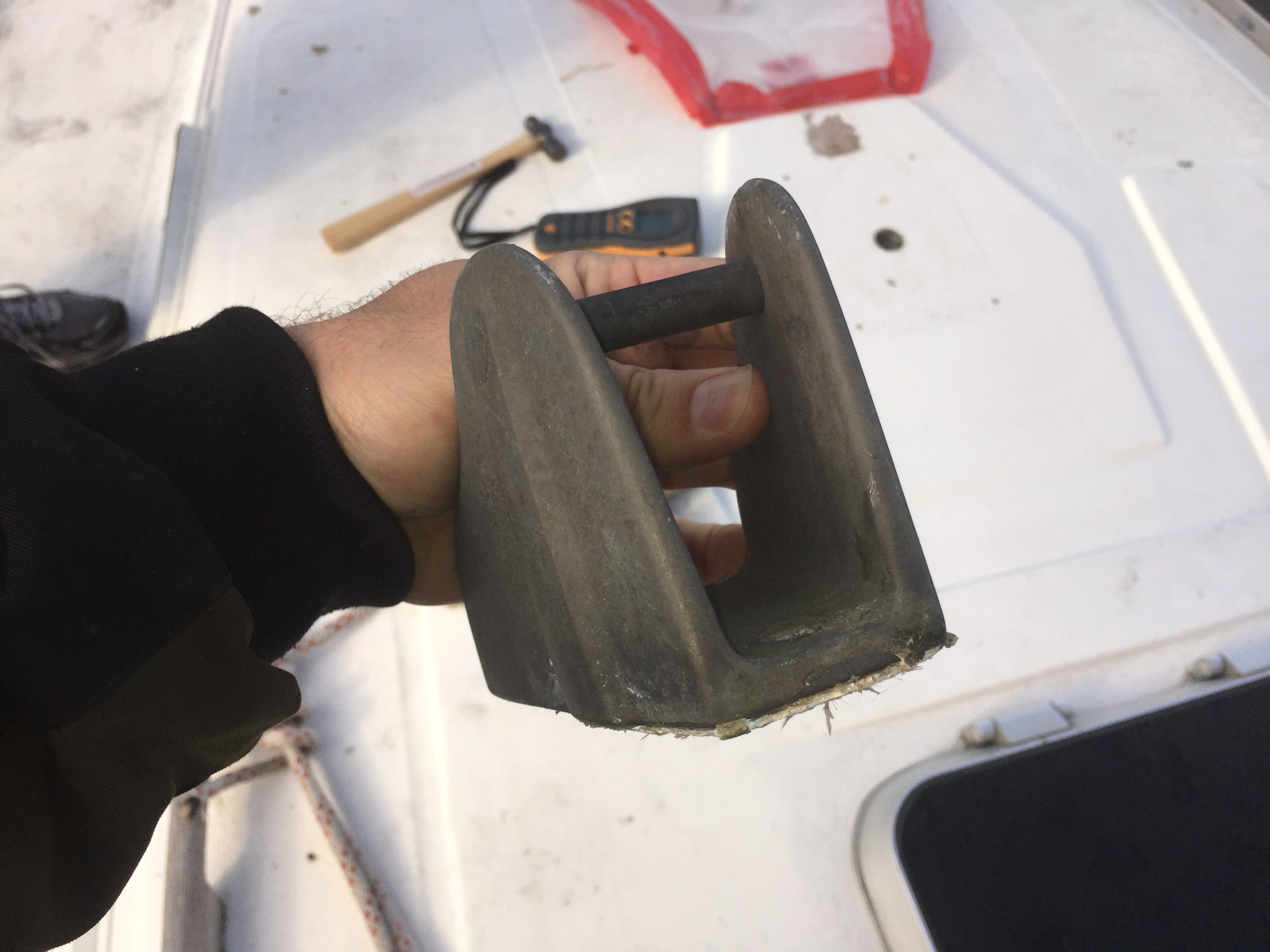
3. The deck inside the hole for the mast wires is wet, and the raised area around the mast step is showing elevated levels of moisture. At a minimum, the entire raised area around the mast step needs to be cut out and replaced. Let's not talk about worst case scenario right now.

A yard has quoted me $5760 for the work, but there's no way to know the extent of damage until they begin to demo out the deck.

I have only owned the boat for two months. I bought the boat through a broker and paid a surveyor to specifically look at the mast step before the purchase. I am working with them on payment for repairs.

IMG_2430.JPG


IMG_2604.JPG


IMG_2606.JPG


IMG_2611.JPG


IMG_2626.JPG
 

KD3PC

.
Sep 25, 2008
1,069
boatless rainbow Callao, VA
Two things...

a lot of the work is done, as the mast is out. I would take a deep breath and do some more research. The pics of the deck look great, I would want to know more about the "elevated moisture readings" and how they point to the work suggested.

Get a second and third estimate BEFORE you commit to any work. Preferably from another yard as well.

Hire yourself a surveyor who knows hunter boats. I doubt seriously that the best solution is to start "demo"ing anything, especially the deck, as the fiberglass looks great, compared to other mast steps I have seen (see Sabre 38). And there is no indications of flex, one would typically see with wet deck, bad mast step..

Salon support and lining looks good???
 
Oct 24, 2010
2,405
Hunter 30 Everett, WA
It's possible to have the deck dry from the inside without cutting it up once the leak is stopped (proper drain hole installed.)
I'm told possibly without even opening it up. Another possibility is to drill some holes on the inside and deep heat on it. Once again get second opinions.

Ken
 
Oct 20, 2016
56
Hunter 31 Seattle
How would I get other estimates? Get various yards to come see the boat and do their own separate testing?

Nothing to me looks obviously bad, but I'm no expert here. I've had multiple surveyors and boat yards look at this, and no one has said to leave it alone.

Do you know a Hunter expert in the Seattle area who could take a look?
 
Jan 22, 2008
1,715
Hunter 34 Alameda CA
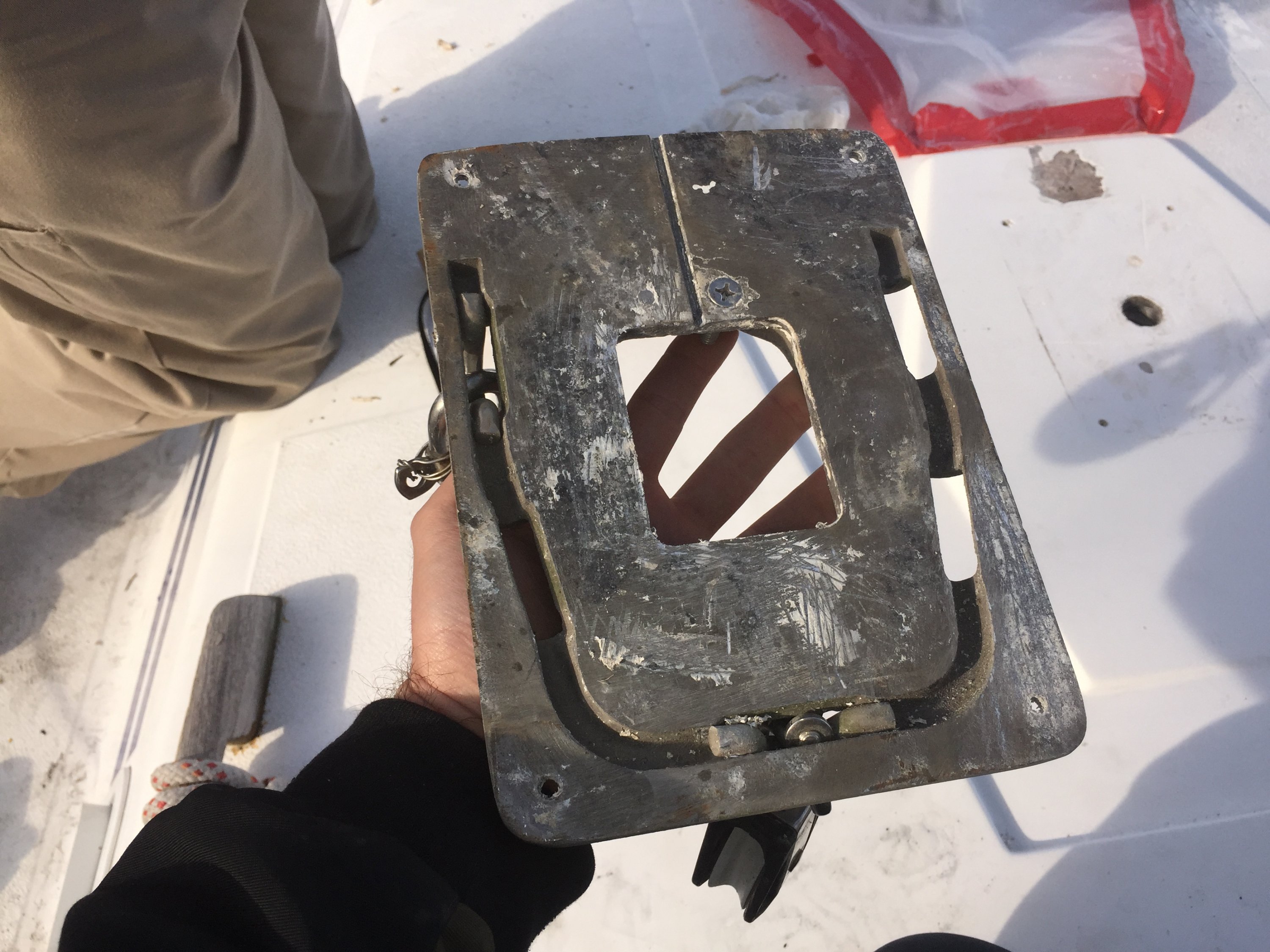
Proceed slowly. The elevated area around the mast is due to a large 1/4" aluminum plate. The moisture readings could be suspect. If it is a capacitance measurement that correlates with moisture in a wood core then the aluminum may provide a false reading. Underneath that is a synthetic core material. That is not particularly water permeable. If water leaked down inside, the area to be checked is the compression post itself and the chunk of transverse Douglas Fir inside the fiberglass beam. There has been a lot written on the repair of H31 and H34 compression post failures. Maybe yours was already repaired. Check by removing the door to the head, then pop out the wooden plugs on the door jamb. Remove that piece from the front of the compression post and inspect. The post is also something like Douglas Fir that is clad with the teak you see inside the boat. From your picture, I can't determine if there was a short standpipe of PVC that the wires passed through. If it was well caulked then you should be good. If that flexible conduit was just stuffed into the hole you may have had leakage around it. But, I will still lean towards the improbability of the deck being compromised because of the construction from the top down.....fiberglass skin/aluminum plate/synthetic core/fiberglass skin. Do you own probing first before letting anyone do major surgery on your boat.
 
Oct 20, 2016
56
Hunter 31 Seattle
When I put my fingers into the wiring hole, I can feel very wet wood that is crumbling. Without having good photos of the construction, I don't know how to proceed. I'd really need to know exactly what the deck at the mast step looks like.

When hammer sounding below the mast step, the area has the sound of a dull thud, and it sounds delaminated to me. Beyond that, the area sounds solid, but they're picking up elevated levels of moisture. I think the area does need to be cut out, but hopefully the area of damage is limited. The fact that the area of the deck under the mast step has that dull thud sound when tapping on it isn't a good sign.
 
Jan 22, 2008
1,715
Hunter 34 Alameda CA
Good information about the wet wood. As I said before, there is no wood in the deck sandwich under the mast step. What you are feeling is the wooden filler piece in the overhead beam that is stuck up to the underneath of the deck. All of this can be easily repaired from underneath. From my history, here is what the wood looks like from inside:
1996 Boat Support Repair & Mast Work 027.jpg

After removing the wood, I did an inspection of the deck sandwich by using a 2 inch hole saw and drilling up to the aluminum plate. That's how I determined there was not be any water damage to that composite structure. And most likely can't be. Here is the photo:
1996 Boat Support Repair & Mast Work 031.jpg

Basically I pulled a hockey puck piece out. You can see the various layers of the construction under the plate.

In your case, I would attempt to start with a much smaller opening than I did. Mind you I fixed this 20 years ago and it was definitely over-engineered. Take a pencil and trace the outline of the compression post on the fiberglass beam. Remove the post. Then using a multi-tool available from Harbor Freight, cut out the square piece from the beam. You should see your saturated wood. I would use the multi-tool to cut it in half and just shove the pieces out of the way to either side. They'll be fine to leave in the beam. You don't have to drill up like I did as it should be fine (you can feel around to confirm). The best fix is to get a piece of aluminum the exact same height as it is from the underside of the deck to the bottom of the beam. This will form a solid couple between the deck and the post. That way, as designed, the deck does not support the mast load. Its basically floating under the mast and the compression load passes through all solid material. You'll have to drill through the aluminum for the wires to pass through. Glue it up under there with some epoxy. Depending on the condition of your post you can re-use it (I did). Or you may have to fabricate a new one. You can either make a new one the same way with wood and re-use your teak cladding or as dcalif has recently done, make one out of aluminum box tubing. Here is a link to his excellent repair:

http://forums.sailboatowners.com/in...pression-post-repair.181840/&highlight=dcalif

If you can work with the smallest hole possible, reinstalling the post will hide most of it. The addition of a little teak trim will hide the rest and it will be better than new.

Up on top, use a 6 in long piece of PVC as a standpipe for the wires to pass through. Make sure it's caulked really well in the hole and it won't leak again. When you restep the mast, make sure the wires form a loop lower than the top of the standpipe so rain will drip off rather than run into the pipe. Caulk that too before the mast is dropped all the way down.

I'm nearly 100% certain there is no deck damage and therefore you should not attempt to cut anything open from the top. It can all be fixed from underneath. And, depending on how much work you do yourself, it won't cost anywhere near $5700. Mine cost $58 in materials and I had a pro come and fix that giant hole in the beam for $700. Don't remember how much it was to pull the mast, but you have no choice in that anyway. Unlike mine, you don't have to remove any bulkheads, just the post.

Regarding the sounds you hear....I don't know what it should sound like, but I can imagine its influenced by that aluminum plate and acoustically dead foam layer. Get that most likely rotten piece out first.

I hope this helps. Here's my link when I did it for additional details:

http://hunter.sailboatowners.com/mods.php?task=article&mid=31&aid=6641&mn=34

Allan
 
Oct 20, 2016
56
Hunter 31 Seattle
As I said before, there is no wood in the deck sandwich under the mast step
I think I understand the repair. Basically, you're saying there's a large 1/4" aluminum plate glassed in on the top side, so starting to cut into the deck from the top will just hit this aluminum plate, and it makes no sense to do that. Now it does seem like they're misinterpreting the moisture meter readings.

One thing I don't understand is the wood beam. It looks like you removed the entire beam, but only supported it with an aluminum shim. Is this wood beam doing more than simply providing shimming for the compression post? I can't tell how the ends of the wood beam are supported, and it's not clear how you removed the full length of the wood beam. I'm guessing that they just dropped in the post from the top side during original construction, and it's just acting as a shim and not connected anywhere else. Is that true?

Deck at Mast Step.jpg


beam-question.jpg
 

Attachments

Last edited:
Nov 6, 2006
10,256
Hunter 34 Mandeville Louisiana
As Allan says, the repair can be done through the bottom. I cut out only the place where the compression post touched the bottom of the beam, carefully removed the rotted wood and replaced the wood with a block of aluminum epoxied in place with G-Flex epoxy. My post had only a small area of rot in the very top so I gouged that out and replaced the rotted part only with a piece of oak treated with copper napthenate. I treated the remaining fir in the post with the preservative as well. The post now bears on the block of aluminum .. I did not replace the glass skin that the post used to bear on. The post top picture is the finished repair.

P2040785.JPG P3300849.JPG
 

Attachments

Last edited:
Oct 20, 2016
56
Hunter 31 Seattle
Isn't the fiberglass hollow beam structural? I'm not sure about these ideas of running a hole through the middle of the beam and not repairing it. It seems like the correct repair would be to replace the rotten shim, and then to glass over the beam to fix it, and finally reinstall the compression post. Or, you could possibly glass the beam to the compression post, so you would be cutting the length of the fiberglass beam in half.

If the deck isn't structurally attached to the compression post, you're relying on that fiberglass beam for deck support I believe. When you cut out the bottom middle of the beam, you've basically compromised the most highly stressed part of the beam, and you're likely to see much more flexing in the deck with heavy loads on the deck.

I don't know how these were engineered, but I can't imagine they installed this beam unless it was needed.
 
Nov 6, 2006
10,256
Hunter 34 Mandeville Louisiana
I think the beam stiffens the deck vertically somewhat but it doesn't carry a lot of load. It does some work to keep the hull sides from coming together, but with the bulkheads attached, the hole does not affect the load carrying capacity to any measurable extent. The internal grid in the hull carries most of the hull loads (note the large "knees" in the grid at the bulkhead). The major load is from the mast rigging tension and wind loads on that .. almost all compressive loads which the post and shim carry to the keel attachments.
 
  • Like
Likes: KD3PC

KD3PC

.
Sep 25, 2008
1,069
boatless rainbow Callao, VA
If the deck isn't structurally attached to the compression post, you're relying on that fiberglass beam for deck support I believe. When you cut out the bottom middle of the beam, you've basically compromised the most highly stressed part of the beam, and you're likely to see much more flexing in the deck with heavy loads on the deck.

I don't know how these were engineered, but I can't imagine they installed this beam unless it was needed.
Seattle,

Hunter (and most of the others) have been building boats for decades, and they are built like this. The stresses and loads have been accounted for. Boats are not built like houses, or cars.

while questions are good, and will help you understand - these guys have DONE this, some several times - and I would suggest that the "yard guys" have not. Go with what the forum folks are laying out. With the mast out, and some supplies, a minimum of hand tools and an afternoon, this can be moved to the completely repaired side of your paperwork.

Don't make this more difficult (expensive) than needed. These guys have provided pictures and step by step instructions on how to fix this.
 
  • Like
Likes: Allan12210
Oct 20, 2016
56
Hunter 31 Seattle
kloudie1 - how did you feel about replacing a large area of wood with a small block of aluminum? I'm not sure of the compressive strength of the core material above, but maybe that wood beam is doing more than you think. Kiln dried wood has very high compressive strength even when loaded perpendicular to grain. With the original design, the load is spread out with the aluminum plate and underside of the fiberglass beam, and by attaching directly without spreading the load out over the same distance, this could result in crushing. If you don't run some numbers, I wouldn't change the original design so drastically without really thinking it through.

I don't know if I like these modifications I'm seeing, I'm not so sure if people have really thought out structural, corrosion, and thermal issues here. My boat held up fine for decades, it's only now that a water leak got into the wood that it's an issue. The original design works, it's only when someone plugs up the weeps or doesn't seal wires, that things go bad. This boat would've been fine, but some idiot plugged up the weep holes at some point, causing this whole mess.

In this post, someone tried to install an aluminum block, and it ended up damaging the fiberglass beam. This is not something I'd want to happen.

http://www.cruisersforum.com/forums/f55/compression-post-repair-part-deux-101577.html

I'll be talking to the boatyard about what they think is the best approach. I've been in touch with some surveyors as well, so I'd like to get some opinions on the best "in kind" repair. I could see the repair working from top or bottom, but it's starting to seem like a topside repair could ultimately be the better approach.
 
Oct 20, 2016
56
Hunter 31 Seattle
Seattle,

Hunter (and most of the others) have been building boats for decades, and they are built like this. The stresses and loads have been accounted for. Boats are not built like houses, or cars.

while questions are good, and will help you understand - these guys have DONE this, some several times - and I would suggest that the "yard guys" have not. Go with what the forum folks are laying out. With the mast out, and some supplies, a minimum of hand tools and an afternoon, this can be moved to the completely repaired side of your paperwork.

Don't make this more difficult (expensive) than needed. These guys have provided pictures and step by step instructions on how to fix this.
This is what worries me:

http://www.cruisersforum.com/forums/f55/compression-post-repair-part-deux-101577.html

Somebody cut out and installed an aluminum block, and this ended up damaging the structure.

Cost aside, why not cut out from the topside, remove the aluminum plate, and fill everything with fiberglass, and finally glass in the aluminum plate? I think that's basically what my boatyard is recommending. Even tho they said they just finished a similar repair, it's bizarre they were talking about rotted wood core, if the deck actually has a 1/4" plate under the step. I still haven't seen a forum where anyone has cut in from the topside to do the repair, so I'm not sure how big that 1/4" plate really is. Everyone here seems to assume that everything above the rotten wood is ok, but that may not be the case. The core material could be delaminated in addition to the wood being crushed.

Again, I'll bring all this up with the boatyard and surveyors, and I'll spend more time thinking about it. I basically understand how other people have done these repairs, but I'm skeptical about some of the work I'm seeing here.

It could be that since that fiberglass beam is structural, and my compression post looks good, they feel the work would be better done from the topside rather than going through extensive demo work and cutting out a structural beam on the interior. I really don't see any issues when doing work from the topside, but I get nervous when I see what people are doing from the bottom side.
 
Last edited:

KD3PC

.
Sep 25, 2008
1,069
boatless rainbow Callao, VA
This is what worries me:

http://www.cruisersforum.com/forums/f55/compression-post-repair-part-deux-101577.html

Somebody cut out and installed an aluminum block, and this ended up damaging the structure.

People seem to be thinking about cost only here, and not all possible solutions. Why not cut out from the topside, remove the aluminum plate, and fill everything with fiberglass, and finally glass in the aluminum plate? I think that's basically what my boatyard is recommending. Even tho they said they just finished a similar repair, it's bizarre they were talking about rotted wood core, if the deck actually has a 1/4" plate under the step. I still haven't seen a forum where anyone has cut in from the topside to do the repair, so I'm not sure how big that 1/4" plate really is.

Again, I'll bring all this up with the boatyard and surveyors, and I'll spend more time thinking about it. I basically understand how other people have done these repairs, but I'm skeptical about some of the work I'm seeing here.

It could be that since that fiberglass beam is structural, and my compression post looks good, they feel the work would be better done from the topside rather than going through extensive demo work and cutting out a structural beam on the interior. I really don't see any issues when doing work from the topside, but I get nervous when I see what people are doing from the bottom side.
By his own admission, the OP cut the AL to the wrong size, allowing no load to be transferred to the post, the AL hit the fiberglass ceiling, not the beam?

Cutting the topside, should be your last resort for a multitude of reasons. AL and fiberglass do NOT bond well at all. There is a reason you have not seen anyone cut in from the topside.

One last time, you are way over thinking this. And I can only say, in all seriousness, find a place to live for a month and get out the checkbook. At a yard in Seattle, this is going to be a high 4 figure solution, and several weeks, IF you can find someone to do it for you. I did my Sabre 38, which looses both ends of the post as did a marina mate, and they turned out better than factory.

I will watch this thread, as it is too much of a train wreck happening to not do so, but you are ignoring the most experienced and expert boat owners out there, in favor of theories.

I'm out, but carry on. PMs are fine.
 
Oct 20, 2016
56
Hunter 31 Seattle
AL and fiberglass do NOT bond well at all
Wait, I thought the boat is built with a glassed in 1/4" aluminum plate now?

I will watch this thread, as it is too much of a train wreck happening to not do so
Seems a bit rude, I'm just trying to understand the construction and all options. No one seems to think there could be any fiberglass delamination in the deck. When you tap on the gelcoat from the topside once the mast step is off, you can hear a hollow thud. This doesn't sound like I'm hitting a solid aluminum plate, there's definitely a void in there. Has anyone else noticed this?

Also, why is everyone using aluminum as a shim, and not G10?
 

jssailem

SBO Weather and Forecasting Forum Jim & John
Oct 22, 2014
24,938
CAL 35 Cruiser #21 moored EVERETT WA
SE
You have sailors here on this forum that are Boat builders, engineers, owners with many years of experience and "I just bought my first boat now what do I do?" folks. Most of us want to maximize our fun time and minimize our cost by sharing experience that has worked for us. As with all such sites you may not get the specific answer you seek, but you will be getting ideas that have worked acceptably for the user. You then put the information together with your experience. Then hopefully come back and share with the rest of us.

You bought a 1985 boat that was designed to sail in coastal waters. The engineering that went into it was what fit the times and market.

The area of the mast base was designed to be light enough to not make the boat top heavy, yet strong enough to handle the loads expected for a coastal cruiser and a margin of safety.
The question about wood or aluminum, under the mast needing repair may better be asked in a Boat design forum. Both materials are options that have been used in boats and one is not necessarily better or worse. It depends on the type of use you intend for the boat.

I would approach the repair from under the mast as the top skin was made in a single molded form. The fiberglass deck provides a level of water protection while spreading loads across the boat to the hull edge.The wood under the deck helps to support the deck and transfer the loads on the deck to the hull.

The aluminum plate was a Hunter innovation of the time. It has less weight than a wood base and provides a material that does not rot when you place a screw into it. On the other hand it is susceptible to corrosion and some bolts that have been used on Hunters have seized in the plates requiring forcible removal and re-tapping. Is it better or worse than drilling a large hole through a wood core deck and pouring a fiberglass plug in the hole then redrilling the hole so you can put a through bolt.

G10 is a great modern material and reasonable product to use under your mast. Will it have the same or better compression characteristics as a milled aluminum block in your situation? This a question only you can answer.
 
Jan 22, 2008
1,715
Hunter 34 Alameda CA
One thing I don't understand is the wood beam. It looks like you removed the entire beam, but only supported it with an aluminum shim. Is this wood beam doing more than simply providing shimming for the compression post? I can't tell how the ends of the wood beam are supported, and it's not clear how you removed the full length of the wood beam. I'm guessing that they just dropped in the post from the top side during original construction, and it's just acting as a shim and not connected anywhere else. Is that true?

View attachment 129986

View attachment 129989
The wooden piece was only a couple of inches longer than the size of the hole I cut. It was barely attached to the underside of the deck with a little tiny bit of adhesive. There was no attachment to the beam. Its only function appeared to be a filler piece to transfer load down to the compression post. I just took my sawzall with a 6 inch blade and cut it into four pieces. They just fell right out. A couple of cuts on either side of the small opening in the beam I'm now recommending would do the trick and just use a prybar to shift the pieces over a tad more if necessary. The reinforcing structure is the fiberglass beam itself. As the deck and the inner cabintop liner (including that 3 sided beam) are bonded together under pressure. Once that sandwich is assembled, the liner and its associated beam provides stiffness to the deck outwards and away from the mast. Most of that strength is in the vertical sections of the beam, not the flat part. So a small hole in the bottom is not going to compromise its function. The beam is not so strong that it can support the load of the mast and tensioned stays. That's why the solid couple is required directly under the mast. Like a house, the ceiling joists don't support the roof, they are in tension keeping the exterior walls from falling outwards. Once the block started to deteriorate, then the beams and deck began to take the load and that's when we saw deformation of the interior and had to do these fixes.

Aluminum was an easy choice for many of us. Its relatively inexpensive, easy to machine and it won't deteriorate in our lifetimes. Some have used wood again, however it was in the form of a block turned so the end grain was in the direction of the load and not transverse. The risk is if that water ever gets back in there again its going to rot once more. G10 would also work as its impermeable. I was just able to go down to my local aluminum store and get everything I needed from their inventory and had access to the tools to drill it.

I'm positive the post was installed after the deck was assembled to the hull and not from the top down. How do I know? I was at the factory while they were building them back in 1986 and saw the assembly line of them in various stages of construction. It was a very interesting experience. Especially when the 4 major components (hull, deck, upper and lower liners) were popped out of their respective molds.

Once you remove a sizable chunk of the wood from underneath you can clearly see if there is delamination. I don't believe there is any, but you should inspect. You could drill the hockey puck out like I did if you want. My plug layers were all solid. In fact once my hole saw hit the aluminum I stopped of course. I had to stick a screwdriver in the cut and pry it loose. I'll guarantee that the fiberglass layer between the foam and the aluminium was really bonded to the aluminum. It took some effort to break that plug off the bottom of the plate. Regarding your tapping on the deck: you are standing on a drum. There is a lot of void below from the inside of the beam to the interior of the cabin. I don't know what it should sound like but its probably different than tapping on a hull which is probably thicker down low. So, check it visually after getting the wood out from below before anyone talks you into cutting through from the top. That will open a potential can of worms. Start small with cutting into the beam. You can always make it bigger if you want later, but in the last 20 years with the other creative and successful solutions I've seen, there is no need to excessively support a load that isn't there.
 
Oct 20, 2016
56
Hunter 31 Seattle
Thanks for all the additional information! Looks like I'll be doing this from below like everyone has been suggesting. I'm not sure how my situation isn't worse given the fact that the hole has had a tremendous amount of water going through it. Based on the clogged weeps and length of hose on the PVC pipe, there has been a continuous column of water inside the mast for at least a few years. If the hose clamp on the PVC pipe was holding up, I'd need a column of water about 12" high before water could get in!

Doesn't the PVC pipe need a cap too? I guess any water that gets in the mast will likely be dripping down the inside face of the mast, but water drops could likely fall into the top of the PVC tube, and down inside. Fabricating a little PVC cap would be good. I don't understand the hose idea, how does that help anything? With a hose that has a drip loop, water could just collect in the drip loop, and the wiring will be sitting in a constant pool of water. Not a good idea to me.

How does everyone seal the PVC pipe? I hate to rely so heavily on a fillet bead of sealant around that PVC pipe. A small pinhole or incorrect surface prep, and this will be leaking again.

sealant.jpg


I'd almost rather have a clamp and collar around the pipe, similar to how membrane roofing is done. Not sure if this can be done, but it would be far far more long term than a sealant bead alone.

roofing.jpg


I'm wondering how I can stop most of the water that's getting into the mast. During a week of heavy rain, I could fill up the bilge with the amount of water dumping in. It seems like my mast is getting way too much water inside.
 

Attachments

Last edited: