Long distance towing - any advise?

Status
Not open for further replies.
Mar 14, 2009
5
MacGregor 25 Home
As my husband nears retirement (14 days, but who's counting) we are working on the plans for the drive from Oregon to Michigan, with a Venture 25 in tow. Using an Isuzu Trooper (we hope - getting it's tranny tune-up now) and we will be traveling about 3200 miles in all as the weather is a factor still in parts of the west.
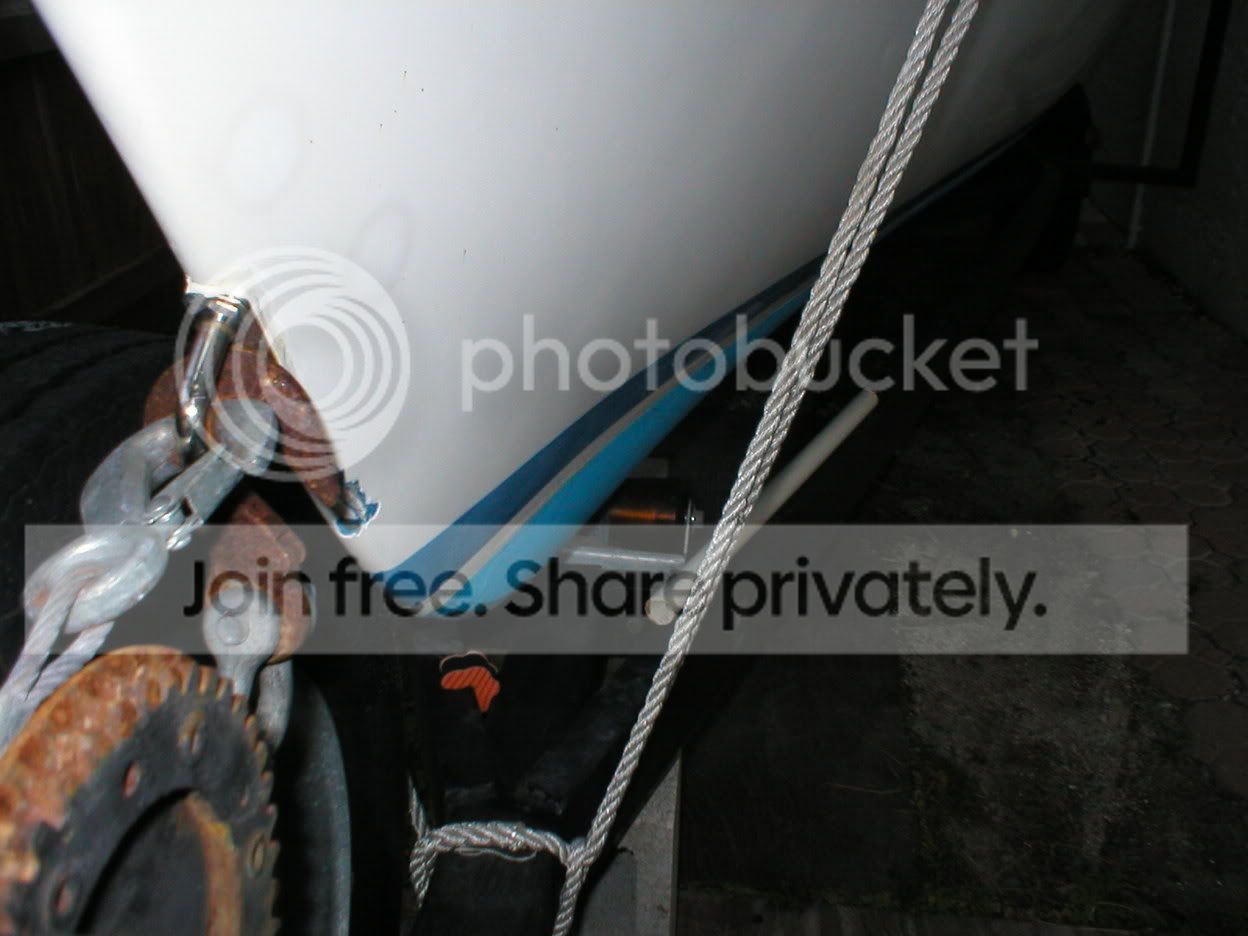
We have only ever hauled it about 60 miles when we first bought it. It has been a project boat and has not been in the water yet. We raised the bunks on the trailer about 3 inches as it appeared to have a possible rubbing issue when we got it.
Any advise for first time long haulers? We are heading south through Reno, Vegas and Kingman to catch I-40 and then straight east to I-75 in Tenn.
 
Dec 16, 2006
353
Hunter 25.5 Cayuga Lake, NY
Pick a comfy speed and ignore traffic. We towed to Maine and back mostly on the Mass Pike :(, 500 one way. Plan on an average of 45-55 mph and don't "push" too hard. Take many rest stops for you!
 

Sumner

.
Jan 31, 2009
5,254
Macgregor & Endeavour 26S and 37 Utah's Canyon Country
Is the Trooper a '91 or newer that is quite a bit heavier than the ones before that? The earlier 3700 lb. ones would be light for towing in my opinion. If it is an automatic I'd for sure get a transmission cooler sized for it. If it has overdrive don't pull in that gear (see your operator's manual).

As for the trailer, it is going to be a lot safer if it has two axles and I would not want to tow that far and into heavier eastern traffic without working brakes on the trailer.

I'd also recommend keeping speeds under 65 and less especially if you don't have brakes on the trailer. If the tires are more than 4 years old I'd replace them no matter how much tread they have on them. Over 5 years old and I'll almost bet money that they blow out. Make sure you have a spare, a jack/blocks that will work and that someone hasn't put the lug nuts on so tight that you can't loosen them.

Repack the wheel bearings and if you aren't real confident doing that have someone who is do it.

Now drive like everyone is going to pull out in front of you and or cut you off as they will :cry:.

All is not bad news though. We have pulled thousands of miles without incident so far,

Sum

[FONT=Arial, sans-serif]============================[/FONT]

Our Endeavour 37

Our MacGregor 26-S Pages

Our Trips to Utah, Idaho, Canada, Florida

Mac-Venture Links
 
May 24, 2004
7,215
CC 30 South Florida
Balance the load on the trailer. The tongue weight with the trailer level with the ground should be 15% of the total weight of boat and trailer. Small adjustments can be made by moving stuff around inside the boat or by raising or lowering the ball hitch. Larger adjustments may require to move the axle forward or aft in the rails. Make sure you have trailer rated tires with a load capacity for at least 1/2 of the total weight of boat and trailer (single axle). For long distance hauling inflate the tires to it maximum rated PSI as it will help disipate heat. It is a proper practice to periodically pull off the road and test the temperature of the hubs and the tires. Normal temperature should be warm to the touch. Temperatures to hot to the touch could signal a failing bearing or to large a load for the tires. It pays to be prepared. A spare tire, a spare hub and a spare set of bearings provide pace of mind. An appropiate jack and a set of jackstands plus some pieces of 4" X 4" lumber may facilitate quick and safe repairs on the go. On long climbs drop the transmission into a lower gear and reduce speed. This will help keep the engine and transmission run cooler. Check your lights and if possible replace with LED fixtures. If not carry spare bulbs. The probabilty of an accident when towing at night increases significantly so you may want to limit your towing to daylight hours. A lot of campgrounds welcome boat campers and you will probably have everything on board that you need to overnight in the boat's cabin. Taking your boat to distant sailing grounds from home is what trailer sailing is all about. Good luck.
 

Ross

.
Jun 15, 2004
14,693
Islander/Wayfairer 30 sail number 25 Perryville,Md.
Check your trailer lugnuts everyday or oftener.
 
Mar 14, 2009
5
MacGregor 25 Home
Wow, great stuff! Especially about how to adjust load distribution. Plans are to only drive about 8 hours a day, so there shouldn't be any night-time driving. We originally were going to do the Wal-Mart parking lot thing all the way back and sleep, eat and relax in the boat....but disc problems and getting alternative drivers have changed those plans. Husband has all the roadside repair equipment ready to pack, but don't think he remember to get extra bearings -- will definitely suggest that. We do have a spare entire wheel/tire assembly.
Another question - we haven't been on the road with this boat but once, and we were wondering what is common for tie-downs on a 25' boat? Front and back? Just to the trailer edge or wrap under to center frame? The largest thing I have ever hauled was a 10' flat bottom and it fit in the bed of the pick-up. Or horses, and that is a whole different experience -- they move around!
Thanks for the advise, Benny.
 
Feb 26, 2009
716
Oday 30 Anchor Yacht Club, Bristol PA
Make very sure your surge brakes are working! Some appear to work but really don't.
 
May 24, 2004
7,215
CC 30 South Florida
As far as tie down if the boat has "U" bolt in the bow tie a line from it to the bow stop and a line down to the trailer. For the stern you can use a strap over the boat tied to both rails of the trailer. Marine chandleries sell a nice on with a rachet and hooks making for a quick and tight tie down. An alternative is to use small straps attached to the stern cleats and the trailer. Not sure on the weight of your boat but it is likely that you may not have brakes on the trailer so make sure the brakes on the trooper are up to stoping both the vehicle and the loaded trailer. When towing allow extra distance between the car ahead and yours to compensate for longer stopping distances. Keep your speed down too to a max of around 65 MPH not to exceed relative traffic speeds.
 

RichH

.
Feb 14, 2005
4,773
Tayana 37 cutter; I20/M20 SCOWS Worton Creek, MD
Another question - we haven't been on the road with this boat but once, and we were wondering what is common for tie-downs on a 25' boat?
Most important are the tie downs that prevent the boat from sliding forward ... like during a panic stop by the towing vehicle. You definitely dont want the boat to slide into your truck when you hit the brakes hard.
 
May 4, 2005
4,062
Macgregor 26d Ft Lauderdale, Fl
I would tide the bow down to the front of trailer, and a strap aft of the cabin. and a safety chain for the winch.

">

I would also have a complete hub and bearing setup ready to go, the hub can fail too. easier to just replace everything, if you have a problem.

also check the springs on the trailer. raising the boat to stop rubbing? why did it start rubbing? tired springs?

I would also have a case of ATF, just in case.

swaying is the biggest concern you need enough tongue weight to keep it from jackknifing. getting the trailer beams level by lowering the ball can help.

55-60 mph is a good safe speed, over 65 you generate a lot more friction and heat.

good luck!
 
May 11, 2005
3,431
Seidelman S37 Slidell, La.
Towing

I would strongly agree with the post about the transmission cooler, if you don't have one. And do not tow in overdrive. As for wheel bearings, a good habit to get into each time you fill up with gas, is to walk around the trailer, and just put a finger on each hub. If they are more than luke warm, your getting close to having a problem with a bearing.
 
Apr 8, 2010
2,238
Ericson Yachts Olson 34 28400 Portland OR
Excellent advice so far on the trailer part of the tow. One little bit I might add from our many trips with a trailerable sailboat many years ago is to be Really Sure that the rigging cannot chafe against the deck or the spar.
After learning the hard way that a sagging shroud wire would vibrate right thru the gel coat, we wrapped that mast and rig up with a swarm of bungee cords. Nothing should be allowed to be vibrated or shook up by bouncing or wind buffeting.
The joke was that our mast & rig looked like it had been attacked by a lot of garter snakes when we pulled in to the parking lot... :)
I always took the motor off the braket and lashed it inside the pickup truck bed. That's a lot of weight to leave back there trying to bounce up n down with every bump -- very hard on the bracket.

Happy trails.
:)
 
May 4, 2005
4,062
Macgregor 26d Ft Lauderdale, Fl
I agree on pulling the OB for that long of trip.. also less tempting for theft.
 

Sailm8

.
Feb 21, 2008
1,751
Hunter 29.5 Punta Gorda
We have towed a Cat 22 from St Louis to the Fl Keys and back many times. Lessons learned the hard way:

!. remove all turn buckels. They rattle off
2. Tape the nut on the trailer ball so it can't unscrew.
3. Check the temp of the wheel bearings at every stop.
 
Mar 14, 2009
5
MacGregor 25 Home
Okay, guess I forgot to mention a lot of stuff. Here goes:
Trooper is a 2001, with Tekonsha brakes that work well (unloaded - we load the boat on Monday). Has a curb weight of 4,238 and a towing capacity of 5,000. With a factory towing package.
It does only have a single axle (that was one of my concerns) but the husband said it towed like a dream bringing it home - some downhill, some uphill - all above 4000'.
All new tires, the originals were 13", these are 14". Wheel bearings were packed when we re-painted and re-wired the trailer (last summer - hasn't moved since).
Only plan on doing the 55 MPH that is posted (yeah, right!). Actually, the husband was pretty adamant that the gals driving the other vehicle will arrive so far ahead of him, they should have time to make dinner each night (or find the best local restaurant).
I am really bummed that I am going to miss this cross country adventure. So far, the Trooper got a thumbs up on the tranny so that is one worry we can cross off the list.
Thanks for all the feedback, folks!
 

LloydB

.
Jan 15, 2006
927
Macgregor 22 Silverton
2nd axel w/surge breaks for better peace of mind and no drama in the long run. Take a half day test run go out fifty miles after everything's completely ready and then come back and check it out to see what you missed. You can get that forgotten widget and get the extra key made in an hour at the house but it takes four hours and a half of a boat buck on the road. Fair winds on your trip, by the way where are you starting from?
 

Sumner

.
Jan 31, 2009
5,254
Macgregor & Endeavour 26S and 37 Utah's Canyon Country
2nd axel w/surge breaks for better peace of mind and no drama in the long run. Take a half day test run go out fifty miles after everything's completely ready and then come back and check it out to see what you missed. You can get that forgotten widget and get the extra key made in an hour at the house but it takes four hours and a half of a boat buck on the road. Fair winds on your trip, by the way where are you starting from?

Good suggestion :). I'd also find a safe stretch and try a semi-panic stop and see how you feel after that also.

We always travel slower than traffic with the boat running 60-65 and everyone else is faster. We also leave more space between us and the vehicle ahead even with the trailer brakes. This creates a problem in freeway traffic around towns as people will continually jump into that space or cut right across you onto an off ramp. I try and be patient and just keep dropping back.

Also we sure try and avoid larger towns at rush hour times now. Going from the north-side of Dallas/Ft. Worth to the south side in 5-6 pm traffic was terrible. Stop and go and thought for sure someone was going to run into the back of the boat. Finally we pulled off and had dinner and let the traffic go down and then continued on.

Good luck,

Sum

Our Endeavour 37

Our MacGregor 26-S Pages

Our Trips to Utah, Idaho, Canada, Florida

Mac-Venture Links
 
Jun 8, 2004
278
Hunter 26 Illinois
Relax and enjoy the trip

After reading all the posts; don't get too stressed out with all the possible things that could happen. Very few things will go wrong. We tow our H26 which weighs about 6000 lbs. with a Nissan Pathfinder and after a while you forget it's there. As for strapping down, you have good advice here, but make sure you have a safety chain with a lock on the bow of the boat. Since I have a cable on the bow eye, at the winch, I add a chain attached at a different place, the padeye on the bow above the rub rail that is used for the front mast shroud. That way I have two dfferent attach points.

You must find the best speed that results in the least amount of transmission shifting. As noted a self-installed trans cooler for less than $90 is cheap insurance, but it is constant shifting up and down a gear that causes the heat, not prolonged driving. We have found that speed to be 56-57 miles per hour. Yes, I know it seems slow but at a higher speed the trans is shifting on every incline. At the lower speed it can make a lot of grades without shifting.

Get a load equalizing hitch or lifting airbags from AirLift corp. (these are around $85) http://www.airliftcompany.com/ Measure the height of the hitch on the truck. Then put the trailer on it. You will see how much the truck drops. How ever you do it, you want it back to the original height. I use arbags because I have hydraulic surge brakes which must move forward and back at the hitch and a load equalizing hitch doesn't allow for that.

Don't go crazy trying to get 15% on the hitch but do get as much as you can. As I said we are at close to 6000 lbs and I can only get around 400 to 450 lbs on the hitch. This has never been a problem.

As stated, lots of bungees and we also have a 2x4 with a notch that sits on the cabin top mast base and supports the middle of the mast for less flexing.

For the most part, with very, very, few exceptions, other drivers don't give much grief. Signal way in advance for lane changing, a talking car gps is invaluable for alerting you ahead of time. You must get one to reduce the stress if you don't have one. Remember that you are very long when changing lanes because you WILL forget. Truckers will always be helpful allowing you in and giving you room.

Have fun! Make it an adventure. Pretend you're young and carefree!
John
 
Mar 14, 2009
5
MacGregor 25 Home
Well, folks, we made it home to Michigan with the boat intact. Nerves not so much, but not because of the boat per say. Problems with load weight from the beginning. Ended up off loading a lot of stuff we stowed in the boat for the trip and ended up paying extra to ship it home. We had 4 people in 2 vehicles so navigation was a breeze (text messaging all the way) and when we were on the road we did pretty well time-wise. But...
Had a flat tire in the Sierra Nevada mountains, 2 new tires in northern California, added a hitch and Uhaul to the Lincoln Towncar in San Bernadino (I know - we aren't even headed east yet). Finally made it out of California, but not without incident (Lincoln meets light pole in parking lot and jack-knifed trailer into rear bumper). Added a transmission cooler in Albuquerque and the rest of the trip was uneventful. We put on 3600 miles in total and are very glad to be home! Hope to get time to get to the water by later in the summer.
Thanks for all the helpful posts!
 

RichH

.
Feb 14, 2005
4,773
Tayana 37 cutter; I20/M20 SCOWS Worton Creek, MD
......
As for wheel bearings, a good habit to get into each time you fill up with gas, is to walk around the trailer, and just put a finger on each hub. If they are more than luke warm, your getting close to having a problem with a bearing.

Glad you made it.
For others contemplating a long haul with a boat trailer:
Do take along a complete spare set of trailer wheel bearings and seals. Anyone with a big bench vise can replace them if needed. Cant do this if you dont have the 'spares' with you.
 
Status
Not open for further replies.