Docking and stopping with a spring line

Sep 24, 2018
4,821
Catalina 30 MKIII Chicago
The most successful method of docking I've found is to toss a spring line over the dock cleat at a slow speed. I then hop out of the boat and walk to the bow. The line will go taught and the boat will bounce backwards and the bow will then become within reach from the dock (my hull has a big curve to it). I've tried slowing the boat down to a stop but either the bow or stern will usually start to drift, even though I'm docking to port.

The spring line is attached to a T track which is fastened to the dock with 1/4" bolts. I'm a big concerned about the shock of this docking method. I can add backing plates but I'm thinking a line with some stretch would be the best move. Any recommendations?
 

Apex

.
Jun 19, 2013
1,229
C&C 30 Elk Rapids
...not to jump off the boat? At your home dock I leave docklines attached to the dock. pick it up off the dock or piling with a pole from your bow, that way if anything goes awry, at least your still with the vessel.

3strand has good stretch.
 

jssailem

SBO Weather and Forecasting Forum Jim & John
Oct 22, 2014
24,938
CAL 35 Cruiser #21 moored EVERETT WA
I utilize a similar version of the mid-spring line technique. It is called a Stern Bridle Duncan on YouTube or Venmo. I find it a bit safer as it does not involve jumping off the boat, yanking on the lines, or lack of control in adverse conditions. There is no urgency. The bow is controlled from the helm. You can engage crew or accomplish the task solo.


  • Helpful
Likes: Will Gilmore

degas

.
Aug 14, 2023
82
Tanzer 29 Lake Ontario
The most successful method of docking I've found is to toss a spring line over the dock cleat at a slow speed. I then hop out of the boat and walk to the bow.
Isn't a variant of what's called the "marriage saver"?

I've been trying out a similar technique: going bow first, put a spring line from the port stern cleat to a dock cleat that's about midship, then put the engine in reverse at idle. As the hull stops and snuggles up to the dock, I can then tie off the bow and the other dock lines with no rush.

Well, that's the goal. Still working on perfecting it.

What matters more to me is convincing the marina to give me a slip that matches wind and current and reverse prop walk. The ideal for me is a bow first, port side, headwind slip.

I'm just thankful as a Great Lakes sailor that I don't have to do Med-style stern-only docking.
 
Last edited:
Jan 1, 2006
8,189
Slickcraft 26 Sailfish
Agree with 3 strand nylon.
I would hang the aft spring line on the outer pole and as entering the slip, bow first, grab it and take it forward to the midship cleat. I can leave the helm at that point because the boat has about a 1/4 knot way on and is in neutral. No reverse is intended to be used because the line will stop the boat and draw it to the dock where the other lines can be secured.
If there is crew aboard I post them on the gunnel near the shroud to grab that spring line and get it on that midship cleat "The money line" I tell them.
Forgive me if I have mis-named the line which runs from the outer pole to the mid ship cleat. To me it is the forward spring line because it runs forward. However I think conventional terminology would have that line called the rear spring line because it originates in the rear of the boat or something. The naming of spring lines has never made much sense to my mixed up brain.
 
  • Like
Likes: Timm R Oday25

capta

.
Jun 4, 2009
5,121
Pearson 530 Admiralty Bay, Bequia SVG
Since I rarely had a slip, no lines were neatly set up on the dock. Once I had a spring from the boat to the dock and her stopped, I would leave the boat in gear with the helm hard over which would leave the boat pinned parallel, close alongside. Then, I could casually step ashore (or my crew could) and get the stern line on first and the bow after that, and step back aboard, pull her out of gear and secure the lines as needed. It worked in a beam off the dock wind and/or current, I just had to increase the throttle to compensate.
It was very important to me that no one, under any circumstances, jumped even one inch. If I couldn't put her right alongside, so that I or my crew could casually STEP ashore, I'd go around again. It was my job to put her alongside properly, not ask anyone to save my lousy docking by taking any chances jumping.
As for marriage savers, that rule, and taking the time to discuss the docking before we even began the maneuver, worked to avoid injuries and/or bitter words in the heat of the moment. Very rarely were words necessary. A single hand signal was sufficient, in most cases, to get the anchor down where I wanted it, or a boat pole pointing at the mooring ball by the person forward, if picking up a mooring.
If single handing onto a mooring, I'd have a line, run outside everything, from the bow to a position where I could easily get the ball right alongside me (center or aft cockpit) and pick up the ball, and thread the line through the eye. Then I could leave the helm and pull the bow to the mooring.
I'm not a fan of the old, "Don't enter a slip any faster than you want to hit the dock." philosophy. As I see it, that's when the wind and/or current may overpower your intentions, increasing your chances of hitting the dock, or a boat alongside. Like anything else on a boat, the more you do it, the better you get at it. If docking (or departing) is something you dread, then take a day now and then, to just dock and depart, over and over again, all day, like pilots do touch and go landings. Forget about that day for going out on the water.
 
Jan 19, 2010
13,096
Hobie 16 & Rhodes 22 Skeeter Charleston
My slip is on the Ashley “River.” I put river in quotes because it’s actually a saltwater estuary with a tidal swing of 6+ feet. So, what you described would work during flood tide, but not with a running tide.

Similar to what @degas referenced, I back in during flood tide and nose in during a running tide. And like @Apex said, I keep the lines on the dock. In my case, I use a long line cleated in the middle, with the two ends at different lengths: one for when I nose in and the other for when I back in.

I think the take-home message is that the perfect setup depends on your boat and where you’re trying to dock. If you find something that works for you, keep doing it.
 

jssailem

SBO Weather and Forecasting Forum Jim & John
Oct 22, 2014
24,938
CAL 35 Cruiser #21 moored EVERETT WA
the perfect setup
I am not sure that anything is “Perfect”. On the water there is always a variable. I think what matters are:
  1. Setting up the boat for use
  2. Having a technique that can be safely used in a variety of conditions
  3. Never jump or ask your crew to jump off the boat to the dock. Eventually someone will miss and slip into the water. No one wants to be between the dock and the boat when that happens.
  4. Be prepared to back away and do over if your set-up goes wonky.
  5. Practicing your technique
I have successfully used my technique in 20 knot off the dock breezes, tidal and river currents both opposing and helping, solo landings, and with well meaning but clueless dock helpers. More then once when arriving at a slip there have been boaters rushing to help with my arrival only to step back and ask, “How did you do that?”

Your 10.8’ beamed boat in not greatly different from my 11’ girl. On your boat, I’d locate the midship cleat ahead of the widest point about in line with the mast. That puts the cleat ahead of your boats pivot point. I’d locate a couple fenders on either side of the middle of your beam (which looks about where the topside port is located). That will be the pivot point of the boat when against to the dock. I would have a bow line that can be hung on the life lines and stretch back towards the mast (for ease of grabbing when wanting to secure the bow).

When approaching the slip I toss the midship spring over the first dock cleat and pull it in and secure to a cleat (the video demonstrates the process fairly well) or secure on the winch. With the boat in forward gear idle the/hull will side up to the dock. And go no further than the where the dock cleat stretches to the cockpit (the beauty of the line geometry). Turning the helm will cause the boat to pivot bringing the bow closer to or further from the dock. Adjust the angle of the boat in the slip to make reaching the bow line easy. When the boat is stable and engine in gear at idle in the slip you can go forward and step down to the dock, Grab and secure the bow and stern lines. Then step back aboard, take the boat out of gear and shut down the engine. It is then I return to the dock and ease the mid-spring then resecure it as I normally secure the boat.

This is a technique that has been used for eons by commercial fishermen. Whatever you decide to use, practice the technique so that you can do it smoothly and safely.
 
Dec 25, 2000
6,071
Hunter Passage 42 Shelter Bay, WA
Due to our boat size, I wrote two articles that describe what works docking our boat. I did have to add a midship cleat to make solo docking a possibility. Why Hunter built this model without them remains a mystery. These articles follow:


  • Helpful
Likes: jssailem
Oct 10, 2009
1,120
Beneteau 393 Muskegon
I think I have three good approaches to using a spring line.

1) Bridle - basically a loop around a winch or even a winch plus mid cleat that you can toss over the first cleat on a finger. I think this is the one Duncan Wells describes on his channel. This snugs the boat to the dock nicely but in my experience requires that the cleat is aft of the winch.

2) Mid ship cleat led aft to that first finger. This is probably my most used alternative, though the fixed position of my mid cleat requires caution about the stern wanting to swing away from the dock. Easily corrected with a little forward and wheel turned away from the dock.

3) Mid ship cleat to a piling or cleat close to midship. We use this a lot when getting assistance from young dockhands because it's easy to explain what we want.
 
Last edited:
  • Like
Likes: jssailem
Jan 19, 2010
13,096
Hobie 16 & Rhodes 22 Skeeter Charleston
I have successfully used my technique in 20 knot off the dock breezes, tidal and river currents both opposing and helping, solo landings, and with well meaning but clueless dock helpers.
I’ve nailed a few spectacular landings and botched a few in dead calm with flat seas. One constant that never varies is...there will be an audience for the latter.:(
 
  • Ha
Likes: jssailem
Sep 24, 2018
4,821
Catalina 30 MKIII Chicago
Wow thank you for all of the responses. I will write a more in depth reply when I have time. For now, I will say that leaving the spring line on the dock takes more time than tossing it over the first dock cleat. This allows more time to correct mishaps and I can toss it from the cockpit if I'm flying solo.

Even at slow speeds, it takes a lot to stop a 10,000 lbs boat. There's a balance between slow and so slow that I lose control. I usually coast in and momentarily idle in reverse or forward as needed. At the last second, I turn to starboard so the stern is close enough to the dock to easily toss the spring line on the cleat. My technique allows me or a crew member to casually walk forward on the dock to grab the bow. Yes, the boat is technically in motion but it is tethered and the helmsman has a good amount of control if needed
 

JBP-PA

.
Apr 29, 2022
838
Jeanneau Tonic 23 Erie, PA
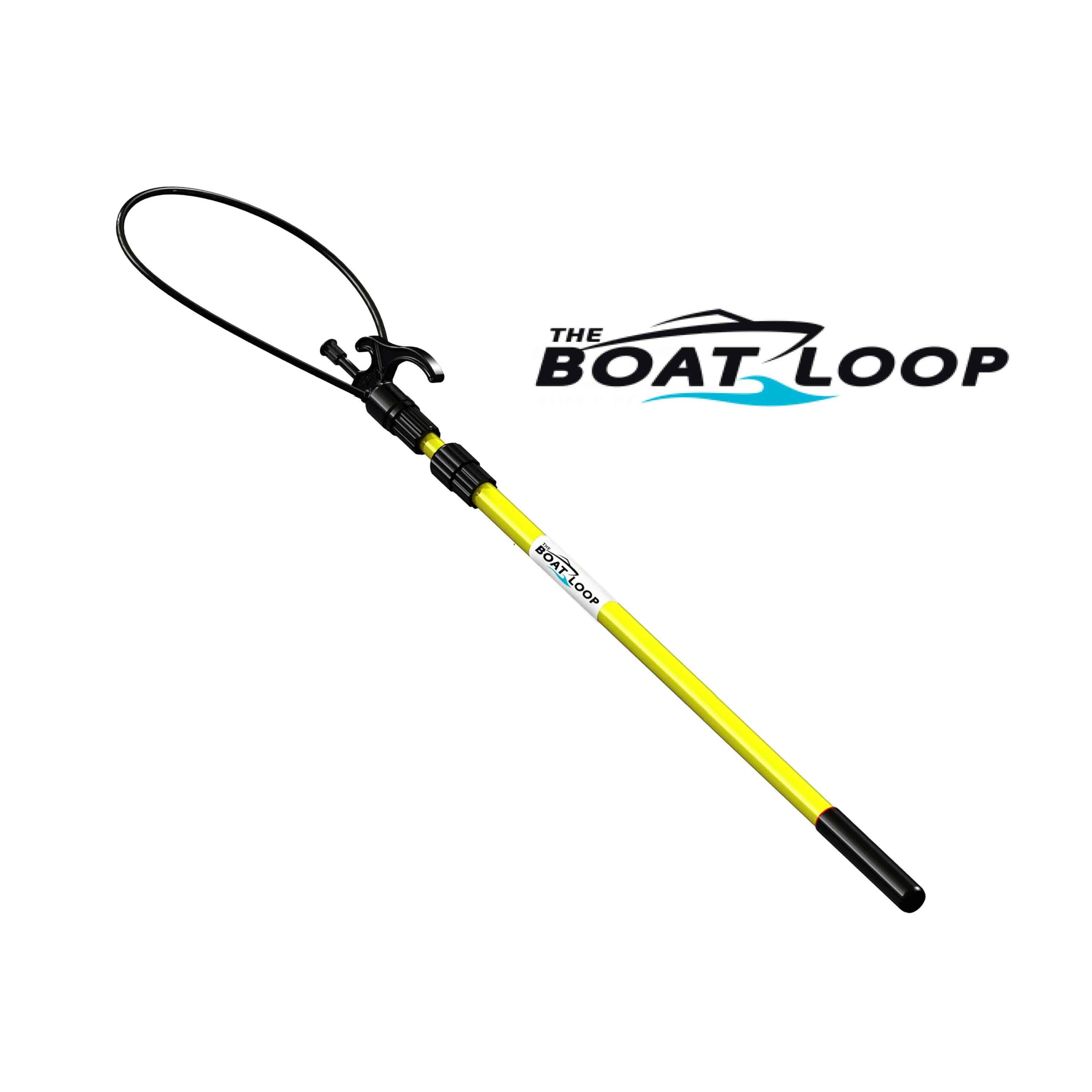
All of the above spring line techniques are great and I really like the Duncan Wells book, but the last two years I've added a 'boat loop' or 'pole grabber' to my docking options. It's like a boathook but with a loop at the end. You put the loop over a cleat or piling and pull your boat to the dock. It makes a great backup if you blow off the dock too far to safely put on a spring. It's simple and doesn't need prep like some of the loop devices.

At first, my buddy made me one out of a pole with wire cable encased in pex tubing. This worked great and got me hooked, but it turns out this didn't float, so I bought one. The retail one also works well plus it's telescoping which makes it easier to store. It comes in different lengths. The standard loop is big enough to go around a 12" piling. It also floats.

 
Sep 24, 2018
4,821
Catalina 30 MKIII Chicago
All of the above spring line techniques are great and I really like the Duncan Wells book, but the last two years I've added a 'boat loop' or 'pole grabber' to my docking options. It's like a boathook but with a loop at the end. You put the loop over a cleat or piling and pull your boat to the dock. It makes a great backup if you blow off the dock too far to safely put on a spring. It's simple and doesn't need prep like some of the loop devices.

At first, my buddy made me one out of a pole with wire cable encased in pex tubing. This worked great and got me hooked, but it turns out this didn't float, so I bought one. The retail one also works well plus it's telescoping which makes it easier to store. It comes in different lengths. The standard loop is big enough to go around a 12" piling. It also floats.

I used to do something very similar. I had a 1-2ft length of line with a small loop attached to the big loop of the spring line. This allowed me to use a boat hook to dangle the large loop over the dock to put it on the cleat. I found out the hard way that without the extra line, one is likely to impale themselves with the handle end of the boat hook as the boat moves forward. Impalement occurs if the hook is caught between the springline's big loop and the dock cleat. No injuries occurred but I got a good chuckle out the incident
 
  • Like
Likes: JBP-PA
Feb 26, 2004
23,544
Catalina 34 224 Maple Bay, BC, Canada
Have you considered "playing around" with JUST the spring line? Forget about the bow line. In fact, you could forget it forever with the engine in idle forward. I strongly urge you to learn more about the spring line by eliminating an apparent "rush" to the bow line which keeps creeping into your descriptions. Try this: before you even leave your slip, set up the springline, turn on your engine, forward idle, the drop BOTH your brest lines and play with the rudder and throttle.
This takes the pressure off using the spring for docking and avoids the end of day tired-ness.
It's also called practice. :):):)

allows me or a crew member to casually walk forward on the dock to grab the bow. Yes, the boat is technically in motion but it is tethered and the helmsman has a good amount of control if needed
 
Last edited:
Nov 8, 2007
1,619
Hunter 27_75-84 Sandusky Harbor Marina, Ohio
Here is our spring line docking procedure that has worked in every berth on our arrival.

1. Our spring line is rigged to a midship cleat and has a large loop tied at the end. At full extension, it reaches about a foot ahead of the stern on our 27-footer. While most berths have docks 30 feet or longer, the line needs to be short enough to hold the bow off the main dock at the end of the berth.
2. Rig the large loop hanging from our boat hook, held at the forward end of the cockpit on the docking side.
3. Enter the berth at the lowest speed to maintain control in the wind and current conditions.
4. Drop the loop of the spring line on the cleat or pole at the end of the dock.
5. Continue forward until the spring line is taut.
6. Steer the bow away from the dock. The stern will come to rest against the dock.
7. Send crew ashore with the bow line to make it fast on a dock cleat at the bow.
8. The crew then takes the stern line and makes it fast to the dock. (If I am solo, the boat is stable with the rudder holding the bow away from the dock, so I can step off the boat and make the bow and stern lines fast to the dock.)
9. Shut down the engine, and fasten the rest of the dock lines. I usually undo the spring line, since we may want to position the boat farther forward, and the spring line may be tricky to release when leaving the dock.

This procedure also works when coming alongside a straight dock or wall if that is our assigned berth. The only time we have not used it is when we are met by dock crew to whom we pass lines and use our boat hook as appropriate.