my DIY spinaker sock

JBP-PA

.
Apr 29, 2022
734
Jeanneau Tonic 23 Erie, PA
Hot sand is also frequently used for bending plastic.

Practical sailor had an article on PVC:

"Measure enough playground sand to fill your pipe, and then add an additional cup to compensate for any spillage. Heat the sand to 450°F in an oven. (You an also cook it on a stovetop or grill.) Use a stainless-steel pan. Stir and monitor the temperature with an infrared thermometer. Pour the hot sand into the pipe with a funnel. Close pipe top with duct tape. Although 450°F is above the recommended bending temperature, the conductivity of sand is low and it will not cause the plastic to overheat.

Wait about 2 minutes for the outside of the pipe to reach 200°F and for the pipe to get a little floppy. Bend to a radius of not less than 5 pipe diameters. Cool by running water over the pipe, wiping with a wet cloth, or leaving in a bending jig for 30 minutes or more. Pour out the sand for reuse. Because the sand is incompressible and the ends are sealed, kinking is not a serious problem."

 
  • Helpful
Likes: RussC

JBP-PA

.
Apr 29, 2022
734
Jeanneau Tonic 23 Erie, PA
That is very interesting. I thought it would have better thermal transfer and more consistency

It was impressive watching them make one so quickly for me. I immediately looked up the price of the material when I got home. The only thing that's more expensive than marine grade, is medical grade!
My mom would frequently use ordinary plexiglass for patients with money problems. That why she made things at home outside the hospital.
 

dLj

.
Mar 23, 2017
4,833
Belliure 41 Back in the Chesapeake
My mom would frequently use ordinary plexiglass for patients with money problems. That why she made things at home outside the hospital.
Plexiglass is an acrylic and becomes moldable in the 160 to 200 degree range IIRC... Not the same polymer as PVC...

dj
 

JBP-PA

.
Apr 29, 2022
734
Jeanneau Tonic 23 Erie, PA
Plexiglass is an acrylic and becomes moldable in the 160 to 200 degree range IIRC... Not the same polymer as PVC...

dj
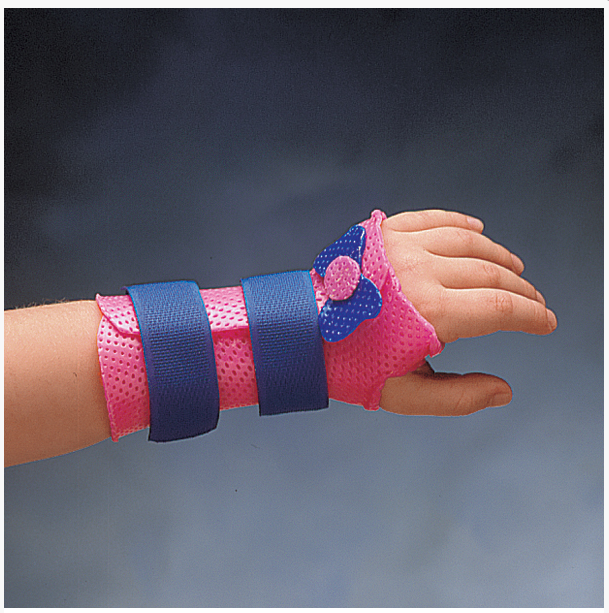
True, but you can still make orthopedic devices from it. She made this $143 splint and many others like it out of plexiglass for people.
 
Last edited:

dLj

.
Mar 23, 2017
4,833
Belliure 41 Back in the Chesapeake
True, but you can still make orthopedic devices from it. She made this $143 splint and many others like it out of plexiglass for people.
Oh sure - in fact probably far better material than PVC... It's just that boiling PVC in water probably isn't going to work to soften it unless you are using soft PVC....

dj
 

JBP-PA

.
Apr 29, 2022
734
Jeanneau Tonic 23 Erie, PA
Oh sure - in fact probably far better material than PVC... It's just that boiling PVC in water probably isn't going to work to soften it unless you are using soft PVC....

dj
Oven, heat gun, or hot sand pot were the methods of choice.
 

PaulK

.
Dec 1, 2009
1,487
Sabre 402 Southport, CT
The launching sock Joe describes is what 49ers and 29ers use. Setting up a "belly button" for the retrieval line might be a problem on a big spinnaker. Reinforcing the area so it would be strong enough to work without tearing the material might create a hard spot that you would not want in light air. The OP's sail sounds like it would be small enough to avoid this problem.
 
Sep 24, 2018
4,144
Catalina 30 MKIII Chicago
My mom would frequently use ordinary plexiglass for patients with money problems. That why she made things at home outside the hospital.
That's awesome. She sounds like a great woman

True, but you can still make orthopedic devices from it. She made this $143 splint and many others like it out of plexiglass for people.
I think my custom one was around $250 about seven years ago
 
  • Like
Likes: JBP-PA

RussC

.
Sep 11, 2015
1,697
Merit 22- Oregon lakes
The launching sock Joe describes is what 49ers and 29ers use. Setting up a "belly button" for the retrieval line might be a problem on a big spinnaker. Reinforcing the area so it would be strong enough to work without tearing the material might create a hard spot that you would not want in light air. The OP's sail sounds like it would be small enough to avoid this problem.
The sail I'll be using has 26'10" luff 24'4" leach and 17'3" foot.
 

PaulK

.
Dec 1, 2009
1,487
Sabre 402 Southport, CT
The sail I'll be using has 26'10" luff 24'4" leach and 17'3" foot.
We had a belly-button set up for one of our spinnakers on a J/36 - bigger than yours. In light air the reinforcement patch it required was not an asset.
 

Joe

.
Jun 1, 2004
8,270
Catalina 27 Mission Bay, San Diego
Fascinating..... first I've ever seen this setup. I'm not sure I'd use the spinnaker enough to be worth having the chute on the deck all the time but it is a very interesting concept. I'll have to dwell on that a wile. thanks Joe :beer:
If it's easier to launch and retrieve you will use it ALL the time. Even if you're just cruzin' with a beer and cigar. It will become part of your regular setup... once you're on the water.. if you want to use it everything can be handled from the cockpit... Most single handers won't mess with the spinnaker if they have to make a bunch of trips to the mast and foredeck.... which will be necessary with the sock hoist up method. Pull the sail out of the launcher and stow it in its bag...just as you would your other sails.... I'd probably take the launcher of the deck when trailering... it depends on the situation.

I'll keep my eyes open for some more examples. And yes, John, the systems should be easy to set up or break down. I guess the continuous line halyard would be left out, but everything else can be folded and packed in a bag.... just like you do with the sock system. Maybe others will have thoughts on these alternatives. lets hear 'em :cool:
 

PaulK

.
Dec 1, 2009
1,487
Sabre 402 Southport, CT
The 505 has a spinnaker launcher that works like the launching sock but is built in under the deck. As Joe suggests hoisting and dousing the spinnaker is simple and quick. If you want to do it singlehanded you can pre-set the guy and sheet for the hoist. To douse you release them and then the halyard, then pull on the dousing (bellybutton) line.