New Hardware on Deck -- Avoid Cutting Interior Liner?

Jun 21, 2007
2,118
Hunter Cherubini 36_80-82 Sausalito / San Francisco Bay
My 1980 36' Cherubini Hunter has been sailing for 36 years with snap shackle blocks on the aluminum toe rail for jib sheeting. Time for an upgrade ... and hopefully a few more degrees of close-haul pointing performance. Given the following, would like suggestions/impressions:

- On my main deck, just a few inches away from the cabin top, I will be installing a T-track for low lead jib-sheet cars: http://garhauermarine.com/images/product/LLC 2.jpg

- My deck construction is a sandwich of 1/4" FRP top layer + 1/2 -5/8"" plywood core + 1/4" FRP bottom layer.

- I am fully prepared to drill through all the layers and properly install the 5/16" bolts secured with washers and nuts from underneath.

- But this will entail cutting through the interior liner (or drilling out say 1" holes for each bolt) to gain access for securing and tightening the nuts. Afterwards, I will need to cover the scars with some sort of decorative piece(s) to "make it all pretty" again. A bit of a chore.

My question is: Any way to secure the T-track from the top only? I am thinking (but not confidently) something like drilling 5/8" diameter holes through the top FRP layer and the plywood core, but not through the bottom FRP layer. Then fill the hole with West System epoxy. Then secure the T-track only with 5/16" screws. Or even "tap" the hard epoxy so as to thread it for coarse thread 1" long SS bolts.

Another question. Is this a good application for Maine Sail's butyl tape product? I have used it for smaller installations were it is possible to ensure the butyl is wrapped around the screw/bolt and around the hole so the butyl gets well "squezed" into the beveled hole on the deck. But visualizing a t-track installation, a good butyl seal might be more difficult to achieve for each hole. In which case maybe standard marine caulk might be preferred?

Many thanks.


-
 

kito

.
Sep 13, 2012
2,011
1979 Hunter Cherubini 30 Clemmons
I prefer through bolting deck hardware and always use MS's buytl tape for bedding. On my H30, when installing all my deck hardware, I did drill my headliner the same size as the stainless steel fender washers. I just stacked washers until flush with the headliner and top it off with an acorn nut.
 
Nov 8, 2010
11,386
Beneteau First 36.7 & 260 Minneapolis MN & Bayfield WI
- I am fully prepared to drill through all the layers and properly install the 5/16" bolts secured with washers and nuts from underneath.

- But this will entail cutting through the interior liner (or drilling out say 1" holes for each bolt) to gain access for securing and tightening the nuts. Afterwards, I will need to cover the scars with some sort of decorative piece(s) to "make it all pretty" again. A bit of a chore.
-
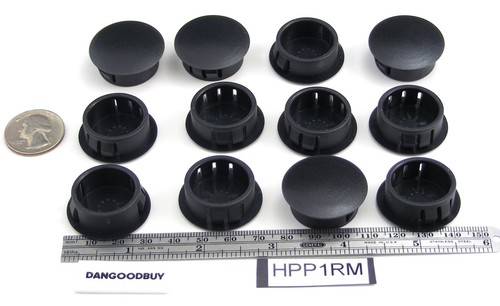
Do that, and cover the hole with a plug cap that matches your liner color.

 
  • Like
Likes: arf145

Gunni

.
Mar 16, 2010
5,937
Beneteau 411 Oceanis Annapolis
You will be drilling two holes: One will be for the through bolt, and the other will be for core removal. The bolt hole will be your pilot hole for the core hole. Do not penetrate the liner with the core hole. Tape the bolt hole on the liner and fill the core hole with epoxy. I like West System Six in the self mixing tube. Level and when set apply the butyl tape on the footprint of the track and bolt it down. There are any number of ways to dress up the bolt ends; acorn nuts, nut covers etc.
 
Jun 21, 2007
2,118
Hunter Cherubini 36_80-82 Sausalito / San Francisco Bay
Do that, and cover the hole with a plug cap that matches your liner color.

Jackdaw ... These plugs are the perfect solution! Thanks for highlighting.
 
Oct 26, 2008
6,432
Catalina 320 Barnegat, NJ
Are you installing your new track straight or are you going to bend it to conform with the toe rail or cabin trunk? I've considered adding an inside track that I might wish to bend along the base of the cabin. I've wondered how to apply the bedding tape since you have to bend the track in the curve as you fasten bolts from one end to the other. The track would essentially be down on the deck in the process of inserting bolts one at a time so that you can't put bedding tape down in advance (making a complete mess) and you can't put tape down after bolts are tightened. Essentially, how do you seal a track that is laid on a curve?
My liner is tight against the underside of the deck. I was going to add a strip of teak or other finished hardwood (3/4" thick) as a form of decorative backing plate and simply countersink the bolt holes and cover with bungs.
 
Sep 8, 2014
2,551
Catalina 22 Swing Keel San Diego
Why not carefully remove the headliner? If its 36 years old then the adhesive is probably tired, the material may be too. If it isn't too much of a chore to remove various trim pieces you can carefully peel or scrape the headliner down. It might be time for new material, or just clean up and re-install the headliner if it was the good stuff that is still viable. Either way, you don't have to grind down the headliner, just a good sanding with 80 grit to remove the loose or flaking old adhesive and then use 3M spray adhesive to reinstall the headliner after the hardware is installed. Good time to check all the other hardware too, epoxy pot and re-bed as required.
 
Feb 8, 2014
1,300
Columbia 36 Muskegon
I think that head liner is fiberglass.
The "bonded bolt" technique works well in thicker structures but I don't think 1/2 or 3/4" would be enough. I once bonded in a set of keel bolts without nuts and they never moved a bit. But that was in 6" of white oak.
 
Sep 8, 2014
2,551
Catalina 22 Swing Keel San Diego
I think that head liner is fiberglass.
The "bonded bolt" technique works well in thicker structures but I don't think 1/2 or 3/4" would be enough. I once bonded in a set of keel bolts without nuts and they never moved a bit. But that was in 6" of white oak.
Ah..., I was thinking white vinyl or some other upholstery material. Now those caps Jackdaw posted make sense.
 
Oct 26, 2008
6,432
Catalina 320 Barnegat, NJ
tracks.jpg
These are two supplemental track positions I am considering. At both locations, holes would go through deck and fiberglass headliner that is adhered to the underside of the deck, so there really isn't any space between headliner and deck. I'm guessing that potting the holes (without going thru headliner) would be best. To start the holes in the right place for a curved track would probably require a dry fit by first installing bolts to establish the hole locations.
I don't know how to install the curved tracks with bedding tape so I will probably forego sealing the tracks.
The inside track on the cabin top should do nicely for a small headsail, tailored to our normal windy conditions.
 

Gunni

.
Mar 16, 2010
5,937
Beneteau 411 Oceanis Annapolis
You still need to back the nuts on the track bolts (plates, fender washers) inside which means you will end up with an exposed nut inside. A cored deck was not designed to take hardware loads on the deck skin alone. You have to use the deck core, and you might as well preserve the inside skin to make it look good.

Scott, you have to bolt one end and bend the track to the radius installing bolts as you go. Then disassemble (remove core if present) and bed the bent track.
 
Oct 26, 2008
6,432
Catalina 320 Barnegat, NJ
You still need to back the nuts on the track bolts (plates, fender washers) inside which means you will end up with an exposed nut inside. A cored deck was not designed to take hardware loads on the deck skin alone. You have to use the deck core, and you might as well preserve the inside skin to make it look good.

Scott, you have to bolt one end and bend the track to the radius installing bolts as you go. Then disassemble (remove core if present) and bed the bent track.
That's where I was going with an earlier post ... I want to use a nice piece of wood on the interior as a backing plate but I would recess the nuts and cover with bungs. I did a similar install to reinforce my bulkheads where the edges of the original plywood was weakening (as shown in the photo). I could even use the new wood backing plate on the inside to fasten interior handholds (which I presently don't have) just over the windows.

With regard to the curve, I know how to install the curve by progressing from one end to the other, but I don't know how it would be possible to use bedding tape underneath the track without creating a mess. So I figured the solution would be to pot the holes so that I don't have bolts exposed to wood core.
 

Attachments

Gunni

.
Mar 16, 2010
5,937
Beneteau 411 Oceanis Annapolis
I have never backed deck hardware with wood, only metal. There is a good potential for leaks. Those sistered bulkheads look good.

RE: bedding the track. Once you put the bend in it and remove the track place a bead of butyl tape down the middle, and around the bolt holes and secure. Anything that squeezes out is cut away like cookie dough. Use a plastic putty knife, or chisel-edge wood scrap.
 
Oct 26, 2008
6,432
Catalina 320 Barnegat, NJ
So are you saying the curve will set when I do the dry fit? I didn't think it would. I figured the track would straighten right out again once it's removed. But if it sets, that would be convenient and eases my mind!
 
Last edited:
Oct 26, 2008
6,432
Catalina 320 Barnegat, NJ
The headliner on both sides of the bulkhead captures the plywood very securely, but they merely drove screws through the plywood at the bottom edges. The plywood weakened over time due to the stresses from the chainplates and the deck mounted mast. Once I secured the bottoms by sandwiching the edges with sturdy hardwood, I have never seen any stress on the bulkhead that causes movement. Unfortunately, after I varnished the teak plywood and had it looking really pretty, I let water get through the chainplate on the port side and it stained the wood under the varnish to an ugly dark color. I sealed the chainplate but I don't know what to do about the stain.
 
Nov 8, 2010
11,386
Beneteau First 36.7 & 260 Minneapolis MN & Bayfield WI
View attachment 128810 These are two supplemental track positions I am considering. At both locations, holes would go through deck and fiberglass headliner that is adhered to the underside of the deck, so there really isn't any space between headliner and deck. I'm guessing that potting the holes (without going thru headliner) would be best. To start the holes in the right place for a curved track would probably require a dry fit by first installing bolts to establish the hole locations.
I don't know how to install the curved tracks with bedding tape so I will probably forego sealing the tracks.
The inside track on the cabin top should do nicely for a small headsail, tailored to our normal windy conditions.
Make sure that inboard genoa track position will not cause the sail to be pulled into/through the spreader tip when sheeted on.

I would just use straight track. Curves not worth the hassle.
 

Gunni

.
Mar 16, 2010
5,937
Beneteau 411 Oceanis Annapolis
Yeah, once you bend the track it the bend takes a set. We did it to replace a bent genoa track. But like Jack says, it is a hassle. My B track is straight and provides all the range I need, and the geometry of the sheet angle is fine. Not as sexy, but plenty good. Bent track is important for self-tending jib cars where the geometry needs to be precise.
 
Oct 26, 2008
6,432
Catalina 320 Barnegat, NJ
I would just use straight track. Curves not worth the hassle.
Yes, I kind of figured that, particularly for a track on the cabin top. If I were to install a track on the deck at the base of the cabin, I think I might want a curve to try to avoid creating a toe-stubbing situation. But, I am also curious about how the clew avoids the shrouds. I see boats with inboard shrouds like mine that also have an inside track located behind the shrouds and I wonder how the sheet is led around the shrouds. I suppose it is useful only for a larger overlapping headsail where there is room for the clew and the sail to curve around the outside of the shroud, correct? In that case, it makes no sense to mount the track right behind the shroud, but it needs to be further back toward the cockpit? What sails can be used with that track? Nothing less than, say, 130%? I'm finding on Barnegat Bay that winds exceeding 15 knots is almost the norm. I can get much more use from a non-overlapping jib than ever before. That's why I lean more toward cabin-top tracks.
 
Nov 8, 2010
11,386
Beneteau First 36.7 & 260 Minneapolis MN & Bayfield WI
Yeah, once you bend the track it the bend takes a set. We did it to replace a bent genoa track. But like Jack says, it is a hassle. My B track is straight and provides all the range I need, and the geometry of the sheet angle is fine. Not as sexy, but plenty good. Bent track is important for self-tending jib cars where the geometry needs to be precise.
More to the point, straight track is better.

The optimal sheeting angle as the LP grows is a straight line from tack. Most good boat's track follows that line.

All modern race boats use straight head-sail track.

Straight track makes remotely adjustable cars MUCH MORE possible.

When ever you see bent genoa track, it is a compromise to the hull-deck layout and the desire to use a single track for a huge range of sail sizes, and not optimal sheeting angle.
 
Last edited:
Sep 8, 2014
2,551
Catalina 22 Swing Keel San Diego
I can say from experience installing a curved track is a royal PITA. Multiple fittings and the creative use of blocks and clamps to hold a fair curve while you drill... Then, to make it double painful, go ahead and take everything off and overbore the holes to epoxy pot them and basically start all over again, LOL!
I went with curved track because on my little boat I have zero deck to spare, so my inboard tracks crowd up the space enough as it is. You have to be careful that you have a gentle and fair curve or you will bind up the lead car. It makes complete sense that if you have the space and it makes sense go with a straight track.
Let me plug Ronstan 1 inch (25mm) T track... Not only is it very competitive with pricing, it comes with a key accessory that no other T track I have seen includes... Tiny little plastic collars that fit the flat head machine screws like a glove for isolation. Much less messy that bedding compound and won't wear away over time.