I also think it would help speed adoption if the pricing could be brought into line with twist-lock gear.
Actually the product, at retail, is not far off with twist-lock. You need to ignore MAP pricing and add it to your basket on many sites. On Defender for example a 30A X 50' EEL Marinco cord set is $103.99 and the 30A X 50' SmartPlug cord set is $129.99, a $26.00 difference in price for a LOT more product!!.
That said SmartPlug builds approx 90% of this product here in the good old USA, assembles the product here in the USA using US labor and thus creating, some US jobs. Every little bit helps!! The thermal breaker is made in Germany a country with arguably higher than US wages. Most of the twist-lock guys are outsourcing the entire product to Mexico or offshore manufacturing. Some "twist-lock" cord-sets are specifically brought in from the lowest Chinese bidder... Most twist-locks still don't even use tinned wire..
Also NONE of the twist locks have any thermal protection, AT ALL, so it's not really an apples to apples comparison it is more like comparing Schaefer Beer to a small micro-brewer like Lagunitas.

If anyone thinks Schaefer tastes as good as Lagunitas, then no one can help them.... If anyone thinks twist-locks are as safe as a SmartPlug then no one can help them....
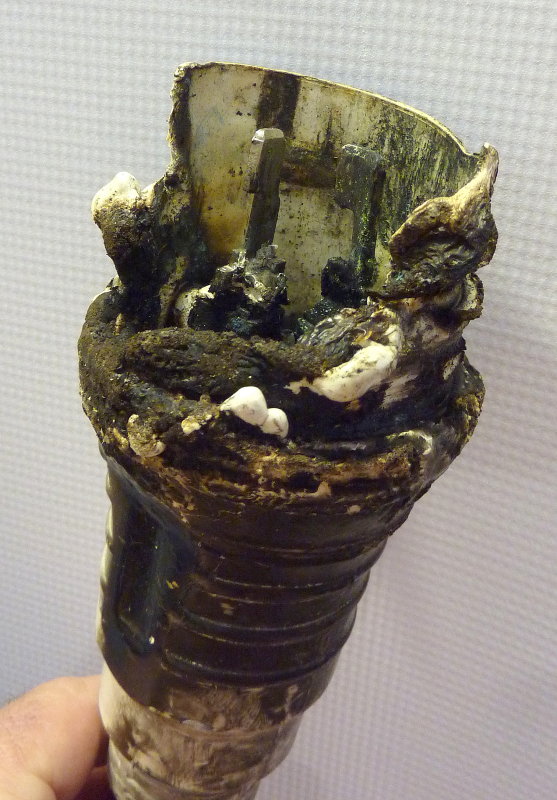
The insurance discounts are great, but for the majority of boaters who won’t know or care about the discounts and the advantages of the SmartPlug they are just going to pick what’s cheapest and what matches what they have when they’re standing at the chandlery with their charred twist-lock.
The insurance discounts will continue even after a SmartPlug is paid for, if your insurance company is one who offers a discount.
Any boater who is picking what is "cheapest", without first doing their homework, tends to get what they get. Some people are willing to plunk down 100+ clams with no research and others will actually try and learn something before doing so.
Hopefully my article, and others like it, will bring awareness to the situation, and awareness of what else is out there, so folks don't make an
uneducated decision to buy into a 1938 product never intended for marine applications vs. one designed from the ground up as a marine product. Hopefully this thread will help more boaters make a more
educated decision on what is
safest for their boat..