Victron DC to DC wiring

duck21

.
Jul 17, 2020
200
Hunter 376 0 Washburn, WI on Lake Superior
Hi all!

It's winter time up here in the frozen north, but I'm already getting excited for spring. Only 4(ish) more months until launch!

In the meantime, I'm starting to plan out projects. One project about which I am quite excited is an upgrade to our alternator charging system.

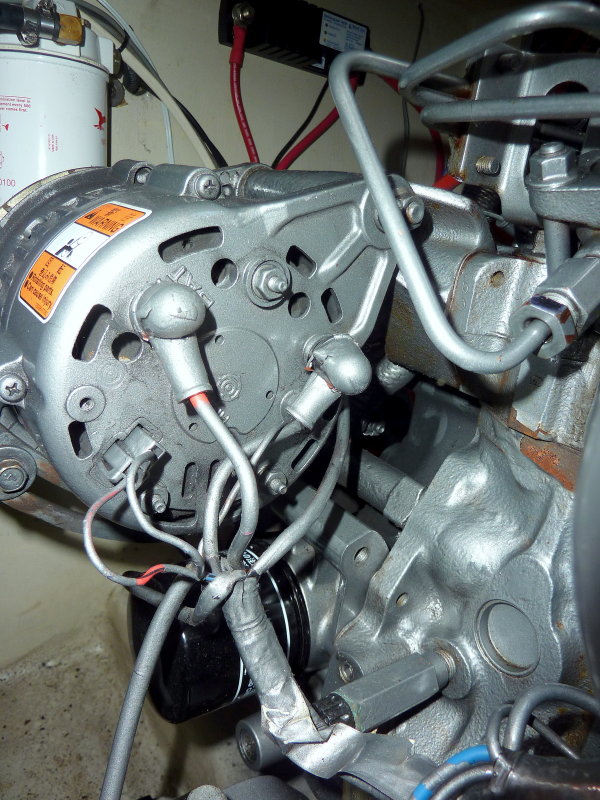
We currently have the OEM Hitachi alternator wired to the mid-90's Hunter shunt, dividing charging to the start and house batteries (currently a group 24 start and 4D house, both lead acid).

I am now in possession of two new Victron DC to DC chargers -- a Victron Orion XS 50 amp and a Tr Smart 9 amp DC to DC charger. The 50 amp would be between the alternator and the house battery, the 9 amp between the house battery and the start battery. The goal here is to output cleaner power from the alternator to the batteries (real, actual voltage controlled bulk and float stages) , baby the alternator for more extended higher amperage output (as I've understood this is accomplished by current limiting the charger to 40 amps, keeping the alternator from moving to "self protect" mode as quickly), and potentially prep for a future upgrade to Lithium.

The more immediate planning question (and the reason for this post) is best determining how to wire the new units. Specifically: should I (mostly) re-use the existing alternator charging wiring, or should I run new wires and connect these units directly to the batteries. I see advantages/disadvantages to both options:

Keeping the existing layout:
Pros: Physically simpler wiring, DC units are mounted in a compartment with more space, the ability to shut off power between the battery and alternator
Cons: Wiring may be a little undersized (it's the OEM Hunter wiring), extra failure points with the battery switches in line


New wiring:
Pros: A simpler system (more direct wires), fewer failure points, right sized wire
Cons: Some space concerns for the House to Start charger location, more cabling to pull, more contact points on the batteries/bus bars

I've included a great MS Paint drawing of the existing configuration and how the two options may look. The drawing is basic -- I'd obviously include fuses, wiring for indication that the motor is running and (most obviously) I used a red line, but the negative would be wired appropriately for the circuit. With that would folks with more expertise in this area recommend?
 

Attachments

Jan 11, 2014
13,594
Sabre 362 113 Fair Haven, NY
I don't really understand the reasoning for the 50a DC-DC charger. It is perfectly OK to run the Alternator output to a DC+ bus and then connect that to the battery.

Everything gets connected to the DC+ Bus, alternator, charger, DC-DC charger for the start battery, the feed to the panel, etc. This keeps the wiring to the battery simple and uncluttered. Wired correctly, there will be 3 switches, on/off switches for the battery and a BlueSeas Dual Circuit Plus switch which will allow either battery to start the engine and/or power the house batteries.

To future proof your wiring use wires capable of handling the high output of 100+amp externally regulated alternator.

Spend some time reading Rod Collin's MarineHowTo.com website. It has numerous articles on batteries, charging, and other topics on marine electrical systems. Solid information from a well respected professional.

 
  • Like
Likes: LLoyd B

duck21

.
Jul 17, 2020
200
Hunter 376 0 Washburn, WI on Lake Superior
Hi!

From everything I've read and observed the stock Hunter/Yanmar Hitachi alternators, while great for car scenarios, are pretty terrible for maintaining larger battery banks:


The actual inspiration for this project was from the same thread (here's the parent):


As well as Rod's Marine How To article about automotive alternators (like my Hitachi) being used for powering larger battery banks:


The main goals with the DC to DC are to provide better regulated voltage to the battery and to keep the alternator from pushing 60-70 amps for 5 minutes then backing way off on amperage output to 15-20 as it self regulates. In my reading keeping the Victron DC to DC at about 40 Amps will actually keep the alternator happy for longer periods of time while also regulating the voltages to the battery in the preferred bulk/absorption/float stages.

The other options are to wire an external voltage regulator to the Hitachi, which I'd rather not do, or to replace the unit with a smart alternator -- which I considered. But most smart alternators are quite a bit more expensive (I missed the boat on the Hitachi drop-in that Rod used to produce), and the other drop- in options don't offer significantly greater output (while the higher output options require modifications to the drive/belt system).

I think my plan is pretty solid, but I'm just a bit on the fence about wiring through the switches vs. direct to the DC bus bars near the battery. I'm leaning toward all fresh wiring however, which does match your suggestion -- just looking for the additional thoughts as to whether there are other pros/cons.

Doug
 
Mar 6, 2008
1,429
Catalina 1999 C36 MKII #1787 Coyote Point Marina, CA.
The DC to DC victron that I use to charge the batteries from solar panels requires a minimum of 17 VDC to have an output. Does the alternator produce high enough voltage to make the Victron put out regulated voltage?
 
Jan 11, 2014
13,594
Sabre 362 113 Fair Haven, NY
The DC to DC victron that I use to charge the batteries from solar panels requires a minimum of 17 VDC to have an output. Does the alternator produce high enough voltage to make the Victron put out regulated voltage?
The Victron solar controllers and DC-DC chargers are different critters. Solar panels don't produce 12v, they typically produce more than 20 volts (at least the larger ones 50w and higher) and very few amps. Victrons require the panel out put to be 5v above the battery's voltage so that when the voltage is reduce to a safe charging voltage (~14.6 for LA batteries) there is enough amperage to actually charge the battery.

DC-DC chargers will come on line at a pre-programed voltage based on the DC source (alternator, charger, or battery bank) and raise or lower that voltage to charge a battery. The only requirement is the input voltage meet the programmed voltage. They do not need a 5v difference between the source and the battery being charged.
 
Jan 11, 2014
13,594
Sabre 362 113 Fair Haven, NY
I think my plan is pretty solid, but I'm just a bit on the fence about wiring through the switches vs. direct to the DC bus bars near the battery. I'm leaning toward all fresh wiring however, which does match your suggestion -- just looking for the additional thoughts as to whether there are other pros/cons.
Ideally the start and house batteries should be isolated in normal use, however, all systems should be able to run on either battery in an emergency. And it should be human proof, so some well meaning soul doesn't accidentally drain both batteries. I forget in which of Rod's articles this system is described. It is the one I used in my boat. It is also a good idea to avoid using the posts on a switch as a power post with multiple wires attached. The Blue Sea Dual Circuit switch accomplishes this.

While Blue Sea switches and bus bars are the darlings of the DIY boating community, there is another brand BEP Pro that offers a few advantages. The BEP switches can be surface mounted, it makes wiring much easier. They also have a bus bar system that is very flexible. The quality is just as good as Blue Sea. BEP is part of Brunswick's Navico Group which also owns Blue Seas.
 

duck21

.
Jul 17, 2020
200
Hunter 376 0 Washburn, WI on Lake Superior
This all makes sense -- I was thinking of the Victron XS as functioning somewhat similar to the Sterling Alternator to Battery charging unit. I appreciate the guidance on this -- I'll amend my plans accordingly!

Thanks,
Doug
 
Jun 17, 2022
425
Hunter 380 Comox BC
What you probably want is have an alternator shop modify it for an external field and then use an external regulator to get more output out of the alternator. Ideally one with a temp sensor.

The alternator needs a battery, can't have a dc dc charger in between. Are you going to lithium? If not, the changes won't do much for the boat....

It might be worth paying a victron installer in your area a couple hours to audit your boats electrical and design the system for you. Many have blown up expensive gear with diy electrical. You'll need good quality hydraulic or mechanical crimper for the lugs. Test and cut a few to check compression before using it on the boat.

You'll be adding more failure points and complexity. An error in programming can damage batteries. It makes sense if prep for lifepo4 house batt, otherwise there's little benefit.... the new FET diodes are very efficient and reliable way to split power when charging.


Some of our favorite camping spots are on that peninsula!
 
Last edited:
Sep 24, 2018
4,147
Catalina 30 MKIII Chicago
If the DC to DC charger is between the alternator and the batteries, what's preventing the alternator from frying when the batteries stop charging?
The Victron DC to DC chargers go-between batts not an alt and a batt..
So this is actually acting like a balancer?
 
Jan 11, 2014
13,594
Sabre 362 113 Fair Haven, NY
It’s not really a balancer, it’s a smart charger for the lithium using the start battery and alternator as the power source.
And this is important, the alternator is connected to a battery and a DC-DC charger and not just the DC-DC charger. The regulator needs to sense a voltage at the battery to work, if the alternator is attached only to the DC-DC charger it won't sense a battery voltage because there isn't a battery to sense, i.e., the input side of the DC-DC charger will have no voltage.
 
Jun 17, 2022
425
Hunter 380 Comox BC
If the DC to DC charger is between the alternator and the batteries, what's preventing the alternator from frying when the batteries stop charging?

So this is actually acting like a balancer?
A balancer is installed in a battery and applies a resistance to specific cells to reduce their voltage.

Sometimes seen on large series banks. I've always preferred to balance manually once or twice a year.
 
Last edited:

Blitz

.
Jul 10, 2007
719
Seidelmann 34 Atlantic Highlands, NJ
Ideally the start and house batteries should be isolated in normal use, however, all systems should be able to run on either battery in an emergency. And it should be human proof, so some well meaning soul doesn't accidentally drain both batteries. I forget in which of Rod's articles this system is described. It is the one I used in my boat. It is also a good idea to avoid using the posts on a switch as a power post with multiple wires attached. The Blue Sea Dual Circuit switch accomplishes this.
Like this?
1768361063902.png
 
Jan 11, 2014
13,594
Sabre 362 113 Fair Haven, NY
Yes. An easier system to manage would replace the 1-2-Both switch with a Dual Circuit Plus switch and add an on/off switch to the house bank. In normal use all three switches are in the On position. To isolate a bank, turn that battery's switch off and the DC+ switch to Combine. This will allow either battery to start the engine and to power the DC panel.
 
Jun 17, 2022
425
Hunter 380 Comox BC
An even more robust method ( and more modern than an ACR aka relay) is using a FET isolator. The diode battery isolators of old had a 0.7V voltage drop, which meant the batteries never got fully charged under way. The ACRs / battery combiner solved that issue to a certain degree, you get full voltage to both batteries .but.... they are prone to failure. I've replaced a lot of them over the years.

A simple way to charge 2 banks with an alternator is a FET battery isolator. No battery switching required. Beneteau does this from the factory on many models.


No programming required. Other manufacturers make them as well.


If you want a bit of redundancy and ease of use, you install a dual circuit switch with combine.


Switch ON: start batt goes to starter. house batt goes to house loads. When the engine fires up, the alternator output goes through the FET combiner to both batteries.

Start battery suddenly goes weak and needs a boost? Switch to emergency combine and use the house batt to help it start the engine...

The dual circuit plus switch with a FET isolator is the simplest and most robust way to go on a small pleasurecraft IF you don't need/want lithium.

1768367269333.png


It's also possible to achieve the same thing with a seperate ON-OFF for the house and start bank, then a COMBINE switch to join the circuits together in an emergency (battery failure).
 
Last edited:
  • Helpful
Likes: jssailem