Thrifty DIY Battery Combiner

jviss

.
Feb 5, 2004
7,090
Tartan 3800 20 Westport, MA
I just thought I'd share this. I haven't built one yet.

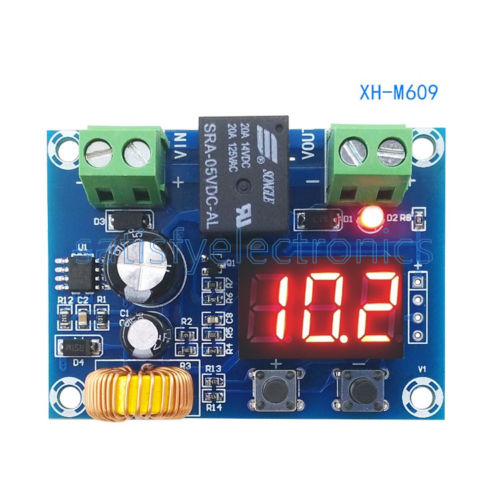
You can get a programmable low voltage disconnect (LVD) on eBay for $5, shipped:
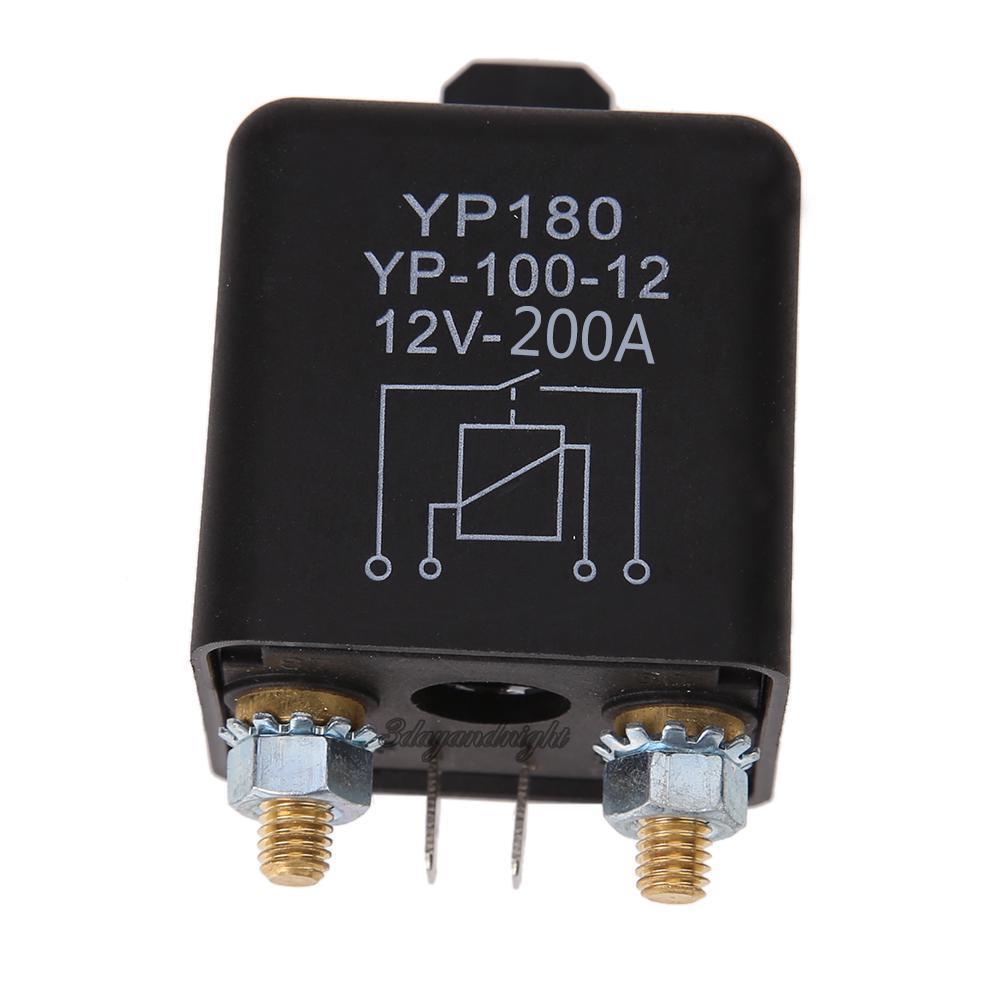
You can also get a 12V, 200A relay for $8.50, shipped:
A battery combiner and a LVD actually do exactly the same thing, which is to connect (combine) circuits when the sense voltage exceeds a set value, and to disconnect when the sense voltage drops below a set value.

You use the Vin, Vout terminals to energize the relay coil. Set the 'disconnect' voltage to something like 13.0.

Of course, you could use just the LVD if you anticipate charging currents low enough to be handled by the LVD alone, which is 20A max. This would probably be fine for an engine starting battery.

That's $13.50 in parts for a 200A programmable battery combiner. You'll have to mount them some how, of course.
 
Jan 11, 2014
13,994
Sabre 362 113 Fair Haven, NY
If you have the time, skills and energy to build your own, more power to you. Don't forget to add in the start isolation relay and the cost of the mounting boards and box to put it in.

On the other hand for $60 more you get one in a nice case with a warranty from Blue Seas. ;)
 

jviss

.
Feb 5, 2004
7,090
Tartan 3800 20 Westport, MA
If you have the time, skills and energy to build your own, more power to you. Don't forget to add in the start isolation relay and the cost of the mounting boards and box to put it in.

On the other hand for $60 more you get one in a nice case with a warranty from Blue Seas. ;)
I knew I could count on you to throw water on this.

What's the isolation relay for?
 
Feb 6, 1998
11,759
Canadian Sailcraft 36T Casco Bay, ME
If you have the time, skills and energy to build your own, more power to you. Don't forget to add in the start isolation relay and the cost of the mounting boards and box to put it in.

On the other hand for $60 more you get one in a nice case with a warranty from Blue Seas. ;)

A Blue Sea ACR does more than just isolate and combine or provide start isolation they have built in delays & programming to avoid or minimize relay cycling. The contacts in them were specifically designed to open under high load and not be destroyed. They also have hefty 3/8" studs that can support the large gauge wire and they are fully potted in epoxy to better survive the marine environment. They also have a built in coil-economizer that reduces the standby current draw as well as the holding current to keep the relay closed..
 
  • Like
Likes: capta
Jan 11, 2014
13,994
Sabre 362 113 Fair Haven, NY
I knew I could count on you to throw water on this.
As I said, if some one has the knowledge, the time, and the skills for do it yourself projects, more power to them. I know a guy who didn't like the charting programs, so he wrote his own. He also built his own link counter for his anchor windlass. He has the skills and enjoys it, I don't have those skills nor care to learn them. Also, it will take me less time to earn that $60 than it would to find the parts and build. Your mileage may vary.

What's the isolation relay for?
According to Blue Sea:
  • Start Isolation allows temporary isolation of House loads from Engine circuit during engine cranking to protect sensitive electronics from sags and spikes
 
Feb 17, 2006
5,274
Lancer 27PS MCB Camp Pendleton KF6BL
I would also encourage you to build and test it. A couple of cheap car batteries would work. Or even SLA batteries. However, you will have to find a way to generate a high current load to equal what on outboard/inboard would draw on startup. I am concerned about the terminal on the LVD being too small to handle high currents. But one will never know unless one tries. As for a container, be frugal and go to WM and get one of the tight seal freezer containers.
 
May 17, 2004
6,145
Beneteau Oceanis 37 Havre de Grace
be frugal and go to WM
Totally read that as "be frugal and go to West Marine" which isn't something you hear everyday.

It does sound like an interesting project, and you could probably make something that works with it. But in my experience making it as robust and flexible as a commercial product is going to take a lot more engineering time than just making a working prototype.
 

jviss

.
Feb 5, 2004
7,090
Tartan 3800 20 Westport, MA
According to Blue Sea:
  • Start Isolation allows temporary isolation of House loads from Engine circuit during engine cranking to protect sensitive electronics from sags and spikes
I went to their site and read that just now. First, voltage sages aren't dangerous and will not appear on the house because this LVD will disconnect during a sag. For spikes, a relay is the last thing you would use! The relay disconnect will create a spike if there is any current flowing when the contacts break. You would be much better to install an MOV (metal oxide varistor), which is the most common surge and 'spike' protector.

They also have a built in coil-economizer that reduces the standby current draw as well as the holding current to keep the relay closed..
Power consumption of this is in the same ballpark; I'll know for sure when I get mine.

ully potted in epoxy
I hate potted stuff! I get the value, but potted also equals unfixable. Shouldn't be installed in a wet place anyway, and can be sprayed with various anti-corrosion treatments if you feel it necessary. Note most boats have LOTS of critical electronics that aren't potted, nor even have a conformal coating on the PCBs. You could put this in a water-tight box.
 
Jan 11, 2014
13,994
Sabre 362 113 Fair Haven, NY
I went to their site and read that just now. First, voltage sages aren't dangerous and will not appear on the house because this LVD will disconnect during a sag. For spikes, a relay is the last thing you would use! The relay disconnect will create a spike if there is any current flowing when the contacts break. You would be much better to install an MOV (metal oxide varistor), which is the most common surge and 'spike' protector.
Voltage sags are not as damaging as voltage spikes, that's a given. However, voltage sags can cause electronics to reboot, which takes them off line. If you dig around into the Blue Sea site and read some of their white papers, what happens is that the relay that connects the start with house battery disconnects completely, basically it makes the circuit act as if the ACR isn't there.

Hey, it's your boat, your batteries, your electronics. Have fun!
 

jviss

.
Feb 5, 2004
7,090
Tartan 3800 20 Westport, MA
Voltage sags are not as damaging as voltage spikes, that's a given. However, voltage sags can cause electronics to reboot, which takes them off line. If you dig around into the Blue Sea site and read some of their white papers, what happens is that the relay that connects the start with house battery disconnects completely, basically it makes the circuit act as if the ACR isn't there.

Hey, it's your boat, your batteries, your electronics. Have fun!
I can't be sure exactly which article or articles you are referring to, but I found this:
https://www.bluesea.com/support/art...t_of_House_Electronics_during_Engine_Starting
Is this what you mean? They take the start wire from the starter, i.e., the one enrergized by the start button, and use that to disconnect he combiner relay. The implication is that the combiner won't disconnect wit the voltage sag quickly enough to prevent a low voltage condition from resetting electronics.

I understand how it works, but I find that a bit puzzling. First, if you are 'combined,' you must have a charging source present. But in this case, it can't be the engine. It would have to be a generator, or shore power, or solar. And, if you are 'combined,' your house battery would have to be above the combine voltage, I presume around 13.6V?

And, if this is an issue, what about the windlass or bow thruster??? Those are a much bigger issue than the engine starter. And those are on the house, usually, so there's nothing a combiner can do about it, unless they are on separate batteries, with separate combiners, and there's some way to get a signal to the start isolation input, and that signal is ahead of the load enough to disconnect before the house droops.

Interesting.
 
Jan 11, 2014
13,994
Sabre 362 113 Fair Haven, NY
I understand how it works, but I find that a bit puzzling. First, if you are 'combined,' you must have a charging source present. But in this case, it can't be the engine. It would have to be a generator, or shore power, or solar. And, if you are 'combined,' your house battery would have to be above the combine voltage, I presume around 13.6V?
Many folks start their engines at the dock before the shore power is disconnected. This gives the engine a chance to warm up a bit before leaving. I doubt anyone disconnects solar power before they start their engines.

And, if this is an issue, what about the windlass or bow thruster??? Those are a much bigger issue than the engine starter. And those are on the house, usually, so there's nothing a combiner can do about it, unless they are on separate batteries, with separate combiners, and there's some way to get a signal to the start isolation input, and that signal is ahead of the load enough to disconnect before the house droops.
I can't speak to bow thrusters, however, the windlass manual for my Maxwell 1500 says to run the windlass only when the engine is running. While both the starter and windlass are high loads, there are significant differences in the loads. Starters run for just a few seconds and are immediately loaded with the initial inertia of the starter motor and the high compression loads of the diesel. Windlasses load differently. There is the initial start load followed by a long duration relatively low load, i.e., the weight of the anchor chain and anchor. With the engine running, the regulator should sense the voltage drop and adjust the field to provide more power to the system.

The Blue Seas engineers have a good reputation. I'm going to stick by their advice.
 
May 20, 2016
3,015
Catalina 36 MK1 94 Everett, WA
A twist in the origional topic. But I installed a low voltage disconnect this year. I used blue seas version. They are primarily marketed at the wake board crowd with their 10,000Watt (exaggeration) stereo who would disrupt everyone’s enjoyment of the water till the battery dies and they can’t start the gas’s guzzling engine.

I hooked it up to the frig. Once too often I came back to the boat to find the house ompletly flat when the dock power was disconnected or off. Knowing how hard that is on the house batteries this solves that problem, moving to a different slip solved the power disconnects.
 

jviss

.
Feb 5, 2004
7,090
Tartan 3800 20 Westport, MA
I hooked it up to the frig.
That's one reason I started looking at these. Not that I'm plugged in to a dock, but just cruising, I don't want to flatten the batteries over night because of the fridge.

One of the appeals of these devices is that they are programmable. You could have multiple units set up to shed certain loads at different voltages. Don't know that I'll ever do that, but it's interesting to consider.
 

jviss

.
Feb 5, 2004
7,090
Tartan 3800 20 Westport, MA
By the way, @dlochner @Maine Sail and others, I'm not saying anything bad about Blue Sea Systems or other vendors, nor and I knocking the idea of using commercial products. The original post was just speculation, for others' interest, and maybe for someone who really wants to DIY.

(My previous boat, a C36, had a new electrical panel made of all BSS components. It was a huge upgrade over the original panel mounted AGC fuses and toggle switches. That said, the BSS stuff wasn't perfect, by any means. The backlight assemblies were expensive and failure prone. There as no backlight for the high-current breakers. (Yes, a minor thing.) But pretty nice, all in all.)