suggestion on how to replace soft core deck fm below

Status
Not open for further replies.
Jul 7, 2011
2
Phoenix 28 ft Lorton Va
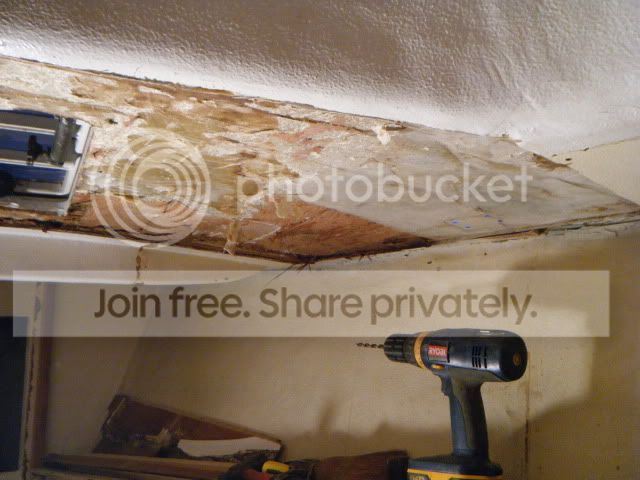
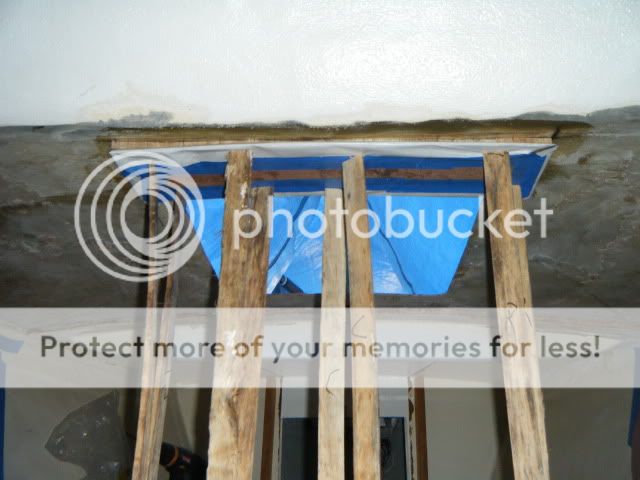
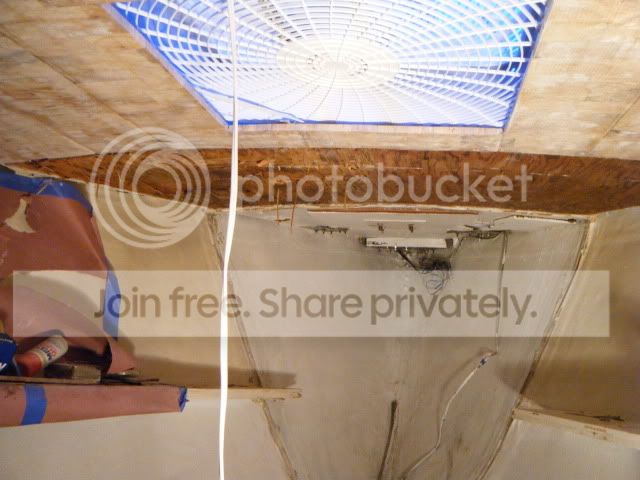
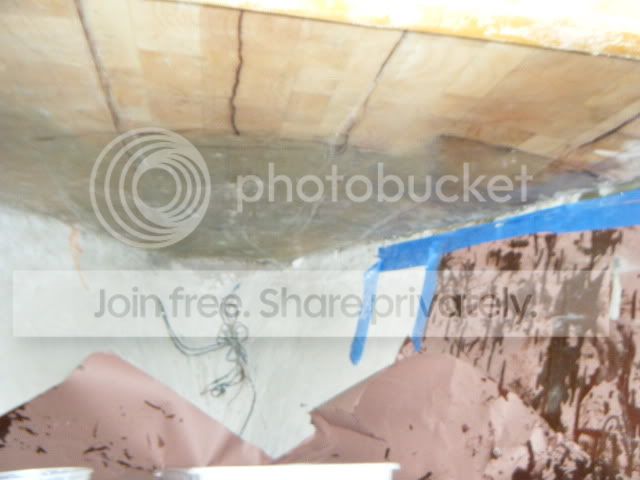
I am replacing my balsa core on my Caliber 28. The balsa wood was soaked and it deteriorated. Looking for suggestions on how to make a template to fit the entire inside of the cockpit as I removed most of the lower deck to scrape the balsa.

I have never made a template. Thought I would make one out of thin plastic.

Then my son and I will trim it to fit where the lower deck was.

I will probably cut it in about 8 or ten pieces. Then I will cut plywood to match the template.
Next I will use the west system epoxy mixture to cover the plywood making it semi waterproof. I will cut slits about every inch on the side of the plywood facing up to enable the plywood to fit the contour of the boat.

then I will cut a piece of fiberglass cloth to fiberlass a piece of the plywood. I plan to fiberglass in each piece of the plywood separately. Then I will use 2x4s to keep pressure on the plywood until it adhers to the upper deck.

Then when it cures - from the top I will drill some holes in the hull in order to insert west system epoxy through the hull to fill in the clits which will be flush with the upper deck.

Not sure if this is clear but would appreciate it if someone with expertise would comment.

Not only will I be rebonding my boat back together I will be further bonding with my son who is off to college in the fall.

thanks so much for anyone's help / suggestions.

sincerely,

Larry
asklarry.kwrealty@gmail.com
 
Dec 27, 2009
82
Clipper Mariner - Mac 25 -Bayliner and 4 kayaks 21 Clipper & 25 Macgregor & 19 Bayliner classic Red Rock Lake IA
I always thought is would be easiest to repair my soft deck by applying wood strips, just like they use to make strip kayaks. Bull nose and groove to lock them together. You might look at examples of this type of construction. Hope it helps.
Mark
 

kenn

.
Apr 18, 2009
1,271
CL Sandpiper 565 Toronto
If you have enough access and working room from below, it can be done that way. I would aim to cut the new core material into as few pieces as possible, to preserve strength.

Another option - I once read an article, in the UK sailing magazine Practical Boat Owner, showing how one owner replaced some deck core from above. First step was to carefully cut out the deck skin so it comes off cleanly and in good condition. The owner was careful to only cut through smooth spots so that there'd be no joins through patterned anti-skid. Once the deck section was off. repair continues as usual except that this time, gravity is on your side. Last step is of course to put the removed deck sections bac, and of course you have to do some careful gel-coat work to disguise the seam.

PS I usually make templates from brown wrapping paper or flattened cardboard boxes.
 
Feb 6, 1998
11,760
Canadian Sailcraft 36T Casco Bay, ME
This project will be slightly easier with pre-kerfed balsa as it is significantly lighter and often sticks to a thick deck putty on it's own and needs less support from below.. Vacuum bagging will also help tremendously.

Also plywood rots out fairly fast when wet, delaminates sooner when wet and allows water to "wick" through it easier than end grain balsa does. It is good in high loaded areas, though I would prefer solid glass, but for a large area like a cockpit sole then contour cut balsa will be easier to work with.

A template can be easily made out of cardboard. Easy to cut and layout.
 

Ross

.
Jun 15, 2004
14,693
Islander/Wayfairer 30 sail number 25 Perryville,Md.
There is a product called core bond that is purpose made for what you are doing it is as thick as peanut butter, is polyester based and sets hard in twenty minutes. I used about 25 gallons when I cored the hull of Bietzpadlin.
 
Oct 26, 2005
2,057
- - Satellite Beach, FL.
This project will be slightly easier with pre-kerfed balsa as it is significantly lighter and often sticks to a thick deck putty on it's own and needs less support from below.. Vacuum bagging will also help tremendously.

Also plywood rots out fairly fast when wet, delaminates sooner when wet and allows water to "wick" through it easier than end grain balsa does. It is good in high loaded areas, though I would prefer solid glass, but for a large area like a cockpit sole then contour cut balsa will be easier to work with.

A template can be easily made out of cardboard. Easy to cut and layout.
MS,
Is this a good application for Divinycell?
 

RichH

.
Feb 14, 2005
4,773
Tayana 37 cutter; I20/M20 SCOWS Worton Creek, MD
All the previous suggestions are OK.

The following is a 'special consideration' when repairing from 'underneath'.

Epoxy resin when laid-up thick is subject to exothermic 'foam-outs' which can develop extreme pressure between the laminate layers when the resin 'kicks' too fast. For such a repair (from underneath) I would recommend a SLOW hardener for your epoxy, and an adequate supply of ice on hand to retard the 'kick time' of the mixed resin. Id also recommend that you mix your resins in a shallow poly 'pan' (painters roller pan) and the pan on top of a bed of cracked ice .... keep the mixed resin 'cool/cold' and THIN.
The lay-ups should be THIN, even with 'thickened' (thixotropic) mixtures to prevent or retard the resin from kicking too soon. If the resin does kick too fast and yields a 'foam-out' you can easily become 'scalded' if you are underneath it when it 'goes'. Plan on the protections you need of the undersurfaces onto which the possible 'foam-out' will spill (thick poly sheet, etc.)

For such 'under work' it is also possible to do a 'prefab' of the core, and supporting laminates and simply 'push' the substructure into the cleaned and 'absoultely flat (planar) area. Flat ... so that the bonding layer of epoxy remain a MINIMUM thickness. If the tapers of the margins of the substructure are correct 12:1 up to 20:1 taper, then the bond strength to the original laminate will be more than adequate. Simply, 'mush up' the top of the substructure and quickly 'jack' it into place. One bonded you can add layers of laminate to the underside. .... all this is faster and simpler than having hot epoxy dripping all over the place, including onto you.

To assure a perfect face to face fit of the 'substructure' you can use a 'guide powder' ... apply the powder to the cavity, move the substructure in the 'cavity' and sand down the hgigh spots as indicated by the transfer of the guide powder .... you want a FLAT bonding surface to keep the thickness of the epoxy to a minimum. http://www.jamestowndistributors.co...familyName=3M+Dry+Guide+Coat+Cartridge+&+Kit+

Hope this helps.
 
Last edited:
Status
Not open for further replies.