Screws in soft deck......

Status
Not open for further replies.

NYSail

.
Jan 6, 2006
3,181
Beneteau 423 Mt. Sinai, NY
Hello all. Through all my projects I have done, one has eluded me... working with epoxie and fiberglass (have had someone else do it). Here is my situation

I have a dorad vent that sits on a fiberglass box. The box is screwed into the deck core only and I detect wetness as most of the screws just continue to turn when attempting to tighten them. I plan on removing the "box", cleaning out the wet core from each screw hole with a bent peice of metal put into a drill and drying the core out. Then I would like to fill the holes with epoxie and when dry re-screw the screws in. And this is where my questions sit.

1 - When filling the holes, what is the best epoxie to use?
2 - After filling, do I immediately insert the screws (without box) to form the threads in the epoxie? If yes (which is what I imagine) what is used for a release agent so that when dry they screw out perfectly.
3 - Or do I let the epoxie dry, then drill new hole and let the threads cut the epoxie? My worry was that the epoxie is brittle and would crack....

I know this is basic stuff that I can probably read in West sytems book, but was just looking for first hand information from you guys. Thanks!!!!!!!
 
Jan 27, 2008
3,092
ODay 35 Beaufort, NC
Recommendation

If the flange of your box hides the area then I would drill out the hole to a larger diameter, get out all the wet core you can then install a knurled screw thread insert in the hole and epoxy that in place with some west epoxy mixed with microballoons. You will need to put a screw in the insert with release agent to make sure the epoxy doesn't fill up the insert. Wherever you get the epoxy should have release agent. I've also seen dishwashing soap used as a release agent. This will give you a metal female threaded hole solidly bonded in place that should never leak again into the core. Screwing directly into fiberglass is a horrible practice and never done where strength is required.
 
Feb 6, 1998
11,760
Canadian Sailcraft 36T Casco Bay, ME
You can also drill and tap the cured epoxy for a machine screw. IMHO a dorade is something that should be through bolted not screwed.

Drying the deck will be nearly impossible using small holes but you can try heat lamps about 18" away for a few months. It took years for that moisture to "wick" through the core though capillary action, unfortunately it does not un-wick the same way..


I wrote this a while ago..


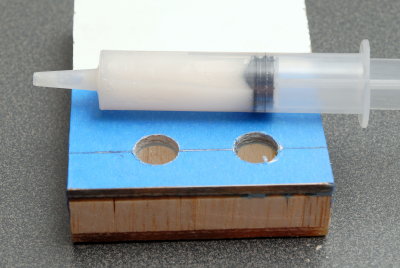
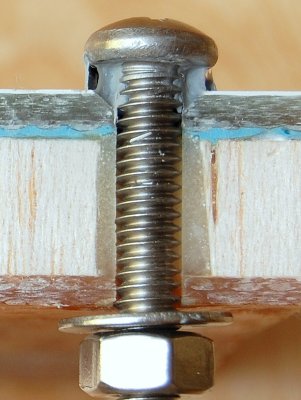
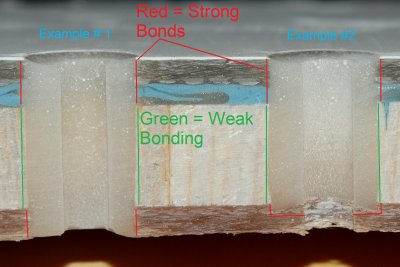
For years I have been trying to describe, as have others, in words, how to "pot" or fill deck hardware penetrations with thickened epoxy to seal the decks core from further moisture damage.

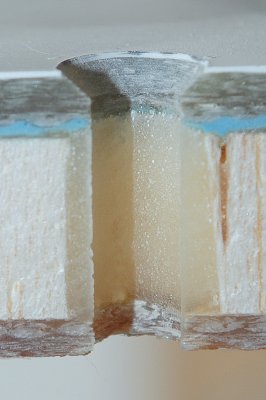
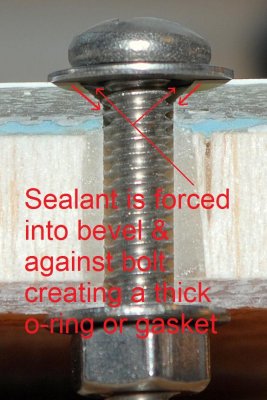
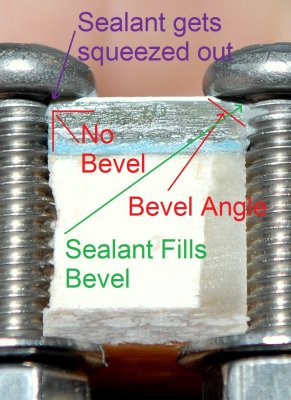
I have also been trying to describe why a slight bevel to each hole that penetrates the deck is a good idea. Sometimes folks understand it via words, and sometimes they don't.

As far as I know this is the only article of it's type that uses deck lamination cut-a-way samples to show what goes on inside the deck when you "pot" with epoxy and countersink the bolt holes..

I hope this helps make some sense of something that really isn't all that difficult to tackle just difficult to describe..

.

Click this to read it:
Sealing Deck Penetrations To Prevent Core Rot (LINK)


And some of the photos from the article;


Ross

.
Jun 15, 2004
14,693
Islander/Wayfairer 30 sail number 25 Perryville,Md.
Re: Recommendation

Using metal inserts will require that you precisely locate them to align with the holes in the box flange. Metal inserts are your best choice because of the limited thickness of the deck although you could use durable wood. Teflon pipe joint tape is very effective for keeping screw threads clean and free of epoxy.
 
Sep 25, 2008
992
Oday 25 Gibraltar
To loosen screws "set" into epoxy try holding a soldering iron on the screw head. The heat will soften the epoxy enough to back the screw out.

Rich
 
Jun 2, 2004
5,802
Hunter 37-cutter, '79 41 23' 30"N 82 33' 20"W--------Huron, OH
Lots of good advice so far. Then there is my simple minded method, the way I did my handrails. I drilled 3/4" holes in the coring. Then I epoxied 3/4" x 2" hardwood dowels into those holes. Solid and no more worries of water getting into the core.
 

Ross

.
Jun 15, 2004
14,693
Islander/Wayfairer 30 sail number 25 Perryville,Md.
Ed, What species of hardwood? Some dowels sold today will rot in one season when exposed to the weather
 

zeehag

.
Mar 26, 2009
3,198
1976 formosa 41 yankee clipper santa barbara. ca.(not there)
USE CLEAR PENETRATING EPOXY... is what fills the wood whenye inject the stuff into core and yes, it works--did it with ericson.....have fun is a lot of fun to do --time consuming and messy.....but it works.......you have end grain balsa coring???? it worked fine with that in my boat......
 
Last edited:
Dec 2, 1999
15,184
Hunter Vision-36 Rio Vista, CA.
Why not cut out the entire area, just inside the dorad box outline. Then you can easily replace the entire core and inspect farther into the sournding area. Then you can easily just replace the piece that you cut out and glass it in place or have a professional do it if you are not comfortable with that process.
 
Jun 2, 2004
5,802
Hunter 37-cutter, '79 41 23' 30"N 82 33' 20"W--------Huron, OH
Couldn't tell you what kind of hardwood Ross. But soaked in epoxy I didn't think I had to worry. I take the rails home to varnish most years and after eight the screws still tighten right down. But point well taken. In the future(is there one at my age?) I will pay more attention.
 
Status
Not open for further replies.