Proper way to shut down an outboard for long term storage

Jun 14, 2010
2,434
Robertson & Caine 2017 Leopard 40 CT
Was thinking it might be helpful for most of us to think about this. Some of the steps I take:
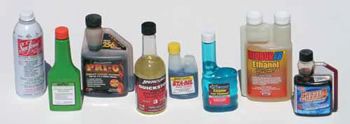
1) Always use stabilizer in fuel when you buy it, and run non-ethanol fuel if available.
2) Run in fresh water while fogging the engine
3) Drain the carb bowl and fuel lines/filter (inside the engine cowl).
4) Drain any external gas tank fuel lines and filters.
5) Slowly pull the start cord to find the resistance point indicating compression stroke to close the valves.
6) Empty your gas tank(s) into a vehicle that is used more frequently.
7) Lube as recommended by the maker
8) Inspect zincs and change if needed
Would appreciate other tips.
 
Last edited:
  • Helpful
Likes: jssailem
Sep 24, 2018
4,129
Catalina 30 MKIII Chicago
Let any water drain out of it by storing in a vertical position. Once that's done, I like to put a rubber glove over the end of the prop to keep critters and rain water out of the exhaust/lower end/prop
 
Jun 10, 2024
284
Hunter 240 Okanagan Lake
Run Seafoam in your fuel, always. You cannot get non-ethanol fuel anymore (Canada). Seafoam counters up to 50% ethanol. If I have fuel in a jerry can, it has stabilizer and Seafoam in it guaranteed.
 
  • Like
Likes: Timm R Oday25
Jun 14, 2010
2,434
Robertson & Caine 2017 Leopard 40 CT
Run Seafoam in your fuel, always. You cannot get non-ethanol fuel anymore (Canada). Seafoam counters up to 50% ethanol. If I have fuel in a jerry can, it has stabilizer and Seafoam in it guaranteed.
50% ethanol? That seems unlikely, and who uses that anyway?
Regardless - The majority of tests I’ve seen point to Sta-bil as the most effective fuel stabilizer.
 
Jun 10, 2024
284
Hunter 240 Okanagan Lake
50% ethanol? That seems unlikely, and who uses that anyway?
Regardless - The majority of tests I’ve seen point to Sta-bil as the most effective fuel stabilizer.
I don’t print the labels. I guess it would depend on how much fuel you have and the rate of evaporation. It was just a suggestion. I run multi cylinder gas radial engines in my small scale aircraft. I would use nothing else.
All the best.
 
Jun 10, 2024
284
Hunter 240 Okanagan Lake
FYI, you would want to put the Seafoam and stabilizer in your fuel and run your engine for a few minutes to allow it to circulate before shutting the fuel flow off Larry.
 
  • Like
Likes: marcham
May 17, 2004
5,936
Beneteau Oceanis 37 Havre de Grace
50% ethanol? That seems unlikely, and who uses that anyway?
Regardless - The majority of tests I’ve seen point to Sta-bil as the most effective fuel stabilizer.
Purely anecdotal, but when I used Sta-bil I still had to clean carbs at least once a year in either my lawn mower, outboard, leaf blower, or trimmer. Since switching to Sea Foam a few years ago I haven’t had any problems. I think Practical Sailor usually lists it as their Budget Buy.
 
Jun 17, 2022
420
Hunter 380 Comox BC
For 3- 6 months, there really isn't much to do...

If you use marine gas stabilizer (and you should), then the fuel will be fine for up to 12 months. Don't use any fuel with ethanol if you can. In North America, premium is often ethanol free. You will have storage issues with fuel containing ethanol, even with the best stabilizer. Stabil MARINE is a good additive, with stabilizer and keeps moisture in check.

A few times a year (or before storage), run some salt away through the engine cleanout port (or through a set of muffs). Some manufacturers require the engine to be off when flushing, others allow you to run it. Ideally, get the engine up to temp (with muffs), then put the salt away through.

Grease pivots, check anodes.

If stored more than 6 months or in a salty environment, then removing the spark plug and spraying in fogging oil is a good idea.

I'd avoid spraying fogging oil through the intake.... it will make a sticky mess and can foul the plugs if the engine is running, causing problems in the spring.

Engine and gear case oil should be changed annually, ideally when going in storage.

Contrary to post above, there is LOTS of ethanol free fuel in Canada. I test my source regularly. Get a little testing vial, they are like $6. Pure-gas.org - ethanol-free gasoline in the U.S. and Canada Shell premium used to be ethanol free, but the last time I tested it , I noted 4% ethanol. Some provinces sell blue tinted gas, which is typically 89 octane and usually less than 2 pct ethanol (even when advertised ethanol free). Costco premium sometimes tests at less than 1 pct ethanol.
 
Last edited:
Jun 10, 2024
284
Hunter 240 Okanagan Lake
For 3- 6 months, there really isn't much to do...

If you use marine gas stabilizer (and you should), then the fuel will be fine for up to 12 months. Don't use any fuel with ethanol if you can. In North America, premium is often ethanol free. You will have storage issues with fuel containing ethanol, even with the best stabilizer. Stabil MARINE is a good additive, with stabilizer and keeps moisture in check.

A few times a year (or before storage), run some salt away through the engine cleanout port (or through a set of muffs). Some manufacturers require the engine to be off when flushing, others allow you to run it. Ideally, get the engine up to temp (with muffs), then put the salt away through.

Grease pivots, check anodes.

If stored more than 6 months or in a salty environment, then removing the spark plug and spraying in fogging oil is a good idea.

I'd avoid spraying fogging oil through the intake.... it will make a sticky mess and can foul the plugs if the engine is running, causing problems in the spring.

Engine and gear case oil should be changed annually, ideally when going in storage.

Contrary to post above, there is LOTS of ethanol free fuel in Canada. I test my source regularly. Get a little testing vial, they are like $6. Pure-gas.org - ethanol-free gasoline in the U.S. and Canada Shell premium used to be ethanol free, but the last time I tested it , I noted 4% ethanol. Some provinces sell blue tinted gas, which is typically 89 octane and usually less than 2 pct ethanol (even when advertised ethanol free). Costco premium sometimes tests at less than 1 pct ethanol.
As of 2022 you can no longer get ethanol free fuel in Canada unless it is old stock, very old stock. Due to this fact, a lot of guys will use low lead aviation fuel. Chevron 94 was the last Ethanol free fuel I used in a specialty engine. No more. Small engine shops sell will sell alkylate fuel, even that’s too pricey for my radials lol.
Enjoy
 
Last edited:
Jun 17, 2022
420
Hunter 380 Comox BC
As of 2022 you can no longer get ethanol free fuel in Canada unless it is old stock, very old stock. Due to this fact, a lot of guys will use low lead aviation fuel.

Enjoy
I beg to differ... i just tested my last fill-up 3 weeks ago, ethanol free.... Test your fuel, talk to your local suppliers.

100 Low lead is definitely NOT a suitable alternative.... at a minimum, sparks plugs will get fouled.... You're much better off running E10 and using a tank in 2 months or less than running 100 LL..... Take rotax engines for ultralights. They normally burn MOGAS, but can burn 100LL. if you use any amount of 100LL, it shortens the inspection and maintenance interval. Spark plugs have to be changed, oil changes are down to something like 20-30 hrs.....
 
Jun 17, 2022
420
Hunter 380 Comox BC
Sorry... but science and engineering doesn't change based on preferences and beliefs. Repeating fake truths doesn't help others. Show me one outboard manufacturer owner manual that says 100LL can be used and without affecting maintenance intervals? Rotax DOES publish in their manuals how to use 100LL and what effect it has on the engine and maintenance.... It's not good.
 
Jun 10, 2024
284
Hunter 240 Okanagan Lake
I would like to read their write up on Ethanol :)

***********I will add the only experience I have with LL Aviation fuel relates to 2 stroke engines only using 2 stroke oils with additives. I do not have first hand experience with straight LL fuel in 4 stroke engines. **********