Making an engine last longer

Status
Not open for further replies.
Sep 25, 2008
2,288
C30 Event Horizon Port Aransas
Nice N Easy posted about engine life, and for once I am not going to high jack someone's thread.:) (especially a nice guy like him)
I want the engine I just built to last. I was wondering if anyone is concerned about the salt water that sits in the wet exaust hose after you shut down the boat.
Is there any concern about that corroding exaust valves or for the valves that are open does the water vapor going into the cylinder pose problems?
I know mainesail says to run an engine until it's nice and hot before shutting it down to help vaporize any water, but what about the water that is in the exaust?
Since I have a single cylinder engine I could mark the power take off shaft and hand crank the engine until the exaust valve is closed.
 

Benny

.
Sep 27, 2008
1,149
Hunter 320 Tampa, FL
I have always heard that a diesel engine after a run needs a cool down period of 5-10 minutes at idle before shutdown. Never heard of any problems with water in the muffler or tube. The best way to extend the life of your engine is through maintenance and light use. The less hours it runs the longer it should last. Running the engine at WOT or under considerable loads causes premature wear. Prompt repairs for leaks or failed parts may prevent further damage to other components. Don't forget the transmission as the engine without it is pretty useless. Good, clean lubricants will mostly take care of it. As far as the outside of the engine, keep a good paint coat on it to avoid rust. What make and HP is your engine? I find it strange to see a C-30 with a one lunger. If you just rebuild yours and with adequate care and light use it should last for another 20 years.
 
Sep 25, 2008
2,288
C30 Event Horizon Port Aransas
It is a YSM-12 yanmar. On the way out of the yard it would get my boat to 6.2 knots with the wind beam on. But in heavy chop it was like 2 knots if that. I am pretty happy with the power but it doesn't have a heat exchanger so no hot water from the engine.
 
May 23, 2004
3,319
I'm in the market as were . Colonial Beach
Wow.....that is the small diesel. I have the Universal MX 25 in my Catalina 30 and it is adequate power. I wouldn't mind a little more but that isn't in the forseeable future.

Think about this....it is not uncommon to see engines with over 2500 hours on the engine with hardly anything done to them other than routine maintenance. If you put 100 hours a season on your engine then it is 25 years of use to get to that point. Think of it that way.
 
Feb 6, 1998
11,760
Canadian Sailcraft 36T Casco Bay, ME
It's funny

I have been around marine diesels for a long time and the one common denominator I have seen is use=long life / lack of use = short life. Call me crazy but I have seen this repeated time and time again.

I know many fisherman who have marine diesels with 6-10k+ hours on them but they use them every day and they last a long, long time hours wise. I then see many sailors who short run their engines and who have engine failures as early as 400 hours. Diesels like to be run. Heat is also good for the engine compartment as it keeps things dry and rust free.

The engine on our boat has nearly 2900 hours on her because of engine driven refrigeration and a five year live aboard cruise. Because this engine was run basically every day for five years straight for refrigeration and propulsion when not sailing the engine had little to NO rust on her when we bought it and it looked nearly new even with 2500 hours on the clock. Internally she looks just as good and oil analysis by Southworth Milton confirms this.

IMHO the BEST thing you can do for a marine diesel is to run it but most won't and don't. I never shut down my engine before it has thoroughly warmed up enough to burn of any internal start up condensation. Engines are expensive so I deal with the noise of the iron genny longer than most will.

I also believe in maintenance intervals that are before the manufacturers recommendations. I change my oil every 30-40 hours, fuel filters yearly, transmission fluid annually and antifreeze yearly but used to do it bi-annually..

As for the exhaust moisture this is another reason why use will help. If you are an infrequent user you can put a drain valve on the waterlift muffler and drain it between uses.

When engines are run properly and maintained to a high standard they can last for a long, long time..

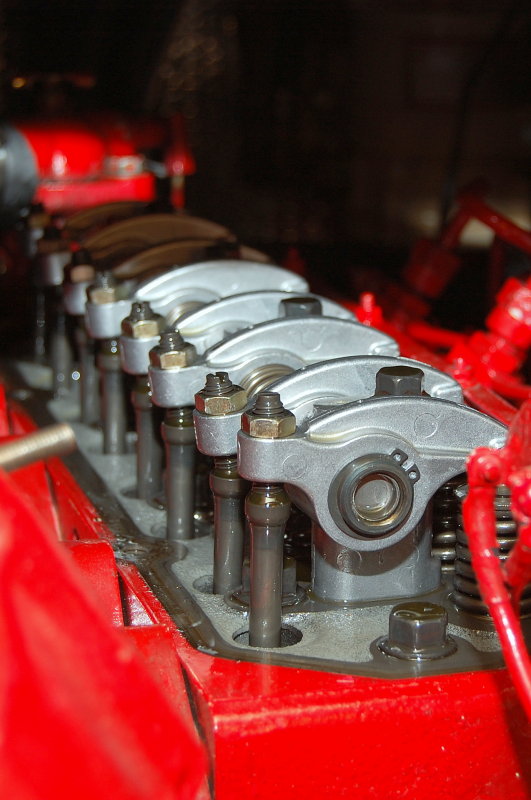
Top end at hours below:

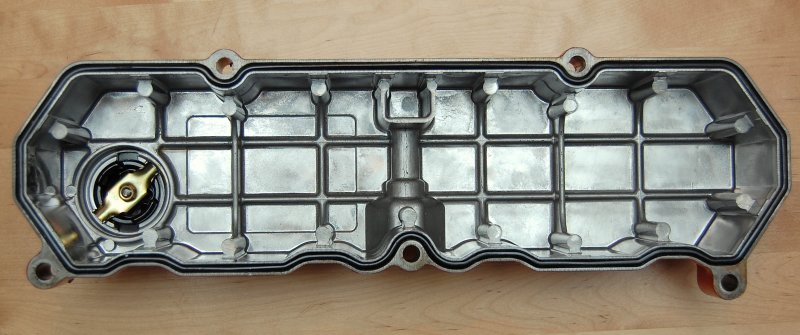
Valve cover as removed (I did NOT clean this prior to the photo):

Hours:
 
Aug 2, 2005
374
pearson ariel grand rapids
I wouldn't worry too much about the water in the hoses, not much you can do about it unless you convert to freshwater cooling.
Marking the take-off will only give you a 50/50 chance of closing the valve, with a 4-stroke the crank turns twice for each cam revolution.

For best longevity, whenever you start the engine, bring it up to full operating temp and hold it there for a while.(Maine Sail's cooldown cycle) condensation and blowby gases combine to form acids that break down bearings and attack the metals in the engine, bringing it up to full operating temp boils the volatiles off and reduces the chance of acid formation. If your normal operations mean that it's seldom brought up to temp, change the oil more often.
Plus, oil works better when it's warm.

Ken.
 

RichH

.
Feb 14, 2005
4,773
Tayana 37 cutter; I20/M20 SCOWS Worton Creek, MD
Marine engines made of cast can last up to 10000 hours if properly cared for. This obviously omits material failures such as spun bearings, pitted/corroded cylinder walls due to faulty wet exhaust systems, valve/injector/pressure pump problems, etc. etc.

The best advice one can offer is: 1. NEVER use an acid (muriatic) to 'de-salt' an engine. 2. Make sure that you regularly run the engine HOT (up to 'normal' engine operating temperature). 3. NEVER EVER drain the coolant passages when long term storing; but add a rust preventative to the water (such as found in enhanced anti-freezes).

Marine engines will prematurely ROT from the inside out. The above steps will insure that the natural form of rust in the water passages remains 'protective' as a form of 'ferrous' (blue-black/black) rust - similar to the 'blueing' on firearms and not the 'ferric' (red) form of rust that is destructive. USNavy ships that have cast iron engine components are kept running/hot to keep the forming rust the 'black' variety of protective 'ferrous' rust. Red destructive 'slab rust' will quickly form in an engine that has its water passeges drained or 'dried out'.

Muriatic acid used for 'pickling' the 'raw water' side will very quickly destroy the protective ferrous rust and then expose the bare metal to ferric rust formation.

Cast iron when it cools during the foundry process forms layers (similar to an onion). The ferrous rust keeps the layers intact. If you let ferric (red) rust form the layers will begin to separate (slab rust) due to the pressure of the formation of 'red' rust .... and the casting 'pushes' itself apart over time from the inside.

Moral: Regularly Run the hell out the engine at near WOT (and insure that the casting becomes HOT over a relatively long time) to ensure that the internal ferrous/black rust coating is maintained or to 'convert'/reduce any of the ferric rust back to ferrous rust. Dont use Muriatic acid but rather an inhibited 'commercial boiler descaling compound' to remove any internal scale/fouling. Dont 'baby' a marine engine - use it, often, and run it hard so that it is at 'operating temperature' for relative long periods of time. !!!!

Its not uncommon for a marine diesel to reach 10000 hours of service life ... if its run HARD and HOT. General maintenance is important - periodic re-torqueing of the head, valve jobs, injector rebuild, etc. Change the oil when scheduled.

;-)
 
May 23, 2004
3,319
I'm in the market as were . Colonial Beach
I think that you could use Maine Sail's engine as cookware it is so clean.
 
Sep 25, 2008
2,288
C30 Event Horizon Port Aransas
RichH I agree with you about the rust as protective coating. Even when I rebuilt the engine I didn't sand blast the water jacket as to leave a thin layer of whatever saltwater is doing in there. I was really concerned about having saltwater going through the engine. But unless I run across a great deal on a heat exchanger, I will probably not change it over. I guess I would run an electric water pump. The only reason I would do this now it to have hot potable water.
Mainesail-How often is "often" when it comes to running the engine? Every week, 2 times a week...?
 
Feb 20, 2009
12
2 25 Prineville, Oregon
I agree with Maine Sails advice with one addition. Change the oil on the calender not the hour on the dial. The condensation tht will accumilate in the crankcase along with the sulphur from the diesel fuel will make a dilute sulphuric acid that will pit rog and main bearings, cylinder walls, etc...
 
Feb 6, 1998
11,760
Canadian Sailcraft 36T Casco Bay, ME
RichH I agree with you about the rust as protective coating. Even when I rebuilt the engine I didn't sand blast the water jacket as to leave a thin layer of whatever saltwater is doing in there. I was really concerned about having saltwater going through the engine. But unless I run across a great deal on a heat exchanger, I will probably not change it over. I guess I would run an electric water pump. The only reason I would do this now it to have hot potable water.
Mainesail-How often is "often" when it comes to running the engine? Every week, 2 times a week...?
In season I would say I run mine about three-four days per week to full operating temp. Sometimes I prefer to sail on and off my mooring and don't run the engine at all but when I do start it I do let it run for a while even if I am just sailing with the motor cooling the engine driven fridge. I also run it at WOT for about 30-60 seconds every other time I run it.. So far so good...
 
May 23, 2004
3,319
I'm in the market as were . Colonial Beach
I like to run my engine at night when I am on the hook to top off the batteries and heat the water. I usually run it about 30 minutes to an hour depending upon what I have been doing during the day. I usually run it at 1500 rpms. When I get up in the morning and get off of the hook I usually run it about 30 minutes to an hour just to clear the nav markers and sail. Sometimes I run it less, sometimes I run it more. When I motor out it is usually at full RPMs.

Your diesel will last a very long time, don't let it worry you.
 
Feb 4, 2005
524
Catalina C-30 Mattituck, NY
Scott -

A couple things to add here:
- I have the exact same engine YSM-12 in my Catalina 30. We've connected a few times over email. I also rebuilt my engine about 5 yrs ago and she runs smooth as ever.
- One thing I added to my Yanmar is a fresh-water flush out. Don't bother trying to convert to a fresh-water cooling system with an exchanger at this point and even if you had a fresh water cooled system, your exhaust system is still going to be salt-water cooled (unless you sail a fresh-water lake). I "T"ed my raw water line before the raw water pump and tapped it into the on-board fresh-water line at a point before my fresh-water pressure pump. You want a non-pressurized source of water. I have a valve on this line - I am sure you can engineer a set-up that allows you to close the raw water line and open the fresh-water line and vice-versa. Be careful with this set-up as you're dealing with valves and lines that are all below the water line and NEVER leave both valves open at the same time (seawater will back up into your fresh water tank and could sink your boat).
- When I am done motoring for the day, I simply close and open (simultanously) the raw water line and the fresh water line respectively. Let it run for 5-10 minutes and then shut down the engine and close the fresh water feed.
- You can also tap the T into your sink drain line (I would add a strainer / filter). This will then allow you to pour anti-corrosive chemicals in or in the winter anti-freeze without removing any fittings. When you want to do the fresh-water flush just close the sink-drain seacock and run the sink faucet as the source of fresh water.
- Then follow the recommendations from everyone else here as they are spot-on.

Good luck and let me know if you have any questions!

- Rob
 
May 11, 2005
3,431
Seidelman S37 Slidell, La.
Lots and lots

of good advice here Hermit. I run my engine at least every couple of weeks, for an hour or more. Change oil at the recommended or sooner intervals. Like Mainesail, I usually change mine more often than Yanmars recommended 100 hours. Clean oil, clean filters and careful and regular maintenance will keep that little one lunger running seemingly forever. Mainesail, ya better be careful. I have been watchiing your pics very closely, and one a these days I;m gonna see a spec a dirt.
 

RichH

.
Feb 14, 2005
4,773
Tayana 37 cutter; I20/M20 SCOWS Worton Creek, MD
Disagree slightly with Rob....
When a marine engine is 'raw water cooled' the precipitation of insoluble carbonates (scale) happens anytime the cooling water goes over ~145 degrees F. So if you go the 'raw water' route, you also need to change the engine's thermostat to one that fully opens at ~135-140°. Once these carbonates 'drop out' of solution, no amount of fresh water flushing will remove them. An engine that is operating at ~140 deg. instead of 180 deg. will not have the combustion efficiency.
If Rob is flushing to prevent corrosion/rust ... will only result in a very slight/insignificant difference in the chemical kinetics of corrosion/rust/oxidation.
 
Sep 25, 2008
2,288
C30 Event Horizon Port Aransas
RichH- Are "insoluble carbonates" a good thing or a bad thing?
I heard that running a diesel hotter is better than cooler, but only possible with synthetic oil, because regular oil breaks down at too high a temp.

Do we want scale or not want scale?
Rob-I wouldn't be comfortable hooking up a line that could possibly contaminate the fresh water. I would like to do what you are talking about, but I like to have things as idiot proof as possible. (sometimes I am the idiot)
 
May 11, 2005
3,431
Seidelman S37 Slidell, La.
A little more info

Hermit,
When salt water gets to the 145 degree temp. there is enough heat to cause the solids in salt water to begin to drop out of solution, for lack of a better description. You do not want a raw water cooled diesel to run that hot. Mine runs at around 125 to 130, under load. I realize that the engine is a little less efficient at these temps, but it doesn't harm it in any way. Much better than having one that runs hotter, and having salt deposits in the water jacket. Keep in mind that the guage sending unit is at the front of the engine, usually pretty close to the thermostat housing. Wouldn't make a lot of difference on yours, but on a two, three or four banger, the head temp, in the rear cylinder can be a little higher.
 
Status
Not open for further replies.