Huricane Mathew prep critique wanted

pateco

.
Aug 12, 2014
2,207
Hunter 31 (1983) Pompano Beach FL
We were lucky, and survived Mathew with no damage, but this was our first time prepping the Stargazer for a hurricane, and I already have several ideas on how to improve my preparations. Below Is what we did, What other preparations would you suggest.

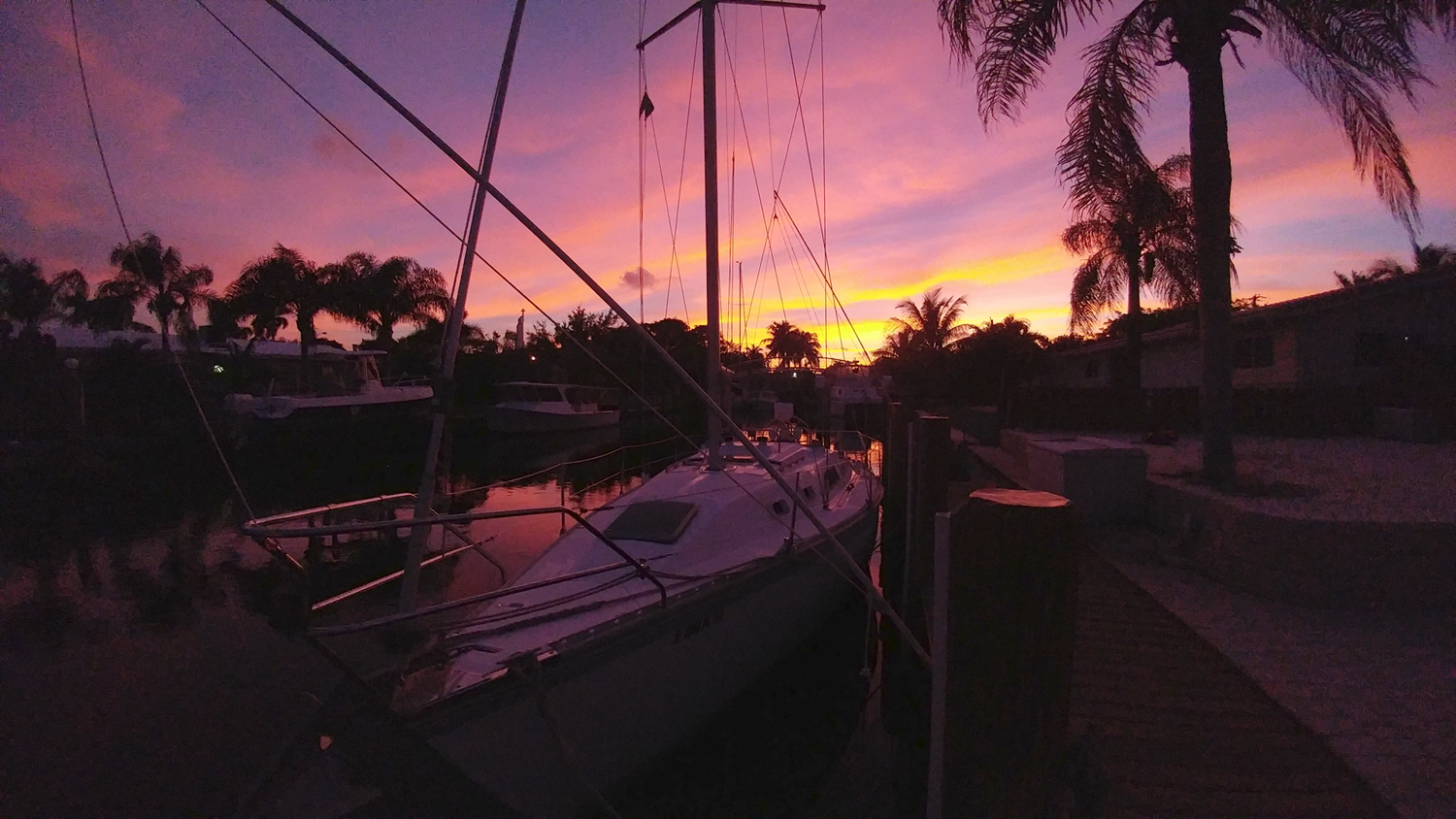
We keep the Stargazer at the end of a narrow canal off the ICW in Pompano Beach FL. When we were issued a hurricane watch I went over to the boat and removed all of the sails and canvas.
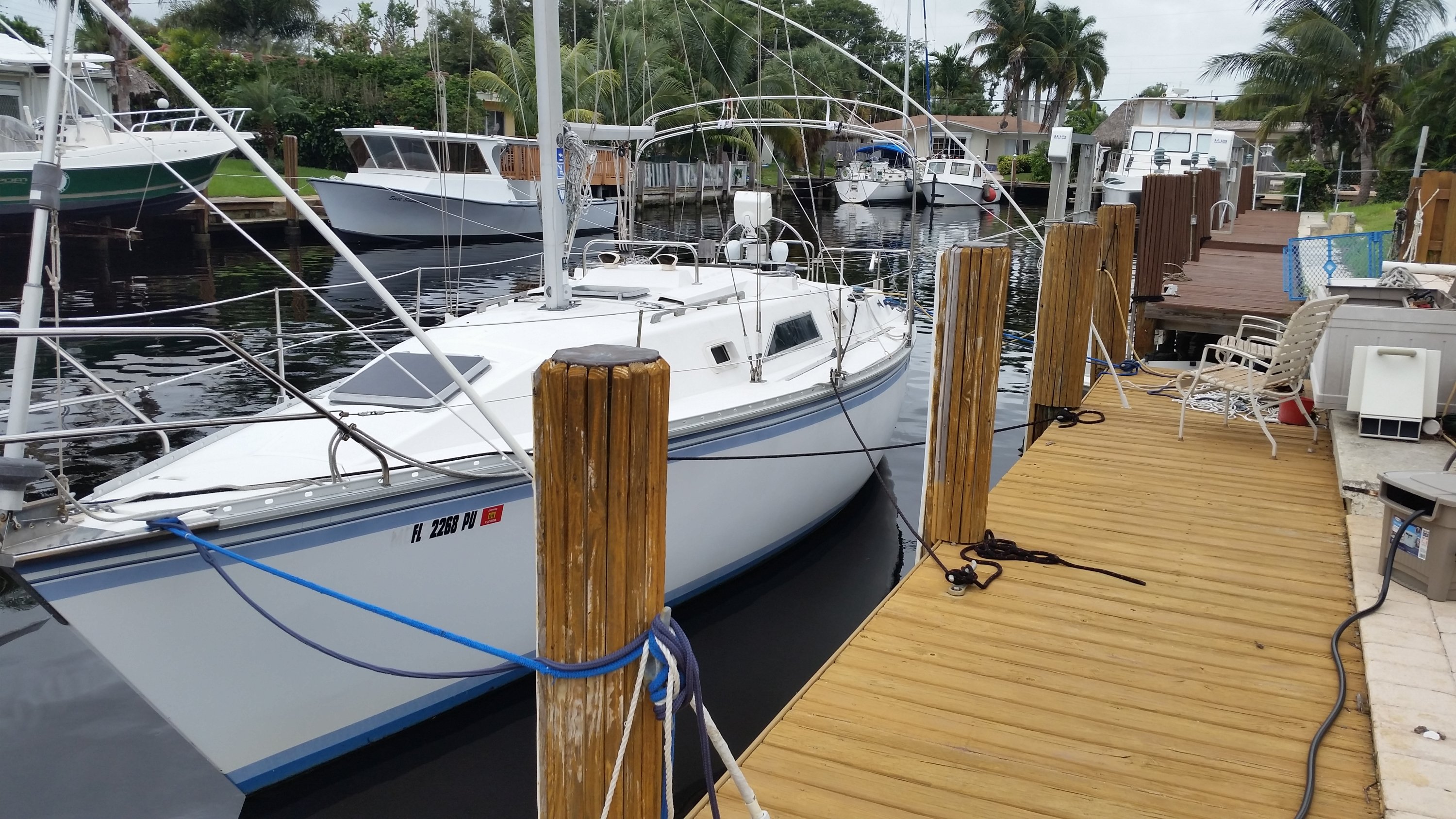
2016-10-06 08.47.26.jpg

When it became a hurricane warning, we started to tie her out. She had preciously been at a marina, so none of my extra dock lines were long enough to cross tie. I searched all morning for longer dock lines at West Marine, Home Depot, Lowes, etc. with no luck, and then managed to borrow lines from my neighbor who was hauling his 32 SEAVEE out instead of staying at his dock. (I was lucky on that one!). My son ran the lines across the canal in our dinghy., and tied them to the pilings across the way.
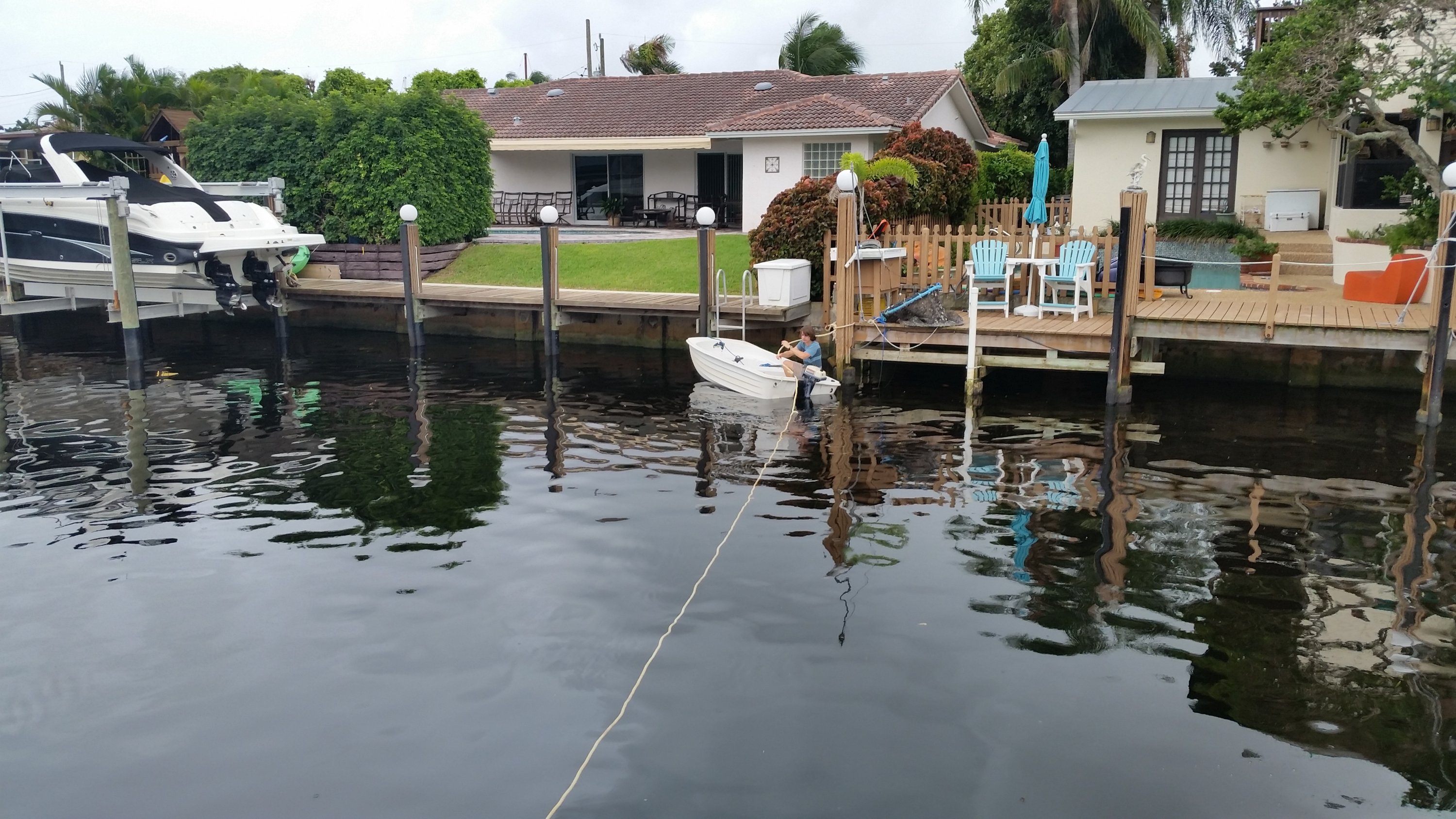
2016-10-06 08.55.16.jpg


Then I replaced all of my existing braided dock lines (some more chafed than I remembered) with longer 3 strand nylon ones, and moved her out towards the center of the canal. I doubled up on all the lines that I could.
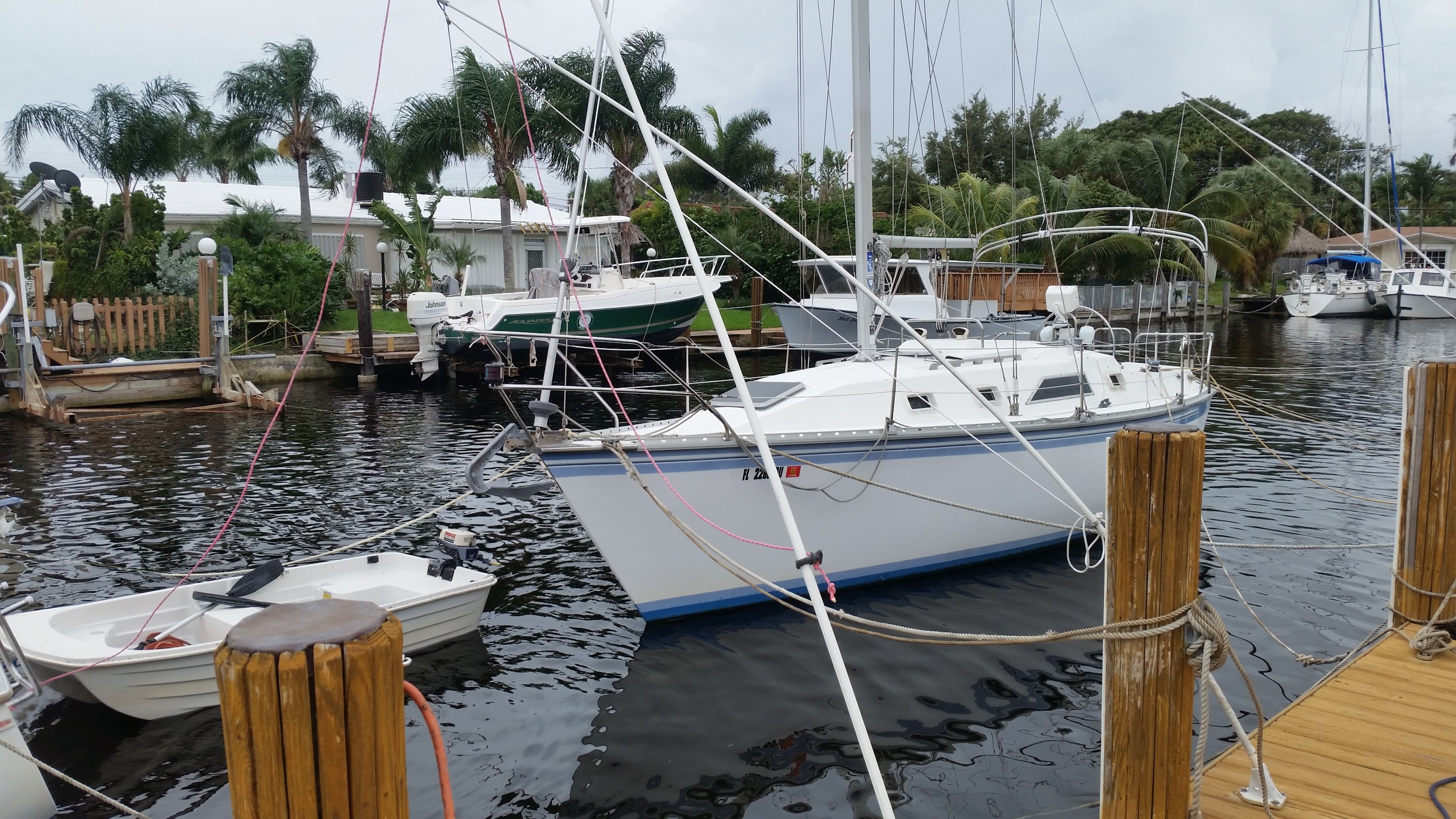
2016-10-06 10.20.43.jpg

Then I zip tied all of the cockpit hatches closed, and moved everything off the dock. We had two dock boxes full of stuff, chairs, our Cruisair portable AC, a gangplank, etc. Moved the outboards inside. Put the dinghy out of the wind in the side yard and filled it with water. Ended up looking like this.
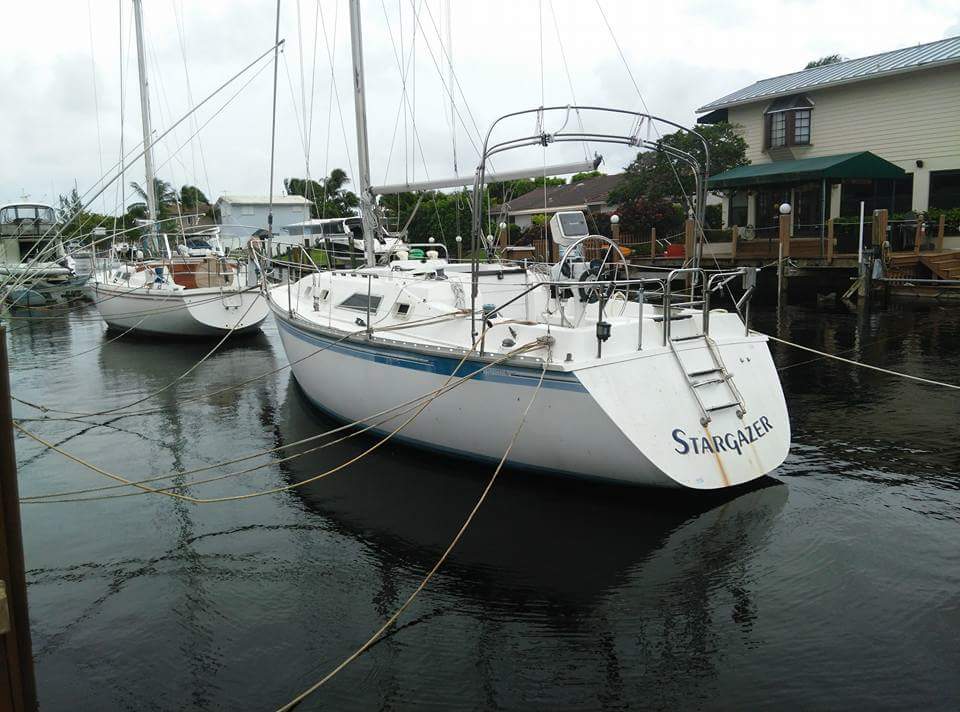
2016-10-08 03.38.17.jpg

We made it through with no problem, but I know we were lucky. This pick was after we moved her back to the dock.
After Mathew 1500.png


Now for what I would do differently.

I had bought some used fire hose for chafing but could not feed the line I borrowed through it in the time I had to prep. I tried, but the fire hose was flat from being rolled up, and I did not have anything to fish it through with. Since we were already seeing the first light storm bands roll through as we were doing this I gave up, and went without.

While I know I need to buy my own extended dock lines, and prep them with chafing gear, what else should I have done? what else should I do for future storms?
 
Last edited:

Gunni

.
Mar 16, 2010
5,937
Beneteau 411 Oceanis Annapolis
Your work looks good. Don't think those dock whips would do much, probably stow them. I know when I rode out a H or two down Florida way the problem was the slacker neighbors and all their stuff that became airborne schrapnel. I would want a neighborhood Kirk to discuss the need to coordinate action to secure stuff. Another thing - those boat lift things. The are not suitable for stowage during a hurricane. During H. Isabel in the Chesapeake the surge took those putt-putts off their cradles and then dropped them back down, some became damaging flotsam, some were speared on their piles. Huge damage. Those boats should be trailered out and stowed.
 

pateco

.
Aug 12, 2014
2,207
Hunter 31 (1983) Pompano Beach FL
Don't think those dock whips would do much, probably stow them.
The whips are old, and came with the dock (not mine) They are glued into the bases, so I would need to unbolt them from under the dock to remove. I figured leaving them lightly tied would be better than nothing.
 

Gunni

.
Mar 16, 2010
5,937
Beneteau 411 Oceanis Annapolis
Oh, anti-chafe: The firehose solution is OK, but the hose does not keep your lines saturated and thereby cooled as they are sawed through your chocks and fairleads. Antichafe needs to be secured to the dock line to keep it in place while you are down at the shelter praying :what: Personally I like and use the woven chafe guards that wrap and Velcro to the line. The are secured with a zip tie and are permeable.
 
  • Like
Likes: pateco
Jan 11, 2014
14,002
Sabre 362 113 Fair Haven, NY
Gunni is correct, lines often chafe from the inside out due to heat. The heat comes from the internal friction caused by repeated stretching of the line. Fire hose, garden hose and other water impermeable chafe guards allow heat to build up, increasing the wear on the rope. These work well Perimeter Industries Chafe Guard
 

capta

.
Jun 4, 2009
5,072
Pearson 530 Admiralty Bay, Bequia SVG
You would need to consider what you would do if there was a significant storm surge. As it is you could not get to the boat to ease out your lines and the way you tied them on the pilings leaves you no way to adjust them under tension.
Fire hose and the like is fine for every day chafe, but in a tropical cyclonic storm of any consequence, it is of little value should there be any surge at all (unlikely in your canal). For those considering leaving a boat on a mooring, at anchor or in an exposed marina slip for a storm, deep pile carpet remnants are the way to go. Wrap your lines in multiple layers of carpet at any point where they might chafe and tie the chafe gear on securely. For a particularly bad storm or one that lasts for an extended period, even with all that carpet, it may be necessary to renew it if possible. I've sat through more storms than I can remember and never lost a line to chafe using carpet remnants, however I've always been aboard to attend to my boat. I guess that's why I get the big bucks, huh?
 
Jan 19, 2010
12,926
Hobie 16 & Rhodes 22 Skeeter Charleston
@dlochner
Thanks for the link to the chafe guard. I had an issue last spring with a bow line that got chafed through during a spring gale. So I've been thinking a lot about chafe guards lately.

@Gunni
All of the old timer books I have suggest leather for a chafe guard. But I'm guessing scrap leather was more common in older times than it is today. Heat friction is not something I've heard about before...but it makes sense. If you know of a study or reference that I could look over, I'd be very obliged.

Fair winds,

r

Edit: I guess @capta was posting as I was typing..... carpet makes sense. Thanks capta. Would you zip-tie it on the line?
 

capta

.
Jun 4, 2009
5,072
Pearson 530 Admiralty Bay, Bequia SVG
Edit: I guess @capta was posting as I was typing..... carpet makes sense. Thanks capta. Would you zip-tie it on the line?[/QUOTE]
I was using the carpet remnants long before zip ties came along, so I've just continued using small stuff to secure it. With all the movement I'm not sure zip ties would keep it in place.
Note; small stuff is most often made by taking apart old lines into their smaller strands. It can be made from three strand or braided line. It is good practice to have some available somewhere handy.
 
May 4, 2005
4,062
Macgregor 26d Ft Lauderdale, Fl
Pateco, do you know anyone up the new river? that's the best place imho.
I have a couple of friends there, but they would want monthly rent... some commercial fishermen I know rent a hurricane hole slip Aug-Oct for this reason. (paying for 2 slips those 3 months)

if the eye hits, all those boats on lifts will be floating, and in the pools or living rooms. (as far as I know, any pompano canal with sailboat masts are east of us1, so expect 10' of tide/surge)

I would pull the bimini frame next time. it will be worthless after a decent storm where it sat

also I would not trust any cleat on the piling (not through bolted) I would do clove hitches around the pilings and trees bases.
 
  • Like
Likes: pateco

pateco

.
Aug 12, 2014
2,207
Hunter 31 (1983) Pompano Beach FL
I would not trust any cleat on the piling (not through bolted) I would do clove hitches around the pilings and trees bases.
I was thinking about that. What about cleats lagged into the concrete seawalls?
 

Gunni

.
Mar 16, 2010
5,937
Beneteau 411 Oceanis Annapolis
Heat friction is not something I've heard about before...but it makes sense. If you know of a study or reference that I could look over, I'd be very obliged.
Heat builds up because of friction between the fibers and also because of internal molecular friction. In a storm, then, wet nylon would last longer than dry nylon because the water would provide additional lubricity (good marine nylon line typically already has a finish that helps to reduce yarn-on-yarn friction) as well as cool the stressed fibers.
http://www.boatus.com/hurricanes/chafe.asp
 
  • Like
Likes: rgranger
May 4, 2005
4,062
Macgregor 26d Ft Lauderdale, Fl
I think the concrete mounted cleats would hold, for any size line.
But if you put a chain or cable around it, at some point something might give.

The weird thing is, if the eye hits say 20 miles away, all the boats could end up on the bottom when the water is sucked out. That happened with Wilma, at black point in homestead. the bay was dry and all the boats in the marina were on the bottom. like the tide just kept going out... then came back.
 
Feb 6, 2013
437
Hunter 31 Deale, MD
I always tie off the wheel on both sides to keep the rudder from slamming the stops in the storm.
 
May 17, 2004
6,148
Beneteau Oceanis 37 Havre de Grace
More of a nitpick than anything, but it looks like when you put on the replacement dock lines, you put the eye splices over the top of the bow cleat rather than going through the middle first. I believe through the middle then over the horns (as you had the original blue lines) is recommended so that the loops can't slip off.
 

pateco

.
Aug 12, 2014
2,207
Hunter 31 (1983) Pompano Beach FL
More of a nitpick than anything, but it looks like when you put on the replacement dock lines, you put the eye splices over the top of the bow cleat rather than going through the middle first. I believe through the middle then over the horns (as you had the original blue lines) is recommended so that the loops can't slip off.
Replacement lines were too heavy to go through the eyes. I tried.
 

CarlN

.
Jan 4, 2009
603
Ketch 55 Bristol, RI
Chafe is your #1 enemy and nylon lines are especially prone to chafe (Dacron/polyester are much tougher but unfortunately don't stretch enough for dock lines). Remember that a nylon line can stretch 30% before breaking so a short 12" chafe guard is going to be out of position once the line stretches in the storm. I make 2' to 3' long chafe guards from tubular webbing. Water will go through providing lubrication and cooling. Make sure to buy a big enough size that it's a loose fit, the line should slide inside. Secure with wire ties.
 
Last edited:
May 8, 2011
189
ODay 25 Cambridge
A friend of mine in Mississippi had a 40 ft sailboat that road out Katrina in a canal behind his house. The surge was 16 feet. He used chain rode instead of nylon. The rode rose with the surge and allowed other boats to pass before and after the hurricane as the chain laid on the bottom.
 

pateco

.
Aug 12, 2014
2,207
Hunter 31 (1983) Pompano Beach FL
I make 2' to 3' long chafe guards from tubular webbing. Water will go through providing lubrication and cooling. Make sure to buy a big enough size that it's a loose fit, the line should slide inside. Secure with wire ties.
Where do you get "tubular webbing"?