Maine Sail,
As always, hate to disagree, but you'll find that n>1 if you look at all the replies to previous packing threads that have appeared here in which the writers agree with running their packing dry.
Actually, I thought my science was pretty good in my write up:
-teflon as a lubricant is much better that water. Simple enough. (and I certainly hope no one mentions a hydraulic wedge as there's no diminishing gap here).
-three drips of water/min. provides cooling ? ? ? ? Doubtful when you look at a calculation for heat removal:
REMOVAL OF FRICTIONAL HEAT
1 drop of water = 0.1 ml.
3 drops/min.=0.3 ml./min = 0.00066 lb/min.
given a 100 deg. rise = 0.066 BTU/min.
- shows that there's not much heat being generated if three drops/min. keep the shaft cool. And that's allowing for a 100 deg. rise which never happens. I don't think a 1" shaft is going to have too much trouble conducting 0.07 BTU/min. into the cold, cold sea. That's why my shaft runs at 62 deg. F with no lubrication.
I've seen the number of shafts which you've posted showing damage due to supposedly running dry. However, I still maintain it has more to do with the condition of the packing, most likely old,old rock hard packing which is just tightened for all its worth to reduce the inrush of water. Heavy silt in the water probably wouldn't help in other cases.
Careful packing of the gland is mandatory if you want to run dry but I think it's completely realistic. Western Pacific Trading says so, other member's experiences say so, science says so .................. so good enough for me.
INHO, a wet, humidifying bilge is just too big a negative to a well kept boat to allow a packing gland to leak.
Ralph,
As you well know the "drips" do not provide the cooling effect they only ensure your shaft is riding on a thin film of water. Better packing materials require less of a film but they are all still
water lubricated. It is the thin film of water the shaft rides on between the packing and the shaft that limits the heat build up. Lose the thin film and heat builds up very fast.
I just yesterday met with the owner and chief engineer of my US braider and went over the latest testing data. One of these tests was to adjust for
zero drips but still thin film lubed. They do not recommend this on any of their 80+ packing variations. Their
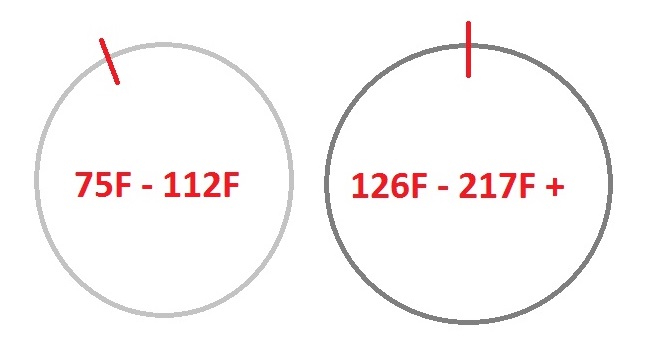
general recomendation for all industries is 8 drops per minute. Braid specific recommendations vary and can be as little as 1 drip or less per minute, based on temp. At low shaft speeds, slower than sailboat shafts turn, in testing we could maintain the thin film without it dripping, just a faint bead around the shaft and gland, but as speed was increased the water would evaporate and send the temps spiking. A thick bead between shaft and gland resulted in slightly incresed temps at sailboat shaft speeds but it remained lubed. The margin for this adjustment however is very tricky. The adjustment for this type of use is critical and likely why Gore and Duramax DO NOT say their packings can be adjusted to run dry.
This is not much different than how a cutlass bearing works. Rubber on a metal shaft with only water..? Water is a poor lubricant... Yes, it is but a thin film of it works like magic. Run a cutlass dry out of the water and you'll smoke it in very short order yet put it in the water and the thin film of water allows it to run at about the same temp as the ocean.
As I mentioned before my bilge is BONE DRY. In fact my bilge is drier than every one of the hundreds and hundreds of boats I step onto. I am allergic to mold so a dry bilge, as in dust down there, is critical. I am using a shaft packing not a PSS.
With careful adjustment I have no water in my bilge or in my engine compartment. This does not mean my packing is not water lubed. As I said a blanket suggestion to run it drip free or dry can be dangerous and folks need to understand that braided packings are intended to be water lubed.
To my braider the marine market is peanuts. These guys ship out millions of pounds of packing per year to industry, military and pharmaceutical and food processing. They have over 35 years of testing. Braided packings are water lubed and this was driven home to me yesterday quite hard by the owner of the company.
"Don't you think industry has pestered us and requested leak free packings? If it was possible we are the company that can do it. It is not possible to run dry on a rotational shaft spinning at the FPM you require."
Trust me I want to sell a drip-free packing but it is not going to happen. Thousands of dollars in testing, at the shaft speeds I requested, have confirmed this. Gore and Duramax are spot on with their terms "virtually no water" and "virtually drip free".
I am in no way suggesting you can not have a "dry" or "virtually dry" bilge with braided packings. You can. My main concern is that many boaters will not understand the fine line between dry and water lube but not dripping.
This a representation of the adjustment margin on actual in-water testing on a boat: