Cleaning a Diesel Tank

Apr 25, 2024
705
Fuji 32 Bellingham
We have a 45-gallon tank. This boat has not run its engine much in about the last 10 years. We got her less than 2 years ago. We topped off the tank with a couple of gallons when we got her and are just now down to a half-tank. It let the level drop so I could get a look at the inside surface of the tank.

Not thrilled with what I found.

The inside surfaces are coated with a fairly thick layer of black slime. The fuel itself seems clean and the filters and separator don't suggest any issues. However, the slime is thick enough that I could see it getting churned up at the worst possible moment.

My original plan was just to just polish and treat the fuel that's in there - until I saw how filthy the tank walls are. Now I've shifted to draining and cleaning the tank. Removing the tank is not an option. I would sooner just get a new boat.

So, my current plan is to drain and clean it as best I can. I got a quote to have this done - about $2000 - and I am convinced I would do a better job. The problem is mostly that I have only one access port (4-5 inches) and another 1.5" hole where the guage goes. So, access is challenging.

Does anyone have pointers?
 

Blitz

.
Jul 10, 2007
714
Seidelmann 34 Atlantic Highlands, NJ
Others will have more than I to contribute but I had an issue with a removable tank a few years ago. It sounds like your situation is a a lot worse with the slime you describe.

Might be obvious but you are going to have to drain the good fuel out or sacrifice in the cleaning process.

You might want to install another access point
You are going to have to to find something that will clean the slime (break it up) with minimal scrubbing.

You are going to lost likely need to make up some tools for the project and get a lot of rags. Rags tied to poles to get to all the nocks of the tank.

Also, be sure you have a place to dispose of properly all the dirty rags and unfit fuel.
 
May 17, 2004
5,881
Beneteau Oceanis 37 Havre de Grace
What’s the tank made of? If it’s metal it may not last forever, and having a way to remove it when the time comes wouldn’t be the worst thing.

As for cleaning it in place - given the size I presume it has baffles? That’ll make the access even harder and might mean adding more access points or substantially more creativity.
 
Apr 25, 2024
705
Fuji 32 Bellingham
Thanks for the replies. Fortunately, the marina takes all of the used diesel at a recycle point just a few feet from my gate. So, that is convenient.

I've already pumped out 5 gallons. This has allowed me to get a better sense of the shape of the tank, which is irregular. So yes, it will be a challenge to get everywhere.

It will be possible to install another access point, but not super easy - challenging enough that I am going to try to do it without the extra hole, first. Kind of my plan is to use the use smaller hole (for the gauge) to put in a little endoscope camera I have so I can sort of see what I'm doing. Then, I guess I will create some sort of sprayer and/or scrubber rig to do the work. That's the bit I was hoping to get some input on. I know someone, somewhere has done this already and knows exactly the slickest way to do it.

Fortunately, I can probably reach most of the tank surfaces through the access hole. I just can't see what I'm doing while my arm is in there (maybe with the endoscope - we'll see). I'm resigned to a nasty and tedious job, but I'm hoping to minimize that. It is the kind of things where I would prefer to spend 10 hours making a tool that saves me an hour of work in the tank.

The tank itself is fiberglass and well glassed into place, extending well under structures that I am not going to remove. I would sooner scuttle than get into that can of worms.

Here's my current plan until I know better:
  1. Finish removing the fuel.
  2. Get in there with a plastic scraper and remove as much as I can.
  3. Follow up with a brush or combination of brushes to break up the surface of what remains.
  4. Spray with some sort of light pressure washer rig with some - not a high-powered pressure washer, but something with enough pressure to spray off anything that isn't clinging to the surface with zeal. Pump out the waste at the same time - periodically inspecting to see what's coming out of there.
  5. Rinse, remove any residual liquid, and dry.
  6. Fill the tank and treat it with something like Star Tron.
  7. Polish that fuel.
  8. Run the engine a while
  9. Inspect/replace filters.
  10. Ask myself if it was worth saving $2000.
  11. Write a note explaining that it was not worth it and to next time just spend the money.
  12. Attach the note some place I won't see it until it's too late.
 
Mar 26, 2011
3,833
Corsair F-24 MK I Deale, MD
Is the tank completely sound? If you clean a scetchy tank it may start to leak and then you're tearing it out anyway. Just sayin'. This may be impossible to tell unless you can ultrasound and have good external access, which it sounds like you do not.

Commercially, this is done primarily with a strong pressure washer and a variety of nozzles that can point in various directions (change tips as you work), including up at the roof. You pump at the same time and you generate a right good volume of wastewater, which requires treatment before disposal.

Scraping and rags through a 4-5" port sounds like a nightmare.

(I've been involved in many odd cleanings in refineries)
 
Jan 7, 2011
5,834
Oday 322 East Chicago, IN
Can you use the old diesel and some sort of small pump/hose/nozzle to “power-wash” the tank? I am thinking about something akin to a fuel polisher (but without a filter to clog up). Diesel stays in the tank and a pump recirculates it to wash down the tank. You will certainly need a way to brush/scrub/scrape the walls if the gunk is that thick, but the sprayer may help rinse it away. As you get down to the bottom of the tank, you will need to drain it lower and lower though.

I assume the tank is aluminum?

Greg
 
Dec 14, 2003
1,446
Hunter 34 Lake of Two Mountains, QC, Can
My Hunter 34 has a 25 Gallon Poly tank. I installed a 10-inch access plate made by Seabuilt. I went with Stainless and even installed the fuel gauge sensor through it. It has been 12 years and so far has been leak-free. It has saved me a lot of trouble as I now make it a point to clean it every 3 or 4 years. As mentioned in a previous post, if your tank is sound, you could possibly enlarge yours which would make the cleaning job a whole lot easier. You can get the plate in aluminum or stainless steel based on what's best for your tank material. Seabuilt website: Seabuilt - Access Plate Systems Good luck
Fuel tank port & gauge 01.JPG
 
Sep 24, 2018
3,913
Catalina 30 MKIII Chicago
Is the tank completely sound? If you clean a scetchy tank it may start to leak and then you're tearing it out anyway. Just sayin'. This may be impossible to tell unless you can ultrasound and have good external access, which it sounds like you do not.

Commercially, this is done primarily with a strong pressure washer and a variety of nozzles that can point in various directions (change tips as you work), including up at the roof. You pump at the same time and you generate a right good volume of wastewater, which requires treatment before disposal.

Scraping and rags through a 4-5" port sounds like a nightmare.

(I've been involved in many odd cleanings in refineries)
Is pressure testing an adequate way to test or would the muck seal a potential leak?
 
Jun 17, 2022
371
Hunter 380 Comox BC
$2000 isn't that bad ....

You can certainly build your own fuel polishing system, but it will cost you about $1200-2000. Commercial pre-built (portable) systems for dock-side use cost $5000-$10 000.

For a tank with limited internal access, you'll need:
- a 120V fuel pump (flow depends on what your selected filters can handle)
- a fuel filtering sock (for coarse particles)
- 2 x fuel filters ( Racor 1000 are ideal, but you could use Raco 500 if you use a lower flow fuel transfer pump
- a drum to store the fuel temporarily
- shut off valves
- hoses
- A wand with a few small holes on the end to clean the gunk off the walls and sides of the fuel tank
- quick connect fittings so you can use the same pump system to remove the fuel, then put it back in (using the wand to polish)
- You'll also need oil absorbent pads, a tray to capture spilled fuel when doing filter changes and an oil boom is a good idea in case anything goes wrong.
- You'll need spare socks and filters (30 and 10 micron), as they will likely clog quickly if your tank is very dirty and you have contaminated fuel

Basically, you pump the fuel out to a drum. Clean the rough / heavy stuff through physical removal if possible. Then pump the fuel back in with the wand to clean off the sides, pump it back out, use the wand again, pump it back out, pump it back in.

Depending on the state of the tank, you could go through $100 -$200 in filters.

If you can get your arm in the tank, then that makes things much simpler, you just need to polish the fuel from time to time if it sits, but you won't need as complex a fuel polishing system.

Add a good biocide and you're done. Note that some biocides will cause solids to form and drop to the bottom of the tank, which has to be cleaned out periodically. I tend to go with Hot Shot's EDT, I haven't had any fuel issues. It also extends the life of your fuel pump, injectors, etc....

There's no reason to get rid of the old fuel. You'll need some fuel to clean the tank, which will clean the fuel at the same time.

Once that's done, will be a good time to change fuel hoses (including the fuel return line), have the injectors serviced and probably should get the fuel injection pump serviced as well. There's no point in doing any of that while you have suspect fuel.

If you can't use the fuel in the tank in one year, the tank is too big for your use, you might consider installing a second, smaller tank. Something you can fill 2-3 times a year. This would keep the fuel fresh and would minimize condensation which is common in the PNW.

Good luck.
 
Last edited:

dLj

.
Mar 23, 2017
4,743
Belliure 41 Back in the Chesapeake
@Foswick unfortunately the only cleaning method I'm familiar with for diesel tanks was already described above by @thinwater . He also mentioned checking for soundness via ultrasound - not applicable to a fiberglass tank. That's used for metal tanks, the much more commonly found diesel tank material. Given your tank is fiberglass, it's unlikely that it is leaking due to degradation, so if you have no visible signs of a leak, it probably is sound.

You ask about pressure testing. While you could, it is a process fraught with pitfalls. I would suggest a close visual inspection should suffice given it's a fiberglass tank.

If you only have a 4" inspection port - that is going to be close to impossible to clean. At least clean well. The suggestion above of adding in a 10" inspection port is sound.

Polishing the fuel removed is a separate subject.

dj
 
Mar 26, 2011
3,833
Corsair F-24 MK I Deale, MD
@Foswick unfortunately the only cleaning method I'm familiar with for diesel tanks was already described above by @thinwater . He also mentioned checking for soundness via ultrasound - not applicable to a fiberglass tank. That's used for metal tanks, the much more commonly found diesel tank material. Given your tank is fiberglass, it's unlikely that it is leaking due to degradation, so if you have no visible signs of a leak, it probably is sound.

You ask about pressure testing. While you could, it is a process fraught with pitfalls. I would suggest a close visual inspection should suffice given it's a fiberglass tank.

If you only have a 4" inspection port - that is going to be close to impossible to clean. At least clean well. The suggestion above of adding in a 10" inspection port is sound.

Polishing the fuel removed is a separate subject.

dj
when delamina

True about ultrasound--I did not read the description carefully. But I have used ultrasound on GRP tanks to search for delamination. Not as common and very different from thickness testing.

I would just power wash the tank and would be done before the thread is.
  • Protect everything with tarps.
  • Get a variety of angled fittings for 30 degree fan tips.
  • Simple Green can help.
  • Pump it out while cleaning. Blow back can be minimized by covering the extra open space.
  • Enough containers to hold the wastewater. This might be as much as 50-100 gallons, with care. Yes, there will be some disposal expense if the marina can't help. Proper DIY disposal is too hard to explain.
  • Dry with a blower and refill.
I would expect it to take about 20 minutes, once I started, probably less. Set-up and take down will take longer.
 

dLj

.
Mar 23, 2017
4,743
Belliure 41 Back in the Chesapeake
when delamina

True about ultrasound--I did not read the description carefully. But I have used ultrasound on GRP tanks to search for delamination. Not as common and very different from thickness testing.

I would just power wash the tank and would be done before the thread is.
  • Protect everything with tarps.
  • Get a variety of angled fittings for 30 degree fan tips.
  • Simple Green can help.
  • Pump it out while cleaning. Blow back can be minimized by covering the extra open space.
  • Enough containers to hold the wastewater. This might be as much as 50-100 gallons, with care. Yes, there will be some disposal expense if the marina can't help. Proper DIY disposal is too hard to explain.
  • Dry with a blower and refill.
I would expect it to take about 20 minutes, once I started, probably less. Set-up and take down will take longer.
@thinwater Yes, you can use ultrasound to find delamination. That could be an issue, but I think probably not highly likely. You also need to have an ultrasound, and have a fair bit of experience using one. What are your thoughts on the probability of delamination?

Do you think that 4" access hole is really big enough to use? That's a 45 gallon tank. As I'm used to working on larger tanks with baffles, I'm not real sure for that size tank.

dj
 
Jan 22, 2008
1,672
Hunter 34 Alameda CA
Like Claude, our H34 has the same poly tank. The key was to empty the tank fully. I consumed it through motoring down to the last 7 gallons and then had a manual pump to transfer into jerry cans. After I cut the 6 inch inspection port hole (also from Seabuilt) I could reach inside the entire tank and wipe it down with an oil absorbing pillow. Thank goodness for long arms. Even after 28 years, the tank build up wasn't that terrible. I finished off the process with a final wipe of lantern oil (close enough to diesel). I bought a gravity filter funnel from West Marine that I used to return the remaining fuel back into the cleaned tank minus any particulates and water. Afterwards I always used a biocide.
 

Attachments

  • Like
Likes: BigEasy
Apr 25, 2024
705
Fuji 32 Bellingham
When I get back to the boat, probably this weekend, I'm going to make a much more detailed assessment of whether additional access is feasible. The main issue is the lack of contiguous flat surface on the top of the tank. The one place it seems possible, there is a floor support beam across it. That beam might come out - I haven't looked too closely. The main issue with that is there is teak flooring on top of the beam, which I really don't want to have to tear out and reinstall.

Honestly, I don't think this job will be especially difficult - just really tedious, time-consuming, and unpleasant. I am not yet sure how much of the tank I cannot reach with my arm, but it looks like I can reach most of it. This is one of those times when having long skinny arms pays off. I'm basically built like this:

1764279017473.png
 
Last edited:
Jan 1, 2006
7,760
Slickcraft 26 Sailfish
...The tank itself is fiberglass and well glassed into place, extending well under structures that I am not going to remove. I would sooner scuttle than get into that can of worms...
I don't know if more input is welcome but if the lateral side of the tank is the fiberglass laminate of the hull, which was done by some builders, I would make a ghost tank of it and install a smaller poly-whatever tank somewhere else.
 
Mar 26, 2011
3,833
Corsair F-24 MK I Deale, MD
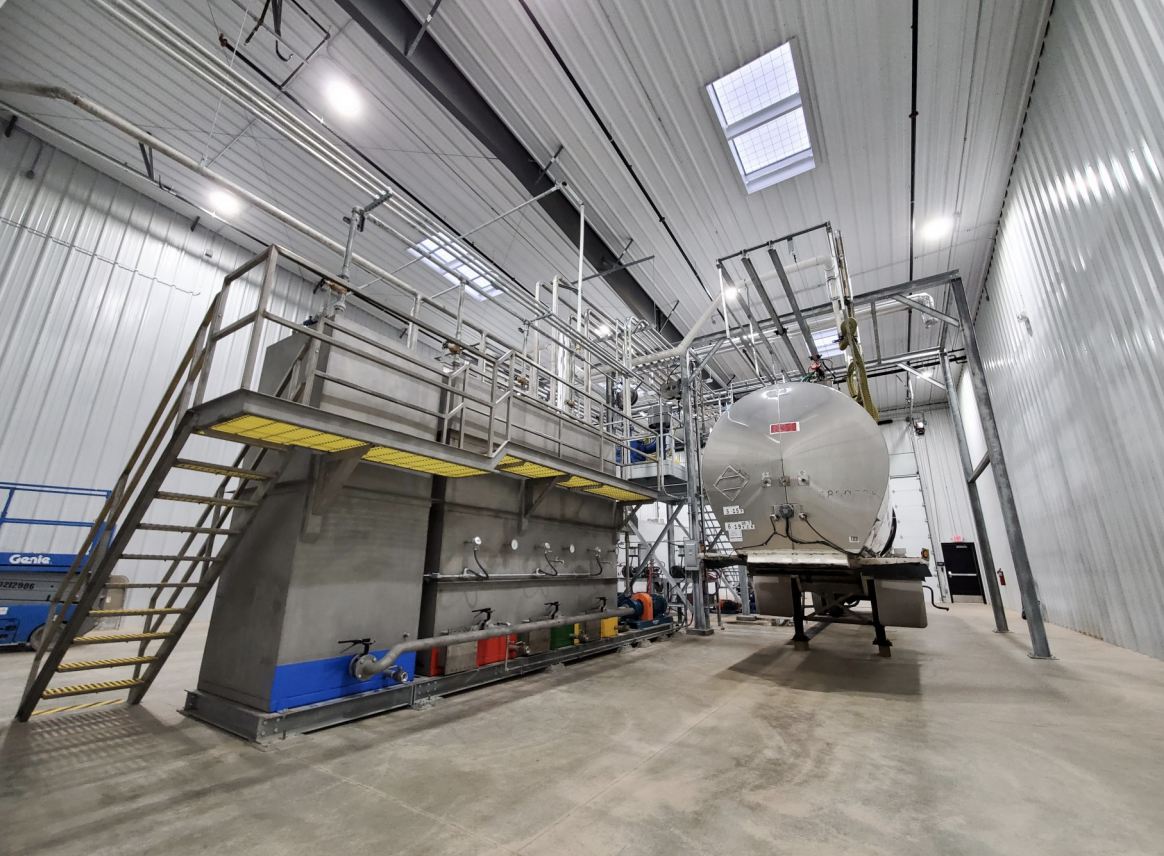
Many thousands of 5000-7000 gallon oil, chemical, and food product tankers are cleaned every day through a 18" manway. Very few of these involve manned entry, no more than a few percent. Most of those are plastics and polymers, not oils. The residual is drained and the rest blasted away with high pressure water. The vats contain hot water and cleaning solutions.

Rags and scrapers will work.

(This is a food grade cleaning bay. The oil bays are similar, just not as clean. The various pipes deliver cold water, hot water, cleaning solutions, and air for blowing dry. The overhead trolleys hold power washing equipment, hoses, and safety tethers.)
 
Jan 19, 2010
1,325
Catalina 34 Casco Bay
When I had the tank polished on our previous boat, the tech had what looked like Bresnan Distributor albeit smaller. The returning fuel churned up the fuel and put everything into suspension. As this was happening, a manifold of 10 filters was employed one at a time until there was zero sediment.
Companies that polish come in all shapes and sizes.... find one that offers a process that I described.