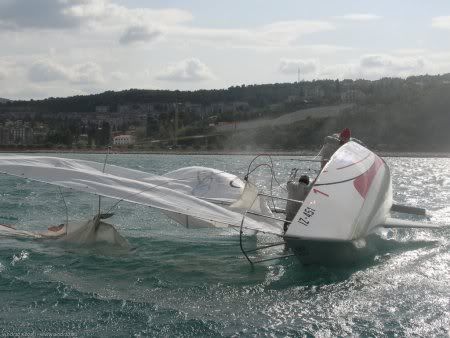
I’d design a gradual failure so you have some time to unload the rig before it comes down but that has been meeting with some poo-pooing lately.
More poo-pooing:

Rigging stresses are limited by vessel stability. It's therefore possible to design a rig that simply won't fail from wind force. Unless, of course, the strength of some part degrades due to corrosion or fatigue. Once you are allowing that to happen through poor maintenance and inspection, all your careful calculations to make sure that something non critical breaks first go out the window. It may be a part other than your planned weak link that degrades and goes first.
A simple rig is is like a chain. How do you propose designing the links for this gradual failure mode? You could design a stretchable part with an indicator that tells you to reduce heel or luff up when a critical stress is reached. Maybe a strain gauge on a shroud with a read out in the cockpit and possibly an alarm.
My boat already has that, a big needle called the mast backed up by the water surface and the cockpit coamings. When the mast gets to be greater than 45 degrees to the horizon, fairly easy to measure mentally, and the water is pouring over the cockpit coamings, it's time to do something. The screaming of the crew and guests works well as an alarm system and isn't subject to the electrical problems of wiring up a strain gauge in a salt water environment. The rig should be no where near a critical stress point in these conditions and the strain on it isn't going to increase any further with wind velocity since righting moment will be dropping off.
The stress that breaks an intact rig in which all parts are up to their designed strength will be something like a wave induced roll over. We're talking about massive forces here that few rigs can be designed to withstand. You aren't going to take any stress reducing actions in that situation. The most vital part of heavy weather sailing is avoiding a roll over.