I know yards like to make money off repeat customers and will typically do 1 coat. Private owners seem to do 2, with maybe more on the leading edges (I seem to get more growth on the trailing edges). But why stop there? Any reason not to get more antifouling longevity on the bottom? Most of the work is in the prep… what’s one or two more coats?

Bottom paint - 2 coats or 3? Or even 4? 5? Why not 6?
- Thread starter skunther
- Start date

If more coats yielded better performance you’d probably see paint manufacturers recommending that. They’re certainly not incentivized to sell the bare minimum amount.
Ablative or hard paint? Either way the extra coats are probably just going to be more build-up and eventually more to sand or blast off when they lose their antifouling properties or lose adhesion to the substrate. With had paint I’m guessing you’ll just be piling extra layers over the bottom few coats, and the biocide in those lower coats could get locked away by the carrier in the top coats, adding nothing but weight and lost money to the bottom. With ablative it’ll probably wear unevenly, and you’ll eventually end up with no paint in the high wear spots but still many layers ready to start flaking off the low wear spots.
Ablative or hard paint? Either way the extra coats are probably just going to be more build-up and eventually more to sand or blast off when they lose their antifouling properties or lose adhesion to the substrate. With had paint I’m guessing you’ll just be piling extra layers over the bottom few coats, and the biocide in those lower coats could get locked away by the carrier in the top coats, adding nothing but weight and lost money to the bottom. With ablative it’ll probably wear unevenly, and you’ll eventually end up with no paint in the high wear spots but still many layers ready to start flaking off the low wear spots.

Using Petit Trinidad my yard uses 2 coats with a third at the waterline and leading edges of bow, keel and rudder. It is at the waterline and bow that the paint wears thru fastest even so.
If hard paint, there is no advantage of extra coats, because the biocide just can't migrate that far through those many layers. Once the outer 2-3 layers have leached, any underlying layers are locked in.
If ablative paint, there is a real possibility of alligatoring and cracking if the paint is applied to too thick of a buildup. Layers can also debond from each other as the water and movement starts to slough it off. And like hard paint, even ablative will get its inner layers locked out of usefulness unless you physically sand off the depleted outer layers. This typically involves a haulout, so makes putting additional layers on originally a moot point.
BTW, manufacturer tech instructions never use "coats". It is always film thickness. They advise a particular film thickness because that is the limit of the antifouling abilities.
Mark
If ablative paint, there is a real possibility of alligatoring and cracking if the paint is applied to too thick of a buildup. Layers can also debond from each other as the water and movement starts to slough it off. And like hard paint, even ablative will get its inner layers locked out of usefulness unless you physically sand off the depleted outer layers. This typically involves a haulout, so makes putting additional layers on originally a moot point.
BTW, manufacturer tech instructions never use "coats". It is always film thickness. They advise a particular film thickness because that is the limit of the antifouling abilities.
Mark


FWIW- I have found that 2 year paints don't work well in the second year, regardless of the manufacturer's claims. I've also found that thick coats tend to flake off, maybe due to poor adhesion or faulty prep.
I only use ablative paint to minimize build-up and the need for sanding.
Paint manufacturers don't differentiate between between sailboats or powerboats for film thickness. It makes sense to me that a fast power boat would wear the paint quicker than a slow sailboat. So multiple coats to build a thick film isn't necessary.
So my technique is to apply one thin coat each year. I scuff the hull with a rough purple pad and then apply a water based paint with a 3/16" nap roller. I roll out the paint as thin as I can get it. I use about 5 quarts for my 40' boat.
Performance? Good performance of the paint for the one year. Minimal build-up from year to year. Actual sanding done every 6 years or so.
Easy clean-up due to being a water base paint.
YMMV.
I only use ablative paint to minimize build-up and the need for sanding.
Paint manufacturers don't differentiate between between sailboats or powerboats for film thickness. It makes sense to me that a fast power boat would wear the paint quicker than a slow sailboat. So multiple coats to build a thick film isn't necessary.
So my technique is to apply one thin coat each year. I scuff the hull with a rough purple pad and then apply a water based paint with a 3/16" nap roller. I roll out the paint as thin as I can get it. I use about 5 quarts for my 40' boat.
Performance? Good performance of the paint for the one year. Minimal build-up from year to year. Actual sanding done every 6 years or so.
Easy clean-up due to being a water base paint.
YMMV.
I've heard of people who leave their boats in year round doing more coats in hopes that they won't have to haul out as often. @colemj has some really interesting info on this however.
I will say this based on my experience with VC-17...
I have never burnished VC17. I have only applied, reapplied, touched up, etc. I had an O'Day 25 with a shoal keel. The first year we applied paint before splashing. All was well. Towards the end of the season we started to have issues tacking. Jibes were fine but the boat just couldn't power through the wind on it's bow. We touched up the VC before the next season and the problem persisted. It wasn't until a complete recoat that the issue disappeared.
I will say this based on my experience with VC-17...
I have never burnished VC17. I have only applied, reapplied, touched up, etc. I had an O'Day 25 with a shoal keel. The first year we applied paint before splashing. All was well. Towards the end of the season we started to have issues tacking. Jibes were fine but the boat just couldn't power through the wind on it's bow. We touched up the VC before the next season and the problem persisted. It wasn't until a complete recoat that the issue disappeared.

"So my technique is to apply one thin coat each year. I scuff the hull with a rough purple pad and then apply a water based paint with a 3/16" nap roller. I roll out the paint as thin as I can get it. I use about 5 quarts for my 40' boat. "
Rich: what paint are you using? I need a new one, Hydrocoat is just not doing it, lots of barnacles.
Rich: what paint are you using? I need a new one, Hydrocoat is just not doing it, lots of barnacles.
I’ve been using this method for the past 20 years or so with very good result. This avoids build up which, as mentioned, will cause lifting and flaking. I use about a gallon for our 30’ boat.FWIW- I have found that 2 year paints don't work well in the second year, regardless of the manufacturer's claims. I've also found that thick coats tend to flake off, maybe due to poor adhesion or faulty prep.
I only use ablative paint to minimize build-up and the need for sanding.
Paint manufacturers don't differentiate between between sailboats or powerboats for film thickness. It makes sense to me that a fast power boat would wear the paint quicker than a slow sailboat. So multiple coats to build a thick film isn't necessary.
So my technique is to apply one thin coat each year. I scuff the hull with a rough purple pad and then apply a water based paint with a 3/16" nap roller. I roll out the paint as thin as I can get it. I use about 5 quarts for my 40' boat.
Performance? Good performance of the paint for the one year. Minimal build-up from year to year. Actual sanding done every 6 years or so.
Easy clean-up due to being a water base paint.
YMMV.
I have been using Interlux Aqua One for the last 3-4 years. This year Defender offered a gallon for about $133 inc shipping and tax.Rich: what paint are you using? I need a new one, Hydrocoat is just not doing it, lots of barnacles.
But I've heard that the effectiveness of any particular paint depends upon your local water conditions. I have used Hydrocoat in the past and I don't remember any issues with it. It seems like all paints do well for the first year in my area.
Last edited:
I had 2 coats of ablative paint applied on the last haulout 3 years ago (Micron CSC). The waterline was showing some wear and growth, especially the keel and rudder. Decided to do this bottom paint myself. At the recommendation of an experienced sailor who I respect, I purchased West Marine CPP instead for the next bottom paint (he said no difference up here in effectiveness). Manufacturer recommends 2-3 coats with another along the waterline and leading edges. I currently have 2 coats everywhere and a 3rd on high wear areas. I’m hoping to get that 3rd year out of the paint. Should I do one more coat or leave it at 2 with the extra on the trim?
Last edited:

jssailem
SBO Weather and Forecasting Forum Jim & John
- Oct 22, 2014
- 24,745
The number of years is dependent on many things with an Ablative Paint. Since you are into it with two coats already, I would take the remaining and do the leading edges of the hull, rudder, and keel, around the area of the prop wash where cavitation affects your paint and the water line where the young barnacles love to attach themselves. Then splash her and sail her.
More and more, ablative paints have adopted self-polishing chemistry, where the ablation is a controlled-rate chemical reaction with salt water, and not based on the amount or speed of the water over them.Paint manufacturers don't differentiate between between sailboats or powerboats for film thickness. It makes sense to me that a fast power boat would wear the paint quicker than a slow sailboat. So multiple coats to build a thick film isn't necessary.
Few powerboats of types that typically run faster than sailboats use ablative paint.
Mark
You New England boats can get away with this because you haul every year. We did the exact same thing when we lived and boated in NE. I'd thin out a single gallon to cover our 40' monohull with one thin coat. It was good for the season, and didn't even start growing stuff until late in the summer when the water temps reached maximum, and most of this was just grass at the waterline. At haulout in the fall, a pressure wash would easily take it back to clean again (and I'd have them go to town on it to remove as much paint as possible to make the prep and painting easier next spring).I’ve been using this method for the past 20 years or so with very good result. This avoids build up which, as mentioned, will cause lifting and flaking. I use about a gallon for our 30’ boat.
I miss those days!
Mark

You haul out in the winter? that changes things.FWIW- I have found that 2 year paints don't work well in the second year, regardless of the manufacturer's claims. I've also found that thick coats tend to flake off, maybe due to poor adhesion or faulty prep.
I only use ablative paint to minimize build-up and the need for sanding.
Paint manufacturers don't differentiate between between sailboats or powerboats for film thickness. It makes sense to me that a fast power boat would wear the paint quicker than a slow sailboat. So multiple coats to build a thick film isn't necessary.
So my technique is to apply one thin coat each year. I scuff the hull with a rough purple pad and then apply a water based paint with a 3/16" nap roller. I roll out the paint as thin as I can get it. I use about 5 quarts for my 40' boat.
Performance? Good performance of the paint for the one year. Minimal build-up from year to year. Actual sanding done every 6 years or so.
Easy clean-up due to being a water base paint.
YMMV.
Good two-year paints last two years (I'm going on three with only a few barnacles) if the boat stays in the water. This time I used Total Boat Krypton, one of the top boats in a recent test in my local waters.
What's The Best Bottom Paint? - Practical Sailor

It has been stated too many times that "Location, Location, Location" is the controlling factor when dealing with each of the many bottom paints out there. There has got to be something behind that saying as it's been echoed too, too many times not to have any value. IMO, the only other thing which affects the particular bottom paint in question is the prep work before it's applied.
@Terry Cox and myself have been battling it out for the last few years to see who can get the most years out of their bottom paint. He's got eight years and I've only managed seven as a personal best.
I use :
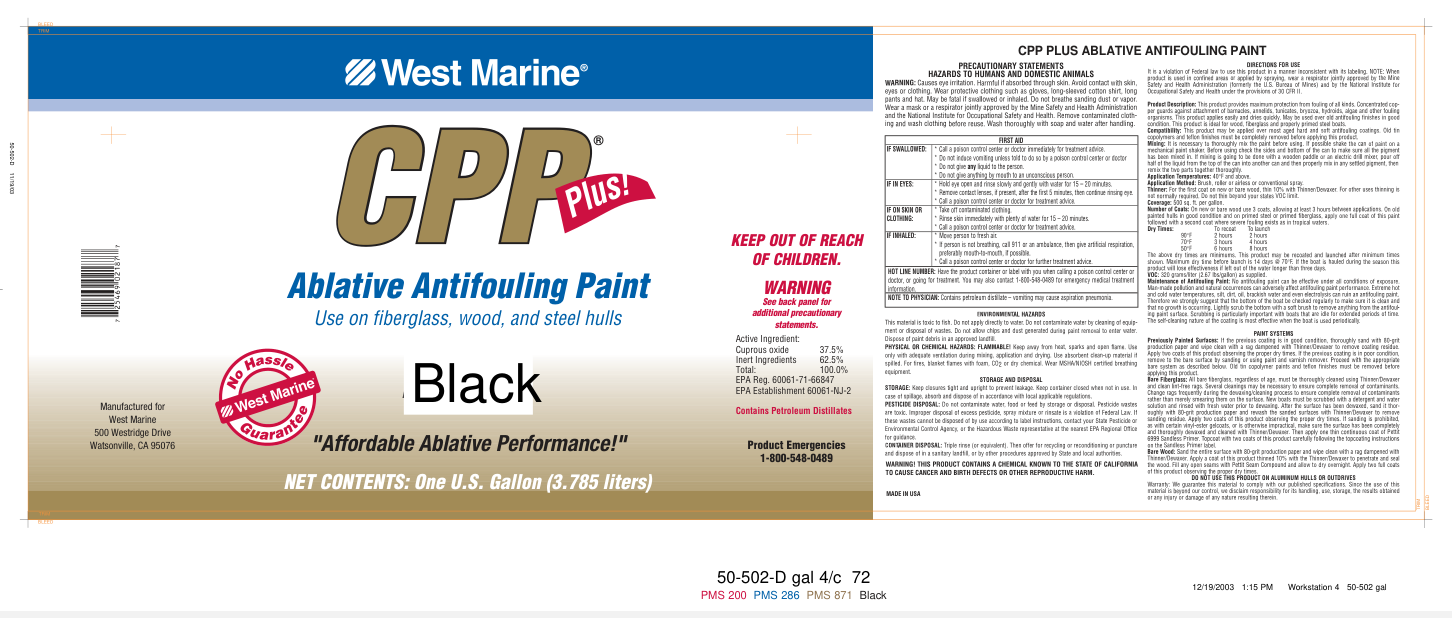
.................. but in blue while I'm not sure what Terry uses other than a West Marine brand :
See post #7.
For the first five or six years I had been applying ablative Micron CSC at a rate of one coat per year. I didn't have any fouling at haul out but the manufacturer wanted one coat per year and one coat he shall have. Eventually I had a big sanding job on my hands as the bottom looked like hell with all of the highs and lows. That's when I changed over to CPP (at about half the price of Micron) and got over the idea of painting every year. This is what I now see every year and this is year five :
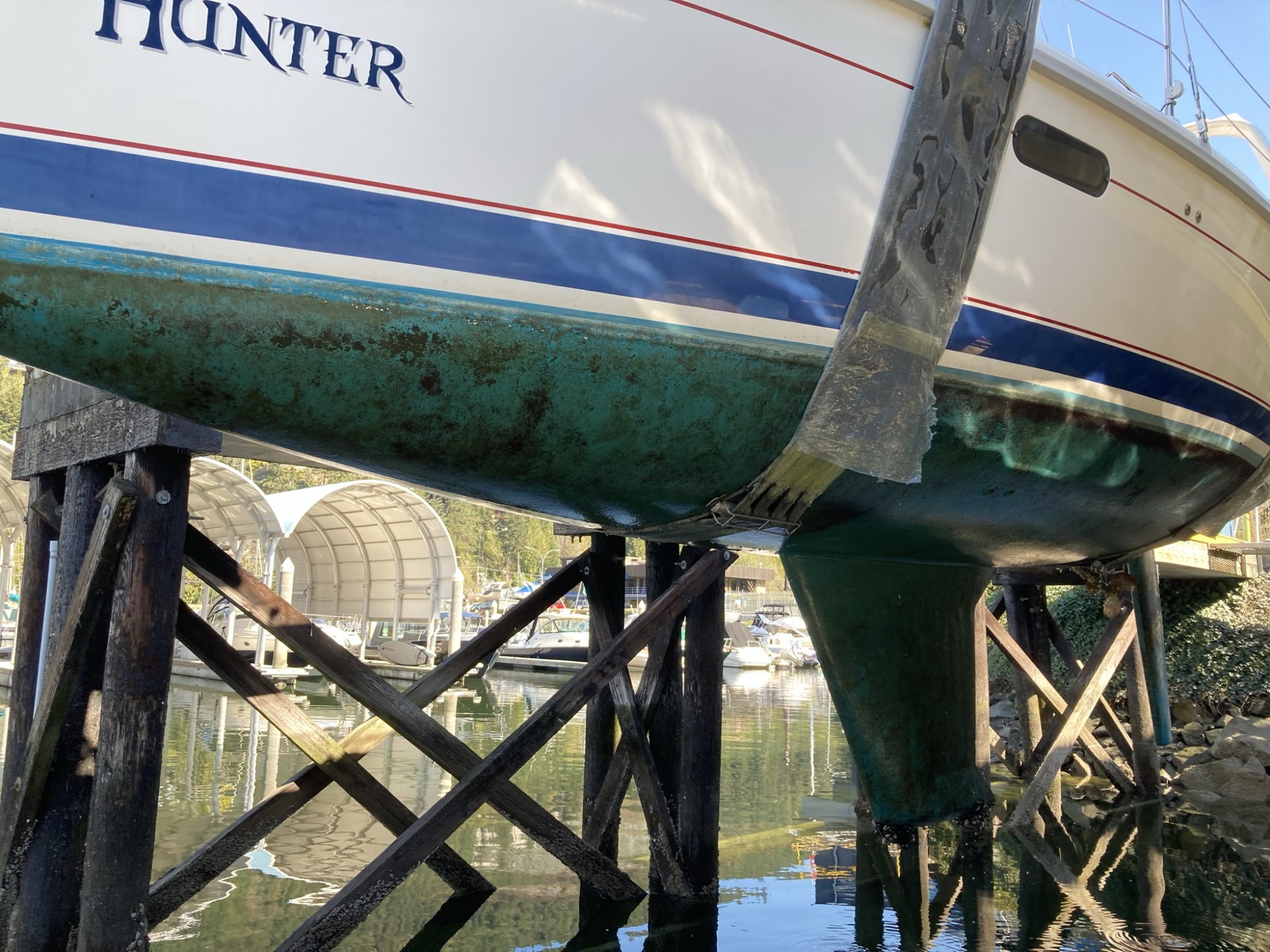
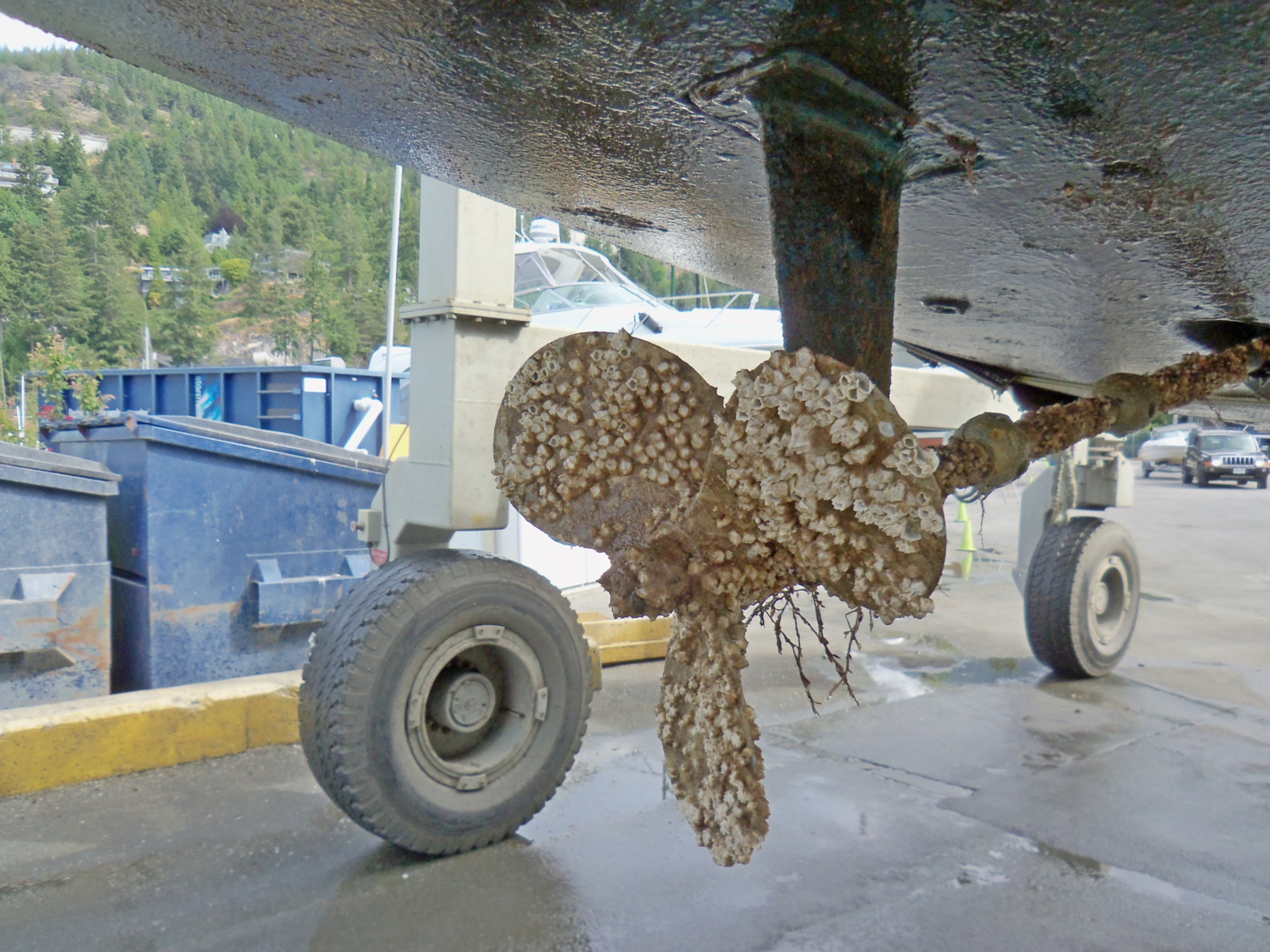
Nothing but slime. Some years the prop is a disaster but I have never seen a barnacle on the hull :
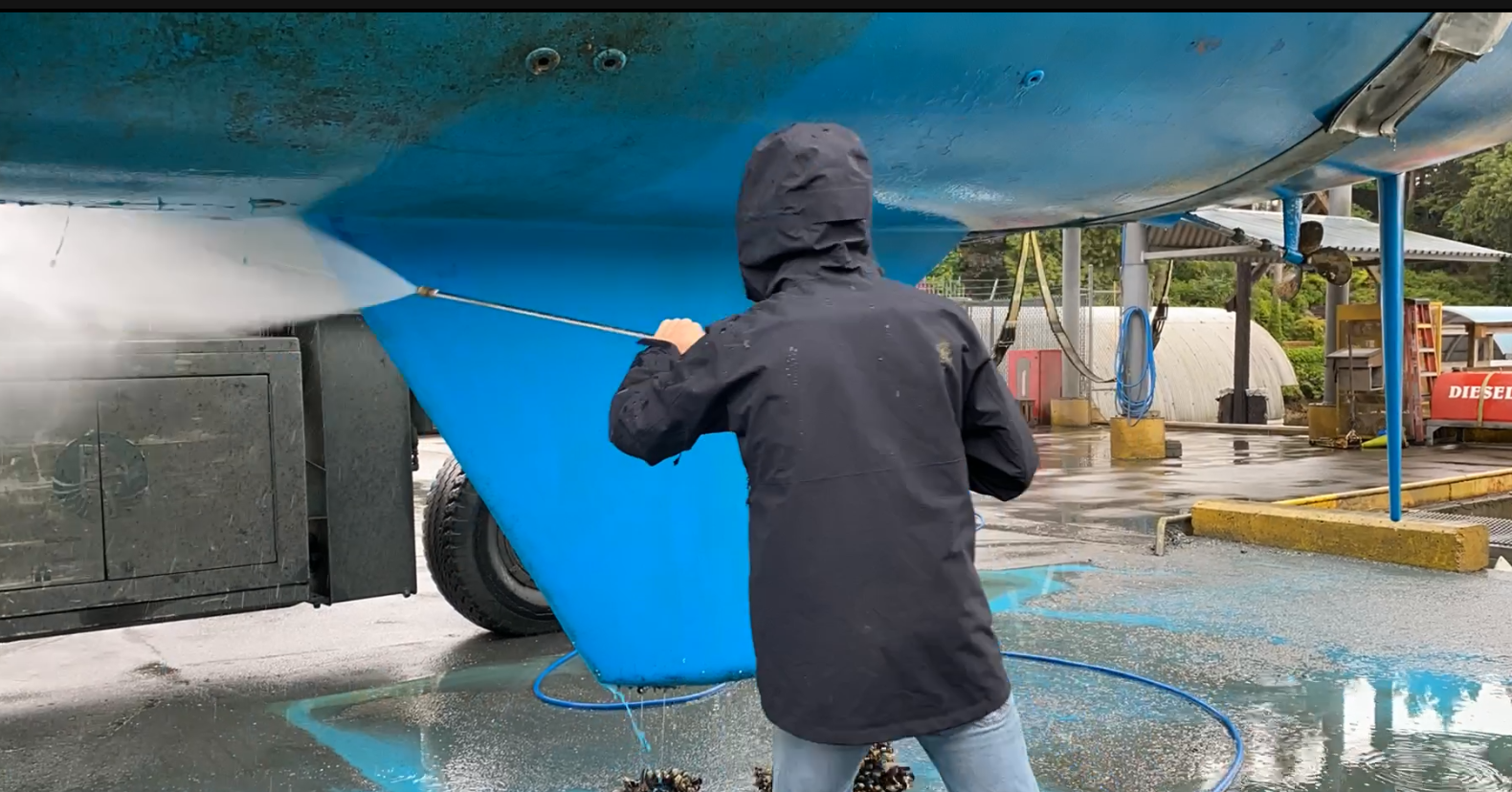
A pressure wash and we're good to go :
So after all of this ballyhooing and bellyaching which has gone on for years and years, other than death and taxes, the only thing I can say for sure is that if you live in the Pacific Northwest region, West Marine CPP Plus when appied with great care at a thickness of two coats, SHOULD last at least 6-8 years.
Of course your boat should always be annually hauled for an inspection of all those things which hang off the bottom of a boat such as the propellor, thru-hulls, and whatever else have you. In addition, that's also the time you go over the bottom paint looking for any signs of your inside tracer coat showing and any barnacle damage. Any problems and maybe you don't have the correct bottom paint for your particular area.
I can't say for sure what @Terry Cox is using, but if something different than my ablative, his works equally as well in our Pacific Northwest.
@Terry Cox and myself have been battling it out for the last few years to see who can get the most years out of their bottom paint. He's got eight years and I've only managed seven as a personal best.
I use :
.................. but in blue while I'm not sure what Terry uses other than a West Marine brand :
Bottom Paint
Has anyone had any experience with CopperCoat - supposed to be a ten year paint?
forums.sailboatowners.com
See post #7.
For the first five or six years I had been applying ablative Micron CSC at a rate of one coat per year. I didn't have any fouling at haul out but the manufacturer wanted one coat per year and one coat he shall have. Eventually I had a big sanding job on my hands as the bottom looked like hell with all of the highs and lows. That's when I changed over to CPP (at about half the price of Micron) and got over the idea of painting every year. This is what I now see every year and this is year five :
Nothing but slime. Some years the prop is a disaster but I have never seen a barnacle on the hull :
A pressure wash and we're good to go :
So after all of this ballyhooing and bellyaching which has gone on for years and years, other than death and taxes, the only thing I can say for sure is that if you live in the Pacific Northwest region, West Marine CPP Plus when appied with great care at a thickness of two coats, SHOULD last at least 6-8 years.
Of course your boat should always be annually hauled for an inspection of all those things which hang off the bottom of a boat such as the propellor, thru-hulls, and whatever else have you. In addition, that's also the time you go over the bottom paint looking for any signs of your inside tracer coat showing and any barnacle damage. Any problems and maybe you don't have the correct bottom paint for your particular area.
I can't say for sure what @Terry Cox is using, but if something different than my ablative, his works equally as well in our Pacific Northwest.

Just for the record - the Pacific Northwest seems to be a unique bio-zone. Getting anything over about 2 years is not at all common. Unless you are full time sailing, or possibly in fresh water (I only have a few years of experience having a boat live in fresh water) - expect to have to repaint your bottom paint about every 2 years. The image above of the prop is what my entire hull looked like after 1 month on a mooring where I keep my boat. Lesson for me - go sailing often!
dj
dj
@Ralph Johnstone is the water brackish where you moor? We’re moored in Squalicum, and sail the heck out of the boat in the summer, but she sits in her slip from mid October til it’s nice enough to go sailing with the family in March/April.
I went with CPP Ablative too. Next time will use a tracer coat. We last used 2 coats of CSC Micron and got 3 years, but some barnacles near the stern, under the wing keel and trailing edge of the rudder. This time 3 coats of CPP with one more along the waterline, rudder and base of keel. Hoping this one lasts, and that it wasn’t overkill.
I went with CPP Ablative too. Next time will use a tracer coat. We last used 2 coats of CSC Micron and got 3 years, but some barnacles near the stern, under the wing keel and trailing edge of the rudder. This time 3 coats of CPP with one more along the waterline, rudder and base of keel. Hoping this one lasts, and that it wasn’t overkill.
If I may, let your hull sit for at least on day (without rain if possible) to allow the hull to dry out for a better adhesion for the new coats. Hit any remaining growth after the power washing with a plastic scouting pad and water hose. Just enough scouring to remove the growth.This time 3 coats of CPP with one more along the waterline, rudder and base of keel. Hoping this one lasts, and that it wasn’t overkill.
Same here but never seen one barnacle on the bottom paint. Our marina is in a bay fed by a small creek (Nelson Creek) which has all fresh water additions promptly removed by our 3 - 4 meter tides.she sits in her slip from mid October til it’s nice enough to go sailing with the family in March/April.
Keep us posted as to what happens over the years if you can remember and definitely let us know when that tracer appears (#1 bottom coat out of three coats in total).
@Terry Cox and I are not gurus on bottom paint (at least I'm not) but we've just hit on something that really works well for us. Maybe if others stopped painting their ablatives every bloody year with a single coat as advertised by paint manufacturers, they may well see the same thing.

Here's my 2 cents worth. First I live at the bottom of Chesapeake Bay and keep my boat a 1996 Hunter 37.5 at the Norfolk Naval Station Marina. I use Pettit Hard bottom paint with the most copper content I can find. Used to be called Trinidad with around 70% copper. I think they renamed it and it now has around 66% copper. Any way I typically get 5 years out of bottom paint before hauling and repainting. I have to get 2 gallons to cover bottom and use it all. I get at least two coats and a weancy bit more out of the two gallons. I got 6 years before painting last haul out and am currently on year three since last painting. Now, I do clean the bottom about every 6 weeks April through October when the water temp is warm enough to do without a wetsuit or just a 2 mil wetsuit. However the propellor and prop need to be de-barnacled regularly as paint doesn't stay adhered to well with spinning apparatus. Water temps here have lows of the upper 30s in Winter and get to 80 sometimes in the Summer. I use a surface supplied Hooka rig like a Brownie's 3rd lung. I use an oilless air compressor with outlet filter water separator. Been doing it for years.
Here are a few pictures of last haul out in October 2018. That's after 6 years. I use Pettit Propellor paint on the Kiwi prop and running gear. That only lasts about 6 months since it is spinning regularly.
Attachments
-
 321.5 KB Views: 90
 -
 322.6 KB Views: 96
 -
 321.2 KB Views: 91
 -
 326.8 KB Views: 93