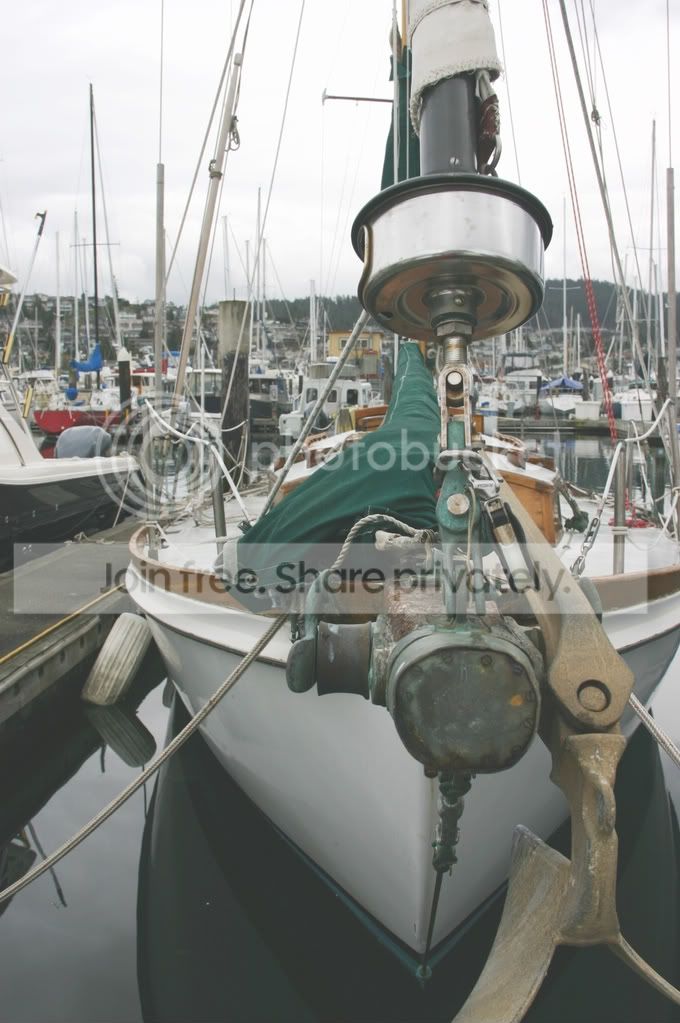
A Crash Landing in windy conditions. . .

Status
Not open for further replies.
Mar 8, 2011
296
Ranger 33 Norfolk
Yes, I did. . .ended up T-boned into the end of my pier and resting on my neighbors bow :eek:

It was a soft landing, no damage done as far as I can tell. There is a short black streak on my hull side but it sucked. . .a lot. And I need to get ahold of my neighbor just to let him know. . .

So, anyone up for a quick story and sharing some advice?

:D

This was a quick sail on Sunday for my dads birthday. Out and in before any storms came up was the plan. . .wind wasn't to bad going out but it was blowing in a direction that makes it hard to dock my boat in it's slip. Coming back in, the wind was blowing pretty good AND I lost half of my engine RPM's (anything past half throttle did nothing) as well as the wind had shifted so it was blowing directly into my slip. It was bad on top of worse on top of "ah, crap". I'm second slip in from the end.

First off, like I normally do. . .as I approach the end of the dock, I reverse and back down, and then stand backwards in the cockpit drive the boat in stern first. Normally goes off without a hitch (but I'm not perfect all the time). With the reduced RPM's I managed to stop, but couldn't make real headway into the wind. Once slow enough and the keel/rudder lost it's bite the wind grabbed the stern and flipped me sideways and started blowing me broad side up little creek. . .even with full power I'm not sure this would have worked (in hindsight).

I turned around and headed back up the fairway into the wind and thought maybe I could try backing down from far enough I could get some speed for the keel/rudder to get some bite and allow me to back in. Again, after slowing down enough to lose steerage the wind spun the bow around and I was being blown broadside up little creek. . .even having the rudder cut over and full reverse did nothing. . .

So I headed back up into the wind and informed everyone I was going to try for a bow-in docking. I hate bow-in. . .I Sent my dad and brother up forward and made my approach. I though I would actually make until I realized that as I slowed down to prevent crashing into the dock the wind was blowing the stern around faster than I had planned. . .no time to do anything but brace for impact. Landed broadside to the east end of the dock (end of the dock is a big "T").

I made it into my slip at this point by a combination of cutting the rudder hard to port and "gunning" it and my brother pushing the stern out. . .kind of pivoted around the bow of my neighbor and the piling and made it in. . .

I know the number one mistake made here was going out against my better judgement. I've dealt with the boat in windy conditions and with low speeds/no sails she gets blown around like a leaf in a puddle. You have to experience to believe it. Or maybe it's my inexperience?

My gut said "stay in", but four pairs of puppy dog eyes convinced me otherwise. . .shame on me.

So to the best of my recollection, this is what went down. . .I need to check youtube to see if this debacle was caught on film and then post it here. I could also draw diagrams if it would help.

But please, any and all advice to help me at least crash a little more elegantly next time in these conditions is very much appreciated. I've been sticking to fair weather sailing and have been fine but would like to get better so I'm not always waiting for the odd "perfect weekend" and go sailing more often. I know there has to be a way to do this. . .

Thanks,
~Steve

P.S. "Windy" was ~15 knots and gusts to 18 when I checked NOAA. . .
 
Nov 23, 2011
2,023
MacGregor 26D London Ontario Canada
I had a day like that last Thursday. I took a buddy out for his first time on a sailboat and things went well until I went to dock. On my 5th try! Yes 5th. I was aligning the boat relative to how fast the wind was going to be pushing us away from my dock and the motor quit! 6 pulls later and I'm racing into the cabin to get the boat hook and a paddle. (This is a motor that starts first or second pull all the time, except this one.) I primed it and there was nothing. Out of gas! No, the tank was on its side. The fuel pickup was out of the fuel. I got that straitened out and it primed and it started first pull.
It had drifted about 30' down along the moorings and was just fine. I got it in to the dock the first try coming from the side I didn't want to come from.
 
Oct 6, 2008
857
Hunter, Island Packet, Catalina, San Juan 26,38,22,23 Kettle Falls, Washington
For me it is hard to visualize your approach without a sketch but my first question is : Why did you lose 50% of your power? It sounds like this was a major problem and if it is something that can't be corrected then maybe you are correct when saying that you shouldn't have gone out under those conditions.
The size of your boat presents a large wind target and without enough power to maintain steerage it is a roll of the dice as to how you get into your slip.
Are marina employees available to assist? Is a different slip available? Could you dock at a different location in your marina, such as the fuel dock, and gather additional line handlers etc.
I can understand your experence as many of us have faced similar trials. It's all part of the learning process.
Good luck, Ray
 

CarlN

.
Jan 4, 2009
603
Ketch 55 Bristol, RI
Difficult docking happens (and this was difficult). First step is to have someone on the dock to help. Find a marina staff kid ($5 tip will make you a friend), another owner, or do a "touch and go" somewhere else in the marina and drop a crew member. If none of these are possible, anchor and wait for someone to show up.

Go in bow first so you have reliable steerage. Use a spring line to stop the boat. Pass a strong mid-ships spring line to a person standing at the very end of the slip. Keep about 3 knots of speed on (for steerage) until 3/4s into the slip then reverse hard and have the guy on the dock snub the spring. Once the boat stops, put the engine in forward with the rudder turned out from the dock and drive against the spring to keep the boat pinned to the dock while you get other lines ashore.

Carl
 
May 24, 2004
7,215
CC 30 South Florida
All good advise. Sometimes just letting off a crewmember that can handle lines to pull the boat in or help it stop makes it that much easier.
 
Mar 28, 2010
91
Catalina C320 Washington, NC
The engine loss of power needs to be checked out, but I think the real issue is attempting to back when the wind conditions were unfavorable. I prefer to back into my slip...downwind/crosswind, 90 degree turn into slip in reverse with 2 ft. clearance between double outer pilings. The wind wants to grab your boat and turn it beam to the wind...check it out sometime. If you are backing fast, you can overcome or control these tendencies for wind to take control. But when you go slow or reduce your speed, the wind forces (and prop walk forces) can quickly overpower the rudder and take control of the boat. I don't like bow first in my slip either, but when the wind is kicking up, you just have to do it, or you get the results that you had. I typically get the boat backing outside the fairway so that I can assess how much control that I have before I get into the fairway. If the wind spins you around in the fairway, you are unlikely to be able to regain control before hitting something. A year ago, when I was attempting to bring in the boat on Memorial Day weekend, there was a large crowd on the end of the pier watching a fireworks display. I started to back down, and immediately the wind grabbed the boat and spun it around about 270 degrees. People are shouting "do you need help?"...."No, no, I've got it...it's ok!" Embarrassed, I regained control and made a bow first landing. It's kind of like reefing....do it when you first think about it, or you may be sorry. Same with do I have enough control in this wind to back the boat in to the slip...if the question comes up, go bow first. You have much more power/control since when you apply power, the engine discharge is directly onto the rudder, giving you maximum control potential.
 

Gary_H

.
Nov 5, 2007
469
Cal 2-25 Carolina Beach NC
Everyone has bad docking days occsionally. in my area the wind blows me into my slip 90 % of the time. I always nose in because you have better steerage going foward at least in my boat. It doesn't back worth a hoot. Pre-set spring lines can help stop your boat. I've also seen people use their anchors to control their boat in strong winds retrieving the anchor with their dink once they are secured.
 
May 5, 2006
1,140
Knutson K-35 Yawl Bellingham
Oh Joy hated the Bayliner next to us for some reason. whenever the wind was from Starboard, she'd do her damdest to put the armoured sprit through it's side.


Luckily, I always had crew when it blew from the North.
 

RichH

.
Feb 14, 2005
4,773
Tayana 37 cutter; I20/M20 SCOWS Worton Creek, MD
Bingo --- " I've also seen people use their anchors to control their boat in strong winds retrieving the anchor with their dink once they are secured" ... and a damn good reason to always have the anchor set up for an immediate anchor drop. Drop the anchor, then pay it out until you reach the dock then drop the rode to the bottom ... retrieve it later when the winds are better.
If you catch the rode as it goes overboard and run it through a stern chock/cleat will keep the stern to the wind, etc. Even a dragging anchor will help slow down the boat.

Of course you have to pre-plan all this; but, now you have an experienced reason to do this. ;-)

A ranger 33 (with balanced spade rudder) can be sculled to a stop by violently swinging the rudder back and forth to the full limit of rudder movement to each side, momentarily slowing the boat with each rudder swing ... but you have to control and anticipate how the stern swings with each full rudder swing. On boats with tillers and balanced spade rudders this is a good maneuver to learn when needing to do a 'panic stop' as if you do this fast enough the stern doesnt have time to swing.
 
Feb 20, 2011
8,062
Island Packet 35 Tucson, AZ/San Carlos, MX
Where I've been sailing, the depth at the docks is too great to work an anchor that way.

Maybe a stout line attached to a stout bucket (or two) to act as a sea anchor to slow you down at the last moment?

Keep practicing!
.02
 

amry69

.
Jun 18, 2012
22
Hunter 23.5 Canyon Lake
All I have to offer is you're not the only one that checks YouTube after sailing. Been there. Maybe that's why people drink so much at the water; so they seem smoother in their own minds.
 

Gunni

.
Mar 16, 2010
5,937
Beneteau 411 Oceanis Annapolis
I can see what happened from 200 miles away! :)

A couple of considerations:

  • Get the boat well out into the creek so that you can get it lined up with the slip.
  • Let the wind take you in. You had the wind behind you. It doesn't take much to move a boat downwind in the slip. You should not have needed anything more than slow forward.
  • If the stern starts to swing, stop the attempt, drop into reverse and bring the stern back into alignment. This also gives the wind a chance to move your bow where you want it.
  • If you have two crew on the bow and they can rope a pile, you don't need an engine - you can walk it in.
  • Easy does it, take your time. If something isn't working...stop doing it. I've been struck twice by guys who think that they can motor a sailboat past a collision, when slowing/stopping the boat was the solution.
 
Feb 26, 2004
23,353
Catalina 34 224 Maple Bay, BC, Canada
Unless you have a piling that is right at the bow of the boat and your crew is positioned there for just that, in general, being at the bow is probably the very worst place for any crew member to be when docking. Why? 'Cuz by the time the boat gets next to the dock, these crew are the furthest away from the dock. If anywhere, they should be amidships at the widest part of the boat closest to the dock.
 
Oct 10, 2009
1,099
Catalina 27 3657 Lake Monroe
Good thread- I really worry about windy conditions and/or stalling while docking in some parts of our marina because there is almost no room for error. One courtesy dock is almost always in a cross wind blowing the boat away from the dock, yet it's impossible to come in at an angle because it's positioned parallel to the shore. I'd run aground if I tried to come in anyway but perfectly parallel and it's always a matter of guess work to figure out how far off the line to aim so that the wind will bring me in to the dock without smacking the end of it or missing completely. I've had to back up and try again more than once.
 
Jan 25, 2011
2,439
S2 11.0A Anacortes, WA
Any time there's wind, I have a X-wind at the dock. Summer is blowing me on the dock. Winter is blowing me off the dock (normally). I have to "powerfully" drive the boat to the dock and "powerfully" stop the boat. When it's blowing me off the dock, I have to approach from downwind and make the stern drift to the dock due to the last second turn. When it blows me on the dock, I have to get into the slip and then let the wind put me on the dock. Both situations using a midship line. This is a port tie with a boat that backs to stbd. The reason I say all this is I see a lot of sailors "crash" or get into sticky situations because they don't use power to their advantage. My boat backs to stbd. So, a turn to port can basically be on it's axis by a combination of fwd/reverse and using power. Sometimes a lot of it depending on wind/current. I use it as an advantage when possible. A turn to Stbd? Well, that takes a lot more "water estate". But, I know that..I see a lot of sailors afraid to use power in confined spaces and not knowing how the boat reacts. One time I totally missed it and ended up spinning the boat 270 deg to port in the slipway with a lot of people thinking I was in trouble. (Gulfstar 44-single handing) Then I put it in. Several asked me how I did it....Not saying this was your problem but just a general observation. I have a torquey 36 hp engine with a 3 blade prop. I'm sure boats with outboards have totally different handling characteristics. And Stu makes a good point. I have to shake my head when I see crew on the bow holding a line......Sometimes cleated off inside the lifeline.....
 

chp

.
Sep 13, 2010
440
Hunter 280 hamilton
I had a day like that last Thursday. I took a buddy out for his first time on a sailboat and things went well until I went to dock. On my 5th try! Yes 5th. I was aligning the boat relative to how fast the wind was going to be pushing us away from my dock and the motor quit! 6 pulls later and I'm racing into the cabin to get the boat hook and a paddle. (This is a motor that starts first or second pull all the time, except this one.) I primed it and there was nothing. Out of gas! No, the tank was on its side. The fuel pickup was out of the fuel. I got that straitened out and it primed and it started first pull.
It had drifted about 30' down along the moorings and was just fine. I got it in to the dock the first try coming from the side I didn't want to come from.
I've had similar. Why is it that a motor that runs perfectly always gives you trouble when you need it most. It seems that when the wind is blowing hard the engine seems to like to act up. I even had to sail into the dock once, but fortunately the wind was light.
 

RichH

.
Feb 14, 2005
4,773
Tayana 37 cutter; I20/M20 SCOWS Worton Creek, MD
I've had similar. Why is it that a motor that runs perfectly always gives you trouble when you need it most. It seems that when the wind is blowing hard the engine seems to like to act up. I even had to sail into the dock once, but fortunately the wind was light.
Pilots of private general aviation aircraft continually practice 'dead stick' landings for the rare or remote chance that sometime in the future the engine will fail. A dead stick practice is coming in for a landing with the engine at very low rpm and with insufficient power to make the landing -- just 'gliding in'. So, if pilots do this practice all the time, it would follow that sailors should also at least occasionally 'dead stick' onto a dock or into a slip just for the practice ... and will undoubtedly save a lot of gelcoat and fiberglass repair when later on the 'stick' does actually go dead.
Techniques that are handy for dead sticking a sailboat: backwinding a sail to stop the boat; sculling the rudder to maintain steerage or to 'slow' the boat; laying the boat up against a piling to help 'pivot', "Big Dropping" sails (into lazy jacks, etc.) so that youre sure the sails can come down or furl up FAST and without 'clutter' that will catch wind, etc. etc. etc. and knowing at what speed (near zero speed and without prop wash) that your boats rudder becomes useless for steerage.
;-)
 

Joe

.
Jun 1, 2004
8,323
Catalina 27 Mission Bay, San Diego
Put the crew amidships with a boat hook to grab a cleat, push off a piling, or loop a spring line on the piling or cleat. As Stu mentioned, there isn't much you can do standing at the bow.
 
Mar 8, 2011
296
Ranger 33 Norfolk
Thank thank thank you for the advice and tips!! And for sharing your own docking misadventures ;)

I've been really busy this week, but hadn't forgotten about this thread. . .as for putting crew at the bow, that's where the dock ends up being. . .here is a shot at the end of my dock, though my boat isn't there because Google hasn't updated the image in years.

Hindsight being 20/20, there is no reason I couldn't have tied up along side the end of the pier and gotten help or thought out a plan to slip the boat.

I'll be back!

<iframe width="425" height="350" frameborder="0" scrolling="no" marginheight="0" marginwidth="0" src="https://maps.google.com/?ie=UTF8&amp;t=h&amp;ll=36.922951,-76.186671&amp;spn=0.000265,0.000285&amp;z=21&amp;output=embed"></iframe><br /><small><a href="https://maps.google.com/?ie=UTF8&amp;t=h&amp;ll=36.922951,-76.186671&amp;spn=0.000265,0.000285&amp;z=21&amp;source=embed" style="color:#0000FF;text-align:left">View Larger Map</a></small>
 
Status
Not open for further replies.