Poylester resin bonds

Status
Not open for further replies.

Ross

.
Jun 15, 2004
14,693
Islander/Wayfairer 30 sail number 25 Perryville,Md.
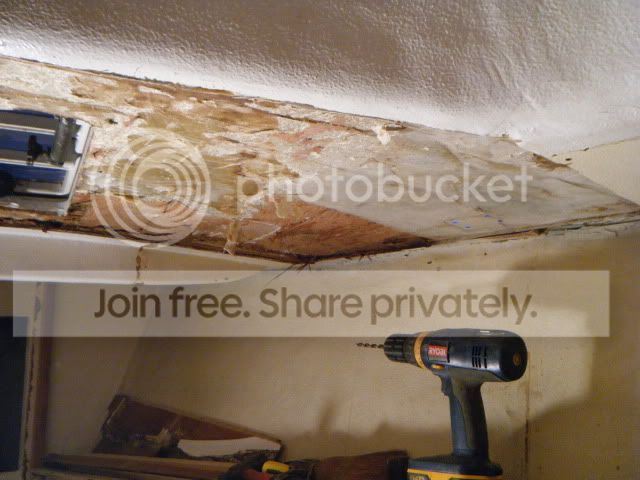
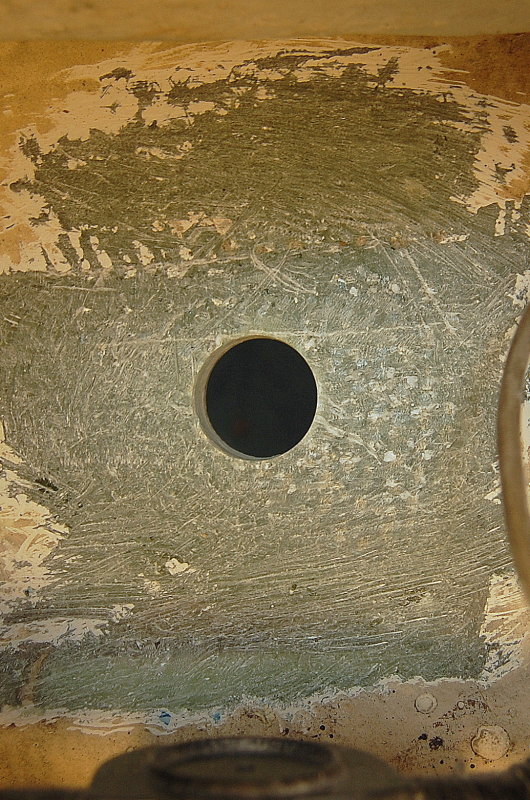
This morning I sanded a piece of pinelumber with a 60 grit disk and then laid up about a half inch of chopped strand mat and woven rovng. I wanted to see if the bond strength was stronger than the wood. This afternoon about six hours after the lay-up I sawed out a piece in the middle and tried to split the wood away from the laminate. the pictures show the results.
 

Attachments

zeehag

.
Mar 26, 2009
3,198
1976 formosa 41 yankee clipper santa barbara. ca.(not there)
whatareyeyoufreekingbloodysykick????

geeziz..phillip and i cant even have a decent conversation about this--i have to make a coupla beams for my forepeak ..lol....i need to laminate stuff and i need to make a glass over wood cored foredeck patch... he mentioned this .....LOL.....without you posting it for future reference....whatyoulisteningin???? LOL ....ty ross!!!!!!
 

Johnb

.
Jan 22, 2008
1,505
Hunter 37-cutter Richmond CA
Ross,

I am not sure what I am seeing, can you add some explanation.

My understanding is that polyester will stick to soft woods, (not oily) much better than to hard woods, (oily) but epoxy will stick to both.

Thanks
 

Ross

.
Jun 15, 2004
14,693
Islander/Wayfairer 30 sail number 25 Perryville,Md.
Re: Polyester resin bonds

The glue only has to be stronger than the lignin that holds the wood together.
 

Ross

.
Jun 15, 2004
14,693
Islander/Wayfairer 30 sail number 25 Perryville,Md.
John it sticks to either the same but the oaks and locust are stronger than the bonds but if you glue pine to oak you will get the same result as I did with the resin/glass laminate to pine. When you attempt to split it apart the pine will fail.
 

PaulK

.
Dec 1, 2009
1,522
Sabre 402 Southport, CT
You may find that if you wait a while and give the wood time to go through a bunch of wet/dry cycles, with the wood cells absorbing moisture, (expanding), drying out, (contracting) and in general warping, that the polyester/wood bond is not overly strong. In his book on fiberglassing over wooden hulls, Alan Vaitses supports connecting the 'glass to the wood with mechanical fasteners (screws, staples, etc.) because the strong original bond doesn't last. Epoxy is much better than polyester for sticking to wood.
 

zeehag

.
Mar 26, 2009
3,198
1976 formosa 41 yankee clipper santa barbara. ca.(not there)
You may find that if you wait a while and give the wood time to go through a bunch of wet/dry cycles, with the wood cells absorbing moisture, (expanding), drying out, (contracting) and in general warping, that the polyester/wood bond is not overly strong. In his book on fiberglassing over wooden hulls, Alan Vaitses supports connecting the 'glass to the wood with mechanical fasteners (screws, staples, etc.) because the strong original bond doesn't last. Epoxy is much better than polyester for sticking to wood.
what about kiln dried wood used as an encapsulated core?
 

Ross

.
Jun 15, 2004
14,693
Islander/Wayfairer 30 sail number 25 Perryville,Md.
PaulK , I have also read that book. You are correct that eventually the bond will fail. If nothing else the wood will rot.

Zeehag, As long as you depend on enough glass to support the load, what you use for a core doesn't matter. In the 1960's I saw boats that used corrugated cardboard for holding shape until the resin cured.
 
Oct 2, 2006
1,517
Jboat J24 commack
In chopping apart Seafever i found the orginal 1970 Poylester resin built to be plenty strong BUT all the secondary bonds like tabbing and core work were VERY hit and miss

I was able to pull off all the inner skins without any effort and there were huge areas on the core to outer skin were the resin peeled off by hand OR was on like nobodys business :confused:

 
Feb 6, 1998
11,760
Canadian Sailcraft 36T Casco Bay, ME
The glue only has to be stronger than the lignin that holds the wood together.
Yep and even Elmer's will do this..;) Did you think poly resinated glass cloth would not bond well to well prepared dry wood for some reason?
 

Ross

.
Jun 15, 2004
14,693
Islander/Wayfairer 30 sail number 25 Perryville,Md.
Yep and even Elmer's will do this..;) Did you think poly resinated glass cloth would not bond well to well prepared dry wood for some reason?
Just all the negative ink polyester resin gets in boat work. My experience has been that the wood fails as in Tommays post.
 
Feb 6, 1998
11,760
Canadian Sailcraft 36T Casco Bay, ME
Just all the negative ink polyester resin gets in boat work. My experience has been that the wood fails as in Tommays post.
I don't think it gets bad ink just some prefer to work with epoxy. Primary poly bonds are very, very strong and well prepared secondary bonds can be too. I have worked with poly for many years but still prefer epoxy for many things and poly for others. Neither is a clear winner in my book and both are good to have. I still use both with no qualms. The only thing I ever recall people complaining about is its secondary bonding but done right it can still be very strong.

There are pros and cons to each..
 

Ross

.
Jun 15, 2004
14,693
Islander/Wayfairer 30 sail number 25 Perryville,Md.
I find that either spilled on a clean surface is the devil to remove the next day.
 

PeteK

.
Nov 3, 2008
30
Clipper CM4/c Nordland, WA
The only thing I ever recall people complaining about is its secondary bonding but done right it can still be very strong.
I hope this isn't taken as a hijack, but what would constitute a proper prep and application for secondary bonding?

Ummm, I'd best not assume here; By secondary bond I mean applying polyester layup to an older polyester layup. Older as in years older.

I'm about to embark upon such a venture and would like to get it right!

Thanks,
Pete
 
Oct 2, 2006
1,517
Jboat J24 commack
Perhaps i said it wrong BUT most of the secondary bonds FAILED randomly be it glass on wood or glass on glass


Its one thing for wet wood to pull off poly resin after 40 years its another to have the secondary poly bonds peel off the hull layup in a hit and miss manner


In putting the boat back together i sprung for the epoxy
 

Ross

.
Jun 15, 2004
14,693
Islander/Wayfairer 30 sail number 25 Perryville,Md.
I had very good results on my 1968 Islander when I sanded all of the existing surface with 24 grit disks and wiped the dust off with a rag soaked with acetone. I ended up using two rolls of 2.1 ounce chopped strand mat and a full roll of 24 ounce woven roving. I don't know how many gallons of resin probably about fifty.
 
Feb 6, 1998
11,760
Canadian Sailcraft 36T Casco Bay, ME
I hope this isn't taken as a hijack, but what would constitute a proper prep and application for secondary bonding?

Ummm, I'd best not assume here; By secondary bond I mean applying polyester layup to an older polyester layup. Older as in years older.

I'm about to embark upon such a venture and would like to get it right!

Thanks,
Pete
Pete,

There are two types of polyester resin used in building a boat, laminating and finishing. The hull is laid up with a laminating resin which cures with a tacky feel as it needs to be air inhibited to fully cure. The last layer or two applied to the mold will be laminated with a waxed finishing resin which will cure in air because the wax rises to the surface to seal if from the air.

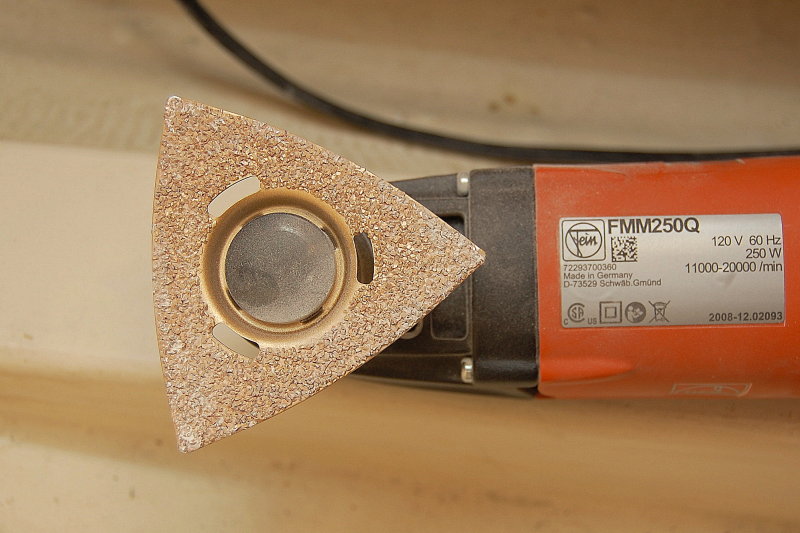
Before any repairs can be done on older fiberglass, no matter how old, the first thing to do is a thorough dewax with a dewaxer like Interlux 202 or Pettit Dewaxer. Use only clean rags and a one wipe, fold, turn, one wipe fold turn, then a new rag approach. The dewaxer will soften the wax and transfer it to the rag but if you take more than one wipe you just wind up moving it around. Once dewaxed a thorough sanding of the area with 80 grit or better, then a final dewax, will give a good solid bond. These days I generally use my Fein Multi-Master with the diamond grit sanding / grinding blade as it can get into some very tight spots.


I have seen 35 year old hulls still beading water due to wax residue from manufacturing. If the interior of your boat is gelcoat then this should also be cleaned and sanded away down to the glass underneath it as seen above.

Sanding alone only serves to drive the wax into the substrate and makes it tougher to get out of the substrate for a good bond. When I used to sit in on surveys with my friend Brian one thing we saw often was failed secondary bonds, usually tabbing, or things like bulkheads & lazarette false floors tabbed in and added after the hull was cured etc..

Acetone can work as a dewaxer, as Ross mentioned, but I find Interlux 202 or Pettit Fiberglass Dewaxer work much better. I have tried to duplicate the secret "Frosted Flakes" recipe, ;) mixing my own solvents, but have not yet come up with one that works better than the Pettit or Interlux dewaxers.
 
May 11, 2005
3,431
Seidelman S37 Slidell, La.
While I know it's not the macho thing to do, I actually called West Systems before starting on the rudder. I was concerned with getting the absolute best bond to the stainless post. West told me two things I did not know. First, clean the post with acetone, and use paper towels, not any kind of cloth. They said there would probably be a tiny bit of either wax or some other release agent in any cloth. Told me that even a washed rag that had been in a dryer with a little fabric softner could have some release agent. Also told me that after sanding and cleaning with acetone, to roll on one coat of epoxy and before applying any glass, to brush it with a wire brush. Apparently this forces the epoxy into every little scratch on the stainless. I did follow the instructions and only time will tell how good this worked.
 

PeteK

.
Nov 3, 2008
30
Clipper CM4/c Nordland, WA
Excellent! Thanks to you and Ross for the information. I'll be sure to follow the de-waxing instructions to the letter; makes perfect sense to me.

Pete


Pete,

There are two types of polyester resin used in building a boat, laminating and finishing. The hull is laid up with a laminating resin which cures with a tacky feel as it needs to be air inhibited to fully cure. The last layer or two applied to the mold will be laminated with a waxed finishing resin which will cure in air because the wax rises to the surface to seal if from the air.

Before any repairs can be done on older fiberglass, no matter how old, the first thing to do is a thorough dewax with a dewaxer like Interlux 202 or Pettit Dewaxer. Use only clean rags and a one wipe, fold, turn, one wipe fold turn, then a new rag approach. The dewaxer will soften the wax and transfer it to the rag but if you take more than one wipe you just wind up moving it around. Once dewaxed a thorough sanding of the area with 80 grit or better, then a final dewax, will give a good solid bond. These days I generally use my Fein Multi-Master with the diamond grit sanding / grinding blade as it can get into some very tight spots.


I have seen 35 year old hulls still beading water due to wax residue from manufacturing. If the interior of your boat is gelcoat then this should also be cleaned and sanded away down to the glass underneath it as seen above.

Sanding alone only serves to drive the wax into the substrate and makes it tougher to get out of the substrate for a good bond. When I used to sit in on surveys with my friend Brian one thing we saw often was failed secondary bonds, usually tabbing, or things like bulkheads & lazarette false floors tabbed in and added after the hull was cured etc..

Acetone can work as a dewaxer, as Ross mentioned, but I find Interlux 202 or Pettit Fiberglass Dewaxer work much better. I have tried to duplicate the secret "Frosted Flakes" recipe, ;) mixing my own solvents, but have not yet come up with one that works better than the Pettit or Interlux dewaxers.
 

druid

.
Apr 22, 2009
837
Ontario 32 Pender Harbour
I connected two pieces of fir plywood with fg tape and polyester resin (the way most stitch-n-glue instructions recommend to extend plywood, but of course they use epoxy). After a day, I could pull apart the connection by hand - the tape just ripped off the wood. After that, I've always used epoxy.

OTOH, although I noticed several places in Far Cove (1985 Catalina 36) where the fg could be picked off the plywood by hand, the connections in my 1973 Crown 28 were solid - the fg was still well bonded to the plywood. Not sure what Calgan did, but it sure lasted!

druid
 
Status
Not open for further replies.