Coating on Hull - Is it Gelcoat?

Feb 15, 2024
9
Hunter 23 WK Claytor Lake
Hello,
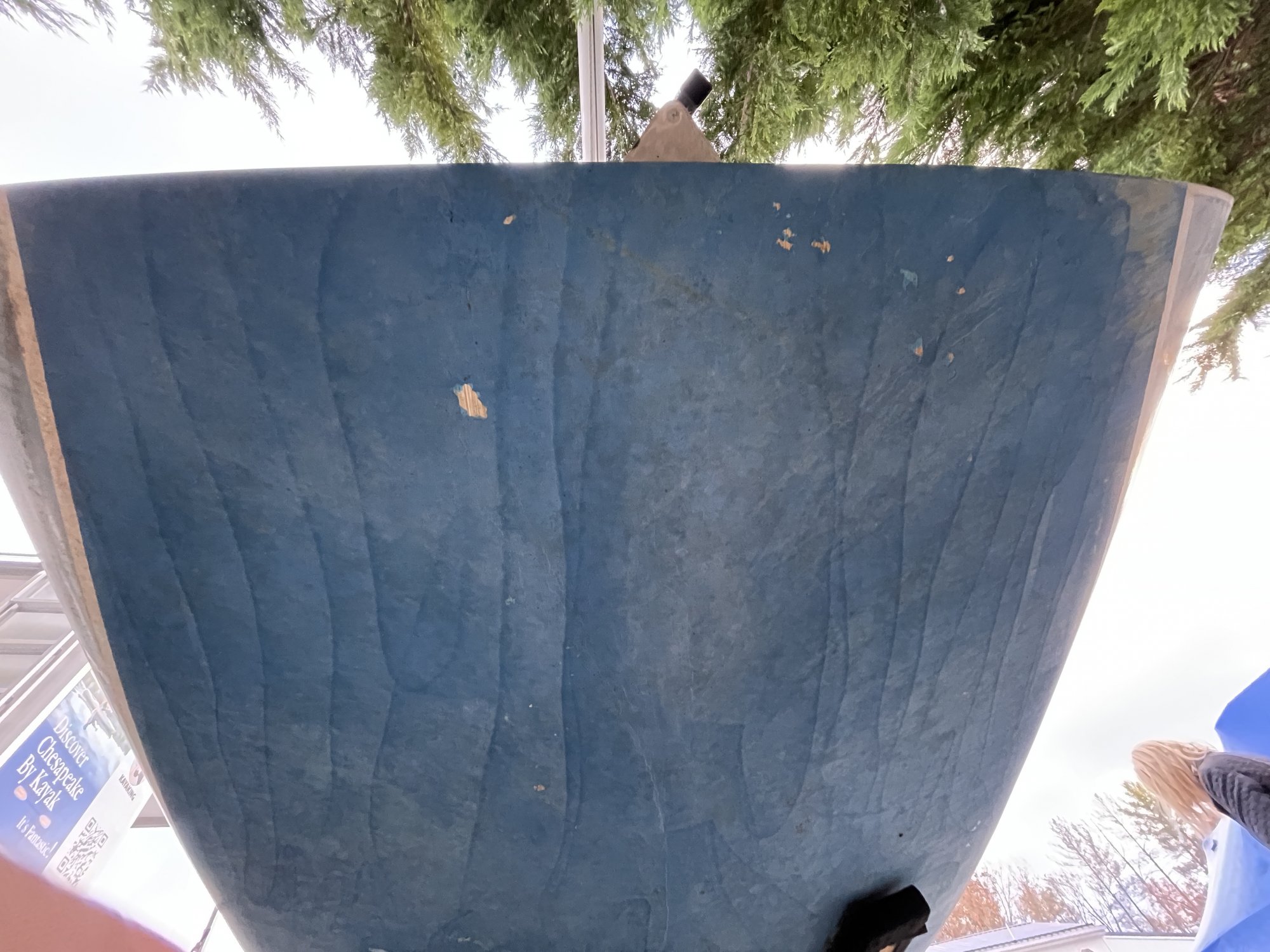
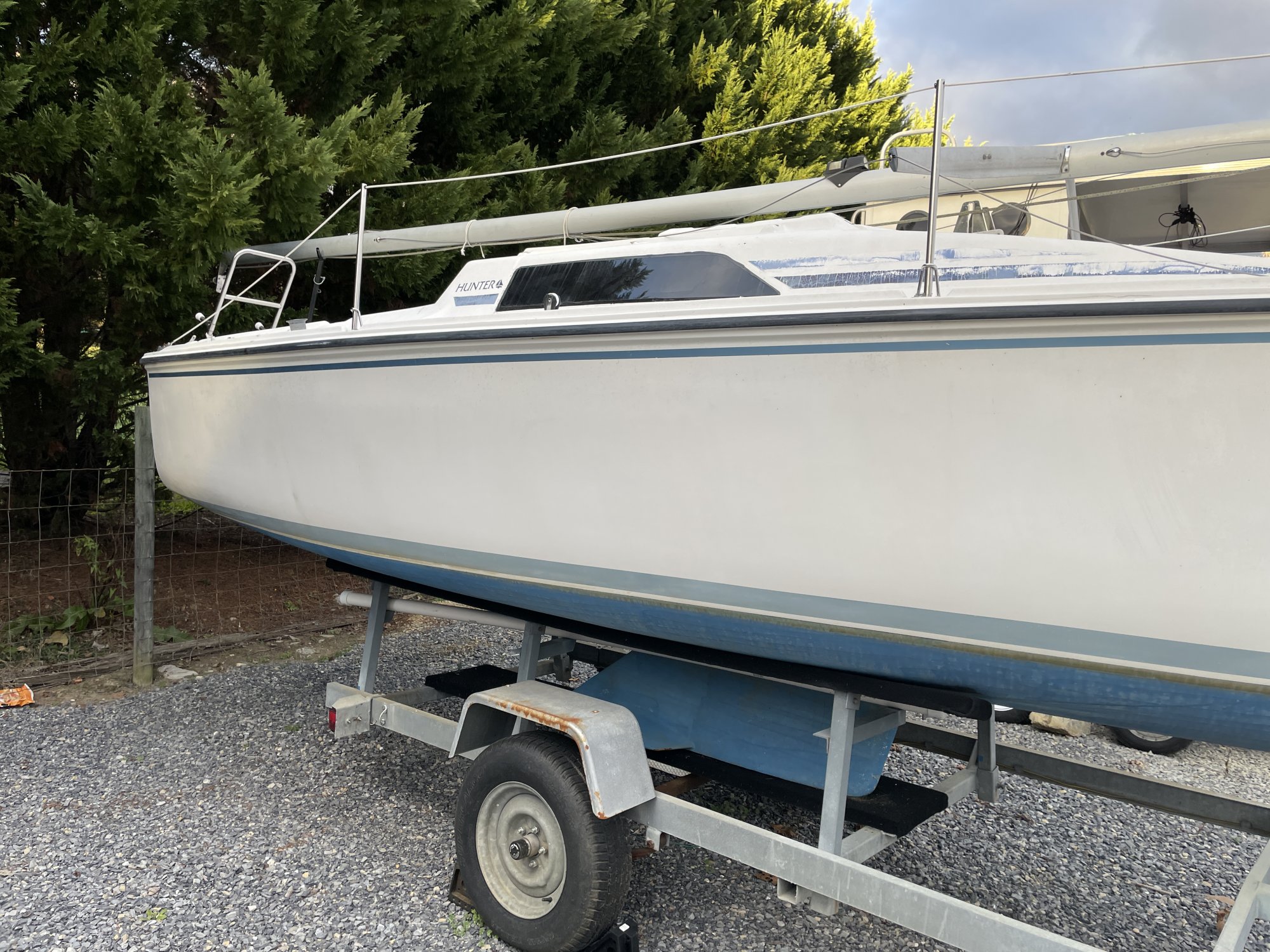
I pulled my 1987 Hunter 23 out of the water in October, and noticed places on the bottom where it looks like the fiberglass is exposed. Most areas are small, about the size of a penny. One or two areas are a little larger. It is pretty widespread along the bottom. The surface looks strange to me. It looks like there are two very thin layers peeling off. Both are blue. One could be the older anti-fouling paint.

I was wondering if anyone knows what this type of boat used for the bottom hull over the fiberglass? Was it gel coat, or something else? Is that the fiberglass I'm seeing? I'm afraid that this doesn't look too good. I'm open to advice. Does this have to be repaired before putting back in the water next year? The boat is near Claytor Lake. Here are some pictures. Thank you.
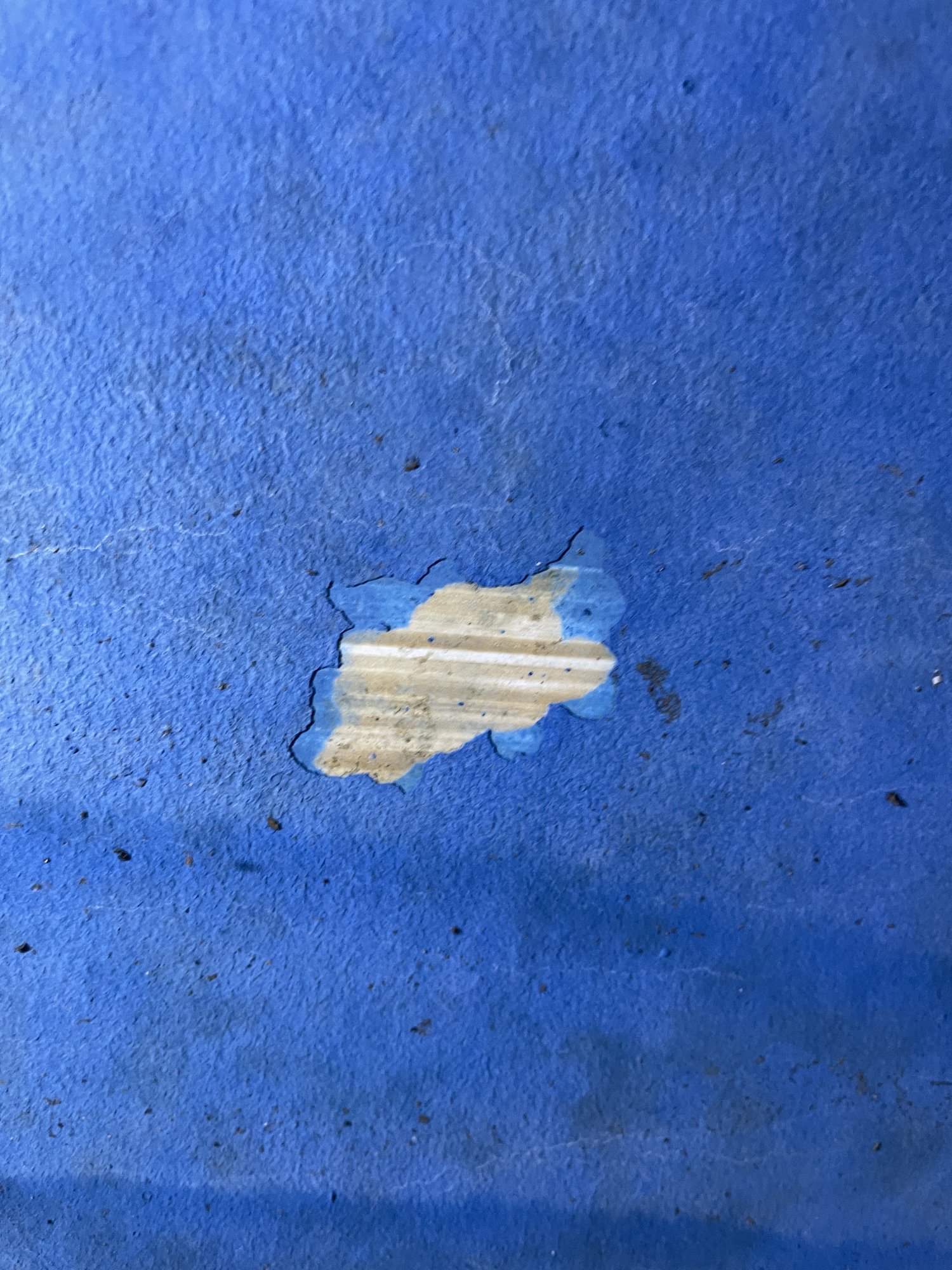
Worst Area of Damage.JPEG
Stern Underside.JPEG
Side View.JPEG
 
May 17, 2004
6,261
Beneteau Oceanis 37 Havre de Grace
The way any production boat like that is built is that gelcoat is sprayed inside the mold, and fiberglass fibers with polyester resin are sprayed inside that. Gelcoat itself is more or less just pigmented polyester, so there’s not much chemical difference between that and the lower levels except for the fiberglass mixed in. The gelcoat and inner polyester/fiberglass are applied in a way that forms a pretty good bond, so it’s not common to see gelcoat peel off. The gelcoat is usually the same color across the entire hull, above and below the waterline.

Outside the gelcoat some owners apply an epoxy barrier coat, usually white or gray. Outside of that is the antifouling paint. I’m sure the outer blue layer you’re seeing is antifouling - that’s exactly how it looks when it gets old and loses adhesion. My guess is that the lower blue level is older antifouling. It’s possible the much older antifouling started chipping or peeling off, so a previous owner just sanded down the areas that chipped away, feathered the edges of those chips, and painted the new antifouling on. Assuming you don’t feel or see any actual fibers in the exposed lower layer I’d assume that’s the case.

The chipping off antifouling causes lots of extra surface area that slows the boat. If you’re not racing that’s not too big of a deal. If you want somewhat better performance you could sand all of those spots to feather them, then paint over with fresh antifouling. You might find that as you start applying new antifouling more old spots will chip off, getting on the roller and making things messy. Unfortunately the only way around that is removing all the old antifouling.

If you’re really concerned about whatever surface is under the blue layers you could sand them a bit and then apply an epoxy barrier coat to them. That will ensure whatever is under there is adequately sealed, waterproof, and ready for more antifouling.
 
  • Like
Likes: kloudie1
Jan 11, 2014
14,280
Sabre 362 113 Fair Haven, NY
As @Davidasailor26 suggests the paint is probably old bottom paint that has lost its adhesion. Adding more bottom paint without removing the old paint will just waste paint. The additional weight of the fresh paint will accelerate the rate of paint chipping off.

Rather than starting with a sander, I'd start with a sharp scraper and scrape a much off as I could. Spread a tarp under the boat to collect the scrapings and properly dispose of them. Just sand the places where the is still well adhered and lightly sand the bottom after cleaning and dewaxing the hull. Once you get through this miserable job, you'll be good for several years. In freshwater a couple of good coats of paint should last 2 or 3 years if you are not too aggressive with the pressure washer in the fall.
 
Jan 19, 2010
13,092
Hobie 16 & Rhodes 22 Skeeter Charleston
That does not look like a big problem to me but you may feel better (or worse) after you get all of the old anti-fouling paint off of the bottom of your boat and can take a real look.

Here is an effective way to remove all of the old bottom paint from a boat hull.
You will need:
  • A 5 lb bag of powdered garden lime, available from Lowe’s, Home Depot, or a garden center
  • About 1 lb of lye, either sodium hydroxide (NaOH) or potassium hydroxide (KOH). The specific hydroxide is less important than using a strong hydroxide. Many drain cleaners are also just hydroxide salts.
  • A 5-gallon plastic bucket
  • A paint tray and roller with an extension pole.
  • Appropriate chemical-resistant gloves, eye protection, and protective clothing (long sleeves and long pants)
Place the garden lime in the bucket and carefully add the hydroxide. While stirring, slowly add enough water to produce a mixture approximately the consistency of melted peanut butter.

Pour the mixture into a paint tray and use a roller to apply a thick, even coating to the bottom of the boat. I recommend doing this late in the day so the mixture remains moist as long as possible. Allow it to sit overnight, then pressure-wash the loosened bottom paint from the hull the following day.

IMPORTANT: This mixture is strongly caustic. Protect your eyes and skin. Wear chemical-splash goggles, gloves, long sleeves, and other appropriate protective clothing. Let me repeat!!! DO NOT LET THIS GET IN YOUR EYES!!!

If the mixture gets on your skin, immediately rinse the affected area with large amounts of water for at least 15 minutes.

This method really does work, (I've done it many times) but remember that old antifouling paint may contain substantial amounts of copper and other biocides. Before pressure washing, place an old bedsheet, or other water permiable collection material beneath the boat and trailer to catch the paint debris. After the sheet dries you can collect and dispose of the residue appropriately rather than allowing it to wash into the soil. Otherwise, you may end up with a copper-rich patch of contaminated soil beneath the boat.

If your old bottom paint is extra thick... you may need to rince and repeat.

Last! There will always be this one spot where the old bottom paint does not want to let go. I have neve figured out why. I have found a little citrus strip followed by a paint scraper does the trick.
 
Jan 11, 2014
14,280
Sabre 362 113 Fair Haven, NY
There will always be this one spot where the old bottom paint does not want to let go. I have neve figured out why. I have found a little citrus strip followed by a paint scraper does the trick.
That's the one place the PO actually followed the directions and properly prepped the bottom so the paint adheres. ;)
 
  • Ha
Likes: rgranger

colemj

.
Jul 13, 2004
1,178
Dolphin Catamaran Dolphin 460 Mystic, CT
You are fine - this is normal and not anything to be concerned about. It is only old antifouling paint that lost adhesion. What you are seeing underneath it isn't bare fiberglass, but just the normal gelcoat or primer. There is no structural issue here, and if you just put it back in the water like it is, it will be fine, with the exception of getting a little more bottom growth on the bare areas.

You have several options, and some were given above. In summary, your choices are (in increasing amount of work, time, and money):
1. Put it back in the water and go sailing. You are in fresh water, so the growth isn't going to be onerous on those small bare spots. You might even be trailering it every so often, which helps keep it clean.
2. Scrape around the edges of the bare spot to remove any loose paint, then put some antifouling on them and go sailing.
3. Strip the entire bottom of antifouling paint and apply new. Likely needing a primer coat before the paint.

If the entire bottom needs antifouling because the old antifoul has lost its effectiveness, then only #2 and #3 are options.

Mark
 
Feb 15, 2024
9
Hunter 23 WK Claytor Lake
Hello Everyone. Thank you for your responses, I really appreciate all of the information and suggestions. I thought the two blue layers could be bottom paint, but the stripes on the exposed areas below concerned me. Thanks again. Chuck N.
 
Jan 19, 2010
13,092
Hobie 16 & Rhodes 22 Skeeter Charleston
... but the stripes on the exposed areas below concerned me. Thanks again. Chuck N.
Hey... we all been there. For reference, this is what it would look like if it were raw fiberglass showing through

1794928098455.png
1794928119611.png
1794928141409.png

...