Dyneema halyard for hauling storm jib?

Nov 6, 2020
616
Mariner 36 California
I have room on my mast top to run four halyards. With main and jib this gives me the option for two more. I figured I would add a Dyneema halyard to the front and probably run another Dyneema out the back or a low stretch polyester that could be used as a backup for the main or topping lift.

What im wondering is if i could use the Dyneema halyard in the front to hoist a small storm jib effectively? For example, the tack of the storm sail would be connected to a strong point on the deck. The halyard to the top of the sail and the clew back to a winch. I would hoist the storm sail like this, so the luff of the sail is effectively free floating.

Would this be an effective and simple way to rig a storm sail or does the sail luff need the rigidity of a stay to be effective?
 

BarryL

.
May 21, 2004
1,127
Jeanneau Sun Odyssey 409 Mt. Sinai, NY
Hello,

I think that would work - i can't think of a reason why it wouldn't. Do you have a strong point on the deck already or would you have to create one? Note that creating one could be a real challenge as the loads are probably very high.

My boat came with a gale sail.


I've never used it but it does have good reviews. Maybe get one of those instead of finding / adding a hard point and buying a hank on storm sail?

Good luck,
Barry
 
Mar 26, 2011
4,045
Corsair F-24 MK I Deale, MD
I have room on my mast top to run four halyards. With main and jib this gives me the option for two more. I figured I would add a Dyneema halyard to the front and probably run another Dyneema out the back or a low stretch polyester that could be used as a backup for the main or topping lift.

What im wondering is if i could use the Dyneema halyard in the front to hoist a small storm jib effectively? For example, the tack of the storm sail would be connected to a strong point on the deck. The halyard to the top of the sail and the clew back to a winch. I would hoist the storm sail like this, so the luff of the sail is effectively free floating.

Would this be an effective and simple way to rig a storm sail or does the sail luff need the rigidity of a stay to be effective?
Storm sail. Probably not.
  • In strong conditions, the luff needs to stay straight, and it is unlikely you can get the halyard tight enough to get most of the forestay load onto this halyard. If you did, you would crush the masthead pulley and the compression on the mast would greatly increased. This is not like hoisting a sail, it is more like creating a new forestay. The storm jib needs to hoist either on a separate, highly tensioned stay, pr to be hoisted up the furling sail foil.
  • The jib would need a non-stretch internal bolt rope as strong as the forestay. Not likely.
There is, of course, the Gale Sail, which is not a true storm sail, but it's pretty good. Better than what you are suggesting.

Topping lift. Great idea. Common practice. If the line might be used for mast climbing, polyester is probably the better choice. I actually prefer a topping lift with a little stretch (polyester), as the forces are many times lower when the boom swings.
 
  • Like
Likes: BAD ORCA

colemj

.
Jul 13, 2004
1,170
Dolphin Catamaran Dolphin 460 Mystic, CT
No way for a storm sail unless you had one built with a purposeful torsion rope in the luff. Otherwise, you would just rip out the bolt rope or the sail itself. Even with a torsion rope, the luff sag will be high and the sail will never set well.

We have a screecher (basically a large genoa) on a free luff that consists of a thick purpose-built aramid parallel-fiber torsion rope. It requires a 2:1 purchase and a tremendous amount of halyard tension to operate with a luff tension sufficient enough to not make it a spinnaker.

Mark
 
Jan 19, 2010
13,076
Hobie 16 & Rhodes 22 Skeeter Charleston
... one built with a purposeful torsion rope in the luff. ..
:plus:

They exist. I used to have one like that... it had a SS wire luff. Also the jib on my Hobie is made with a built in SS luff line.

You could leave the sail in a sailbag rigged and "bent" with the exception of the tack. Secure the tack with another line run to a strong block on the bow and then run that line back to the cockpit. You could then deploy the storm sail by rolling up the jib on the furler... go forward only to the mast base and open the sailbag. Get back in the cockpit and raise the storm jib and pull the tack line to get it in place. Presumably the sheets would also be pre-run back to the cockpit. You don't really want to be on teh bow of a boat during a storm trying to bend a headsail.

You will want that tack block to be aft of where the roller furler is attached.
 

colemj

.
Jul 13, 2004
1,170
Dolphin Catamaran Dolphin 460 Mystic, CT
:plus:

They exist. I used to have one like that... it had a SS wire luff. Also the jib on my Hobie is made with a built in SS luff line.
One difference with yours and the one in the picture is that the halyard is positioned on the mast for them. The OP is considering using a masthead halyard for this. That will have a lot of luff bend.

Mark
 
  • Like
Likes: rgranger
Jan 19, 2010
13,076
Hobie 16 & Rhodes 22 Skeeter Charleston
One difference with yours and the one in the picture is that the halyard is positioned on the mast for them. The OP is considering using a masthead halyard for this. That will have a lot of luff bend.

Mark
That is a good point. What I described should probably only be set up as a fractional rig.
 

Joe

.
Jun 1, 2004
8,351
Catalina 27 Mission Bay, San Diego
I think it's a great idea to have a second jib halyard. But, not for a storm jib. That sail is designed to stabilize the boat, so you'll want to bring the center of effort back lower to the reefed mainsail (or storm trysail) Notice the picture rgranger posted. the luff is well aft of the forestay. If you don't want to go first class and install a removable inner forestay (which can require some rather expensive hardware) you can go with the wire luff or dyneema luff solution. Reinforce the foredeck fitting as you mentioned. The more robust the better, an terminate the upper part to the mast 3 feet or so below the top. I reckon using your reefed mainsail's upper height would be a good reference. It can also offer a counter force. If there's no winch at the mast, you can splice in a single block with a becket to create a 2:1 purchase a the cleat. I would not try to mess with making this part of my "all lines led aft" design. 'You can store the sail in a bag by wrapping it around the wire/rope and coiling it large enough so it won't kink. Keep the halyard clipped to the mast. Bring the sail onto the foredeck, clip on the tack and halyard, then step back to the mast and hoist away using your purchase rig to get good tension. (or you may want to invest in a small standard winch (not that expensive). Below is pic of a "mast hound" from Ronstan, price 25 to 45 bucks. Go to their website for other ideas.

Finally, you will probably use this project more often as a topping lift... for spinnaker work or lifting things into the boat etc. So building something a little stronger to double as a storm jib platform should make sense.
 
Nov 6, 2020
616
Mariner 36 California
Hello,

I think that would work - i can't think of a reason why it wouldn't. Do you have a strong point on the deck already or would you have to create one? Note that creating one could be a real challenge as the loads are probably very high.

My boat came with a gale sail.


I've never used it but it does have good reviews. Maybe get one of those instead of finding / adding a hard point and buying a hank on storm sail?

Good luck,
Barry
I would have to create a strong point, but that would be easy enough to do.

Oh that is interesting. I will have to take a closer look at that sail.
 
Nov 6, 2020
616
Mariner 36 California
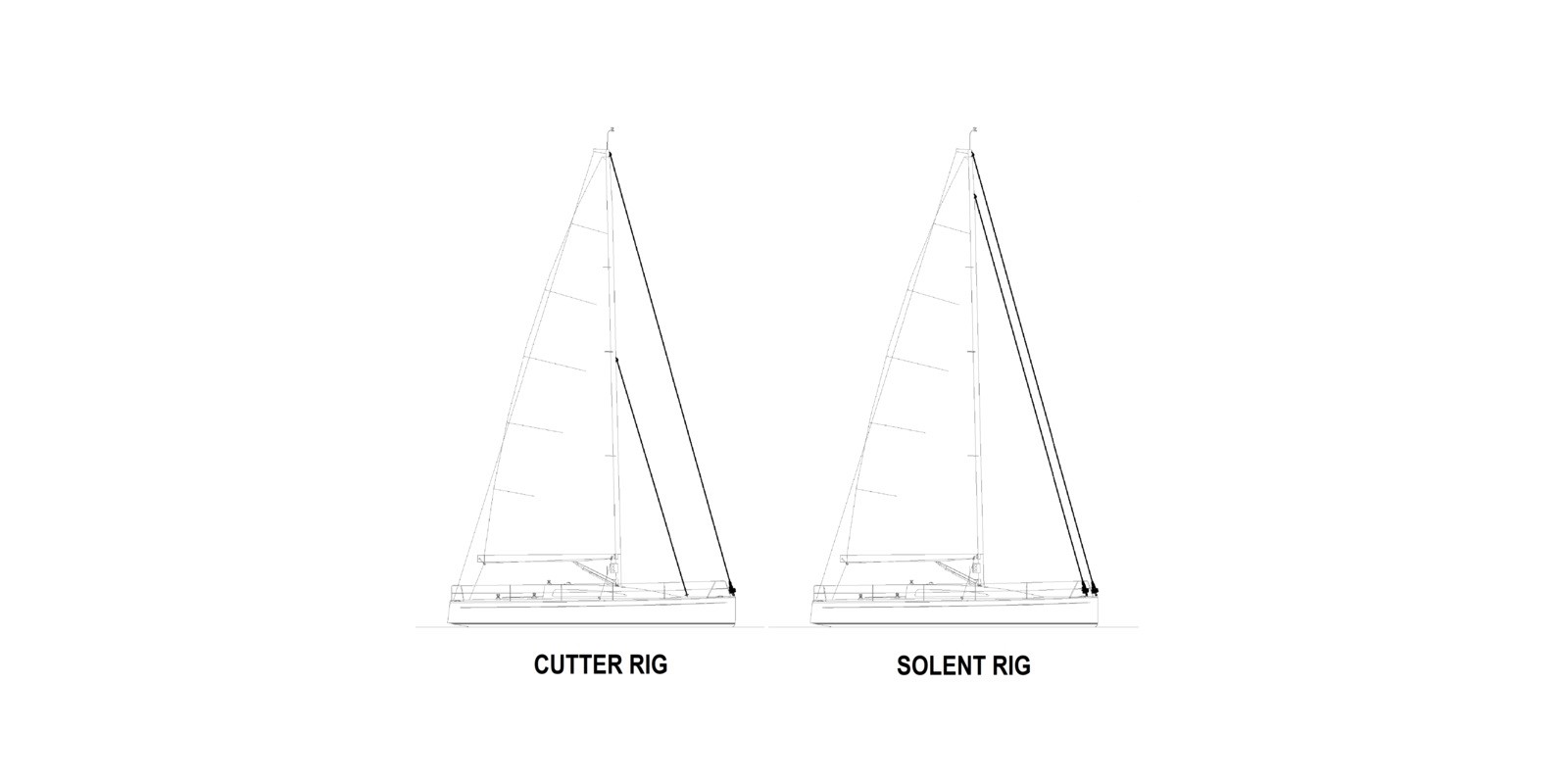
Thanks for the great replies. I think i will have to take a closer look at how to rig a storm sail. If i get my chance to travel to Argentina and Chile (not around the cape), I might be asking a lot from a storm sail. It sounds like the halyard approach is not a good choice. I was hoping to avoid additional backstays by adding an inner stay. I'm wondering though if I go the route of a Solent stay, if that would give me the desired stability Joe touches on. or if i really need to get that stay further aft?
 

jssailem

SBO Weather and Forecasting Forum Jim & John
Oct 22, 2014
24,883
CAL 35 Cruiser #21 moored EVERETT WA
hoping to avoid additional backstays
You own a Mariner 36? That is a mast head sloop. You already have a solid backstay. Why would additional back stays be needed? Are you seeing the mast pump? Is the mast really bendy or is it like a telephone pole?
 
May 29, 2018
692
Canel 25 foot Shiogama, japan
RE: Would this be an effective and simple way to rig a storm sail or does the sail luff need the rigidity of a stay to be effective?

Are you using a roller furled headsail now?
If so will your extra halyard run out at the masthead, parallel, in front of or behind the present furler halyard.
One of the things that you want to avoid is an entanglement up there, especially in heavy weather.

My guess , only a guess. is that you could rig an external dyneema halyard with a winch on the mast and you have a stormsail with a wire luff you will get enough tension to shape the sail and do the job. Of course a good solid well positioned tack connection is essential.
The halyard connection (or turning point) to the mast (see Joe's image) could be in a position where the halyard is as short as possible to avoid stretch.

gary
 
  • Like
Likes: BAD ORCA
Nov 6, 2020
616
Mariner 36 California
You own a Mariner 36? That is a mast head sloop. You already have a solid backstay. Why would additional back stays be needed? Are you seeing the mast pump? Is the mast really bendy or is it like a telephone pole?
I meant if I attached an inner stay that was attached further down the mast a third or so, and further aft of my head stay. My understanding is that a true 'innerstay' attached that far down the mast needs backstays added to stabilize the masts mid/upper section. A Solent stay would not need that backstays since my uppers would support its load.
 
Oct 2, 2008
3,815
Pearson/ 530 Strafford, NH
Our boat is cutter-rigged and we would often use the staysail in heavy weather or at night. It is on a fuller with a boom making the shape very consistent. I think that is what you’re trying to do.
 
May 29, 2018
692
Canel 25 foot Shiogama, japan
RE; I meant if I attached an inner stay that was attached further down the mast a third or so, and further aft of my head stay. My understanding is that a true 'innerstay' attached that far down the mast needs backstays added to stabilize the masts mid/upper section. A Solent stay would not need that backstays since my uppers would support its load.

That is correct
 
  • Like
Likes: BAD ORCA

Joe

.
Jun 1, 2004
8,351
Catalina 27 Mission Bay, San Diego
It sounds like the halyard approach is not a good choice. I was hoping to avoid additional backstays by adding an inner stay. I'm wondering though if I go the route of a Solent stay, if that would give me the desired stability Joe touches on. or if i really need to get that stay further aft?
I think you can get away with your plan as long as you understand its limitations. My observation was to help you realize that moving the sail's center of effort towards mid foredeck can make it much more effective tool. That said I have seen many boats simply use a 35-45% flat cut sail hanked on to the forestay as their storm jib. So, I can accept that simply using a reduced size headsail rigged in the usual way, (except getting the tack and foot a few feet above the deck) could be an adequate solution. Here's an article that might help you: Set a Storm Jib | UK Sailmakers

I use a staysail on my boat fairly often. It has a sewn in wire luff... but I use for light air. I really like the sail, it was originally designed to supplement the spinnaker, but I started using it by itself in light conditions because its lower weight cloth, narrow aspect shape and the luff's curving shape benefitted air flow attachment. That's why a second jib halyard is so advantageous. I dropped the genoa on deck, leaving the halyard attached, and rigged the stay sail using the second one.

So, if you want an opinion, I'd rather have the second jib halyard, then invest in a storm jib that can be attached to your current furled sail... like the "gale sail". Forget the foredeck attachment, and just use the second halyard for the gale sail. You'll probably rarely use the gale sail but the 2nd halyard can be used for other things.... like sailing wing on wing, or as a hoist if you don't have a topping lift. Good luck my friend. It's fun talking about this stuff isn't it?
 
Nov 6, 2020
616
Mariner 36 California
I think you can get away with your plan as long as you understand its limitations. My observation was to help you realize that moving the sail's center of effort towards mid foredeck can make it much more effective tool. That said I have seen many boats simply use a 35-45% flat cut sail hanked on to the forestay as their storm jib. So, I can accept that simply using a reduced size headsail rigged in the usual way, (except getting the tack and foot a few feet above the deck) could be an adequate solution. Here's an article that might help you: Set a Storm Jib | UK Sailmakers

I use a staysail on my boat fairly often. It has a sewn in wire luff... but I use for light air. I really like the sail, it was originally designed to supplement the spinnaker, but I started using it by itself in light conditions because its lower weight cloth, narrow aspect shape and the luff's curving shape benefitted air flow attachment. That's why a second jib halyard is so advantageous. I dropped the genoa on deck, leaving the halyard attached, and rigged the stay sail using the second one.

So, if you want an opinion, I'd rather have the second jib halyard, then invest in a storm jib that can be attached to your current furled sail... like the "gale sail". Forget the foredeck attachment, and just use the second halyard for the gale sail. You'll probably rarely use the gale sail but the 2nd halyard can be used for other things.... like sailing wing on wing, or as a hoist if you don't have a topping lift. Good luck my friend. It's fun talking about this stuff isn't it?
Thanks for elaborating. Much appreciated. I agree, I love learning this stuff. I'm past the halfway point in my refit, so the boat in in 'sailable' condition more often now. Now that i'm taking the boat out more often solo, i can start refining my sailing skills. I hope to head to South America where I will be encountering heavier weather, so i'm trying to keep in the back of my mind some future upgrades that I should make. A second stay is one I keep going back and forth on because of my inexperience.
 

jssailem

SBO Weather and Forecasting Forum Jim & John
Oct 22, 2014
24,883
CAL 35 Cruiser #21 moored EVERETT WA
I hope to head to South America where I will be encountering heavier weather
How far South are you intending to venture. You know that the sea conditions are relative to the latitude you sail. Sea conditions at 45 degrees are generally the same North or South. There is a reason the ocean off the coast of Long Beach, California is called the Pacific. It is similar to the ocean off the coast of Valparaiso, Chile. Looking at Saturday the 7 Nov. the wave height for both locations is about 3 meters. Just direction is changed. California is forecast out of the NW 13 sec period and Chile is out of the SW 10 sec period. Both locations are forecasting Sunshine, 75-80 degrees 5-8 knots breeze and music playing in the Cantina’s.

If you can sail out of your marina in SoCal you should enjoy the same experience South of the equator.
 
  • Like
Likes: BAD ORCA

dLj

.
Mar 23, 2017
5,229
Belliure 41 Back in the Chesapeake
I've been following this discussion a bit. There is a critical statement you've made in my opinion - you say you don't have enough experience with either the cutter rig or the solent rig. I'm attaching two links on a short discussion of the differences between the two rigs. You can get to the second link via the first link but as I had read these some time ago I just wanted to know if I was remembering them correctly before posting them so I just attached both.

The writers state they feel the cutter rig is better for off shore sailing - an opinion I agree with just to be transparent. However I have sailed with folks that prefer the solent rig so it is really a matter of preference.

It's a fair amount of work and expense in both cases to design, build and make the sails etc. to create either of these as it is a redesign of your boats current rigging. The solent rig may be less work, but it's still not trivial.

In my opinion you don't need to spend the time, money and work to redesign your rig. Just make sure you have a good small sail option for high winds setup. If I were in your shoes, I would spend the time and money on a proper installation of a Jordan drogue. The rig you currently have is more than adequate for what you want to do. Is it the very best? Well, perhaps not, but definitely a good rig and sufficient for what you are planning to do.


dj