Diesel fuel can for boating

Mar 26, 2011
3,982
Corsair F-24 MK I Deale, MD
I've had a Surecan for ~ 5 years. No spills, not ever. It is the only can I use to fuel my boat.

(Do place the nozzle in the tank before opening the valve; it can pressurize in the sun, and some will spurt out, but not much, since you can use the handle to control the flow.. Just put it in the filler first.)
 
  • Like
Likes: Bob S
Mar 6, 2008
1,503
Catalina 1999 C36 MKII #1787 Coyote Point Marina, CA.
I bought 5 gallon, nothing fancy diesel jug and buy fuel from street gas station. To transfer the fuel to the boat, I use 12v external fuel pump with short fuel hose. No spills. Gas station diesel is cleaner than marina fuel since more is sold and new fresh fuel is added. Also I can take extra fuel when on a long trip and can transfer the fuel while on the water.
 
Mar 26, 2011
3,982
Corsair F-24 MK I Deale, MD
The simple method, for 5-gallon transfers, is a shaker siphon. You don't hold the can, no moving parts. Cheap and reliable. What I always used on my cruising cat.

I like the Surecan for 4-ounce to 3-gallon transfers, where accurate cut-off is required, and where you may be filling into a small hole. My F-24 has a 3-gallon tank, and typically I am only adding 1-2 gallons. For 5 gallons, a shaker siphon. The can is too heavy to want to hold.
 
Jan 7, 2011
5,941
Oday 322 East Chicago, IN
That Surecan looks cool, and I bet it works well. But I am too cheap to spend $77 for a gas can I would probably use 1x a year.

I stead, I use a plain old 5 gallon yellow diesel jug (plastic), and a shaker hose to transfer fuel should I need it.

But I also use about 19 gallons of diesel a year and I fill up at the marina at the end of the season. So I don’t need to transfer fuel if I am on a few days overnighter and am running low.

Greg
 
  • Like
Likes: BigEasy
Mar 26, 2011
3,982
Corsair F-24 MK I Deale, MD
Even when I had the cruising cat and a fuel dock 100 yards away, I found it more convenient to bring a 5-gallon can as needed. Less farting around, less time. I always carried several cans and a folding cart; some of the places we cruised had no fuel dock, so you had to visit the local service station a few blocks away. No big deal. Once, I hurt my back and had to send my 14-year old daughter to get gas. I had to send her with a note from he father, explaining the situation, because there is a state law saying you can only get gas if you have a driver's license! Pretty funny.
 

MFD

.
Jun 23, 2016
290
Hunter 41DS Pacific NW USA
I use the well-known/basic Scepter jerry cans for diesel, gas and water.
They are affordable and come in many sizes/shapes.
Being standardized also means not worrying about which threading my cans have when buying attachments or replacement caps, etc.

I don't use the spout thing from them (except a 2-gal gas can and the newer design actually works well) - most replaced with a standard cap.
The original spouts have been handy when cut down a bit and reversed (the old-style horrible ones, not the newer one with the lever) - makes it easy to slide a hose or pipe into the can and holds it in place fairly well. I have one of those cut down that way for each diesel and water. They stay 'spout down' in the can (I have three diesel and three water) and I can tell which can has it since that can does not have a standard cap.

EDIT: Now that I think about it, I don't use the 'spout down' setup to hold the hose/pipe in the can with the newer diesel transfer pump. That was setup for use with the older pump and manual siphoning. Newer pump goes directly onto the can itself.

Specifically for diesel:
I have both a siphon and a battery powered electric fuel transfer pump.
I started with just the manual siphon and bought the pump a year or so later.
The pump is much faster and easier to use and easy to stop if you are doing something like filling a small tank for a diesel heater.
It takes standard AA batteries, which I have an assortment of rechargeable ones around for various things anyway.

I haven't used the transfer pump in a couple years, but it was from Amazon and something like this:
I had a different one before and that eventually died and I was never super happy with it anyway.
This was ~5 years ago, but I remember when I bought this one and being a little hesitant about the price, but being very happy with the purchase compared to the other one after putting it to use.

Diesel is messy, smelly, slippery and a big no-no to spill into the water.
The transfer pump has significantly reduced the risk and hassles related to all of that.
It also means both myself and the jerry can are safely seated in the cockpit while doing fuel transfers.

I store all the scepter can related equipment in draw-string clear plastic shoe bags. Separate bags for diesel, water, never-used.
The two diesel shoe bags also get fuel absorbant mats stuffed in to deal with any drippings, and get changed out every couple years.
For gasoline I just have the 2-gallon can and no 'extras' so no shoe bag needed.
 
Last edited:
Sep 24, 2018
4,561
Catalina 30 MKIII Chicago
When I had gas powered engines, I used long EZ-Pour Spouts on a standard 5 gallon gas jugs. I would put the nozzle in to the boat before holding the 30lbs jug up to pour. It was a big improvement over the original spouts.

For some reason the Chicago marinas don't allow fuel jugs unless it's on a boat. Some of the nicer attendants would let me fill up. I used to drive over to the fuel dock with a cart and three or four jugs. It was much faster. I suspect it has something to do with spilled fuel on their property vs a customers property.
 

MFD

.
Jun 23, 2016
290
Hunter 41DS Pacific NW USA
This is what I meant with the term 'spout down' in my earlier post.
This is the setup for my water cans.

For diesel, with the newer AA battery powered transfer pump, it attaches directly to the can so this kind of thing is no longer needed.
I still have the setup for diesel stored away in case I need to do a manual siphon, and also needed it back when I had a different transfer pump that didn't attach directly on the can.

I also use a dewalt-battery-compatible water transfer pump to top up the boat water tanks from the water cans.
It just connects to this, as does the garden hose for filling the cans up shore side.
EDIT: The 90-degree is a regular garden hose fitting and the black thing on it is a regular garden hose 'quick connect'.

IMG_3467.jpeg
 
Last edited:
Sep 28, 2025
93
Catalina C 30 MK1 1983 Stockton Lake Missouri
I use a 12vdc transfer pump in a 3 to 5 gallon bucket with a lid and a couple clamps to secure the hoses to the can or filler input. I can put fuel, fluid or oil soaked rags and other tools in the bucket while working to keeping the area clean. Everything can be stored in the bucket until I need it again . This is the same setup that I use to charge my engine oil and transmission fluid.
So I am not trying to pour anything.
 
Last edited:
Apr 8, 2010
2,239
Ericson Yachts Olson 34 28400 Portland OR
I used our "shaker hose" or Rattle Syphon (as we call it) a week ago while on summer cruise. That way the yellow diesel container stays lashed to the lifeline, adjacent to the deck diesel fill plate. Zero spill. The syphon does lose prime with about a quart or two on the bottom, but it is safe and easy to use. I have used this same scheme off the coast on an overnight delivery trip, with equally good results, for decades.
 
Nov 23, 2015
20
Hunter 33 Coconut Grove
I use a shaker siphon also. I only fill my diesel jugs to 4 gallons because they’re just too heavy. Shaker siphon works a charm, and I lift the jug up a bit higher and at an angle at the end to get all but the last bit. Anything left I pour into a small dedicated cup and with my funnel direct that last amount into the fuel fill opening..
 

dLj

.
Mar 23, 2017
5,110
Belliure 41 Back in the Chesapeake
As a bit of an aside - all fuel cans sold in North America for the past several years have a mandatory vent in them that you can't close. I have several older diesel cans that do not have that mandatory vent in them. I won't buy a new fuel can as I would be worried of contamination especially if storing fuel cans on deck. But when I'm carrying extra cans it's because I'm doing longer ocean legs. I would really not want to get sea water contamination in my backup fuel. If you are coastal sailing or are just using the fuel can to bring fuel to your boat it wouldn't matter. But for anyone that may be thinking of longer passages and carrying fuel for those - I'd look carefully at this design aspect.

dj
 

dLj

.
Mar 23, 2017
5,110
Belliure 41 Back in the Chesapeake
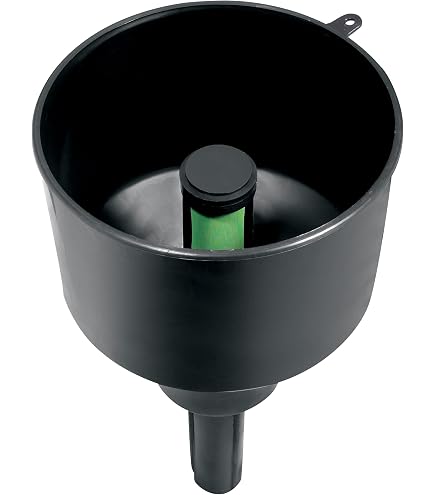
I'm a bit surprised by all this talk of pouring or pumping diesel directly from jugs into the tank. Nothing goes in my diesel tank without first going through a Racor Fuel Filter Funnel:
Do you use this filter when pumping from a dock pump also? How much fuel do you take on when filling your tanks?

dj
 

Bob S

.
Sep 27, 2007
1,814
Beneteau 393 New Bedford, MA
I've used a shaker siphon, works great but my hands always end up smelling like diesel. The Surecan works great but a 5 gal can weighs a lot to be holding high enough to empty. I have a 2.5 gal one I use for the outboard and never had issues.