

We have all had the panic when coming topside in the morning to see everybody in a different relationship to one another. Sometimes we are very close to another boat that was much further away the night before. So the immediate question- Did I drag?
If you have a chartplotter and if you have left it on since you anchored, you can look at the screen and see a plot of where you have been. If you see a circle or an arc then it is a pretty good indication that you have not dragged. That doesn't address why you are uncomfortably close to another boat, but at least you know you are still set in the same spot.
But what if the chartplotter doesn't show a nice circle or an arc? What if the winds were light for a while and you kind of drifted around? Now you have a chartplotter image that is not necessarily clear.
Well, as they say, "I have an app for that".
Here is a chartplotter image-
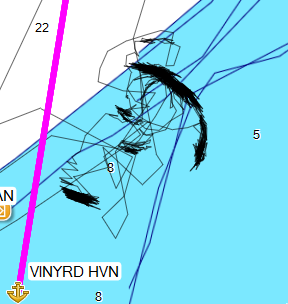
After anchoring I was on the large arc (to the NE) and the next morning I was on the short arc (to the SW). And during the night I was dancing in the middle. But, did my anchor move? This plot is not all that difficult to analyze, but I have seen others that are not clear at all. So I made a visual tool to help answer the question.
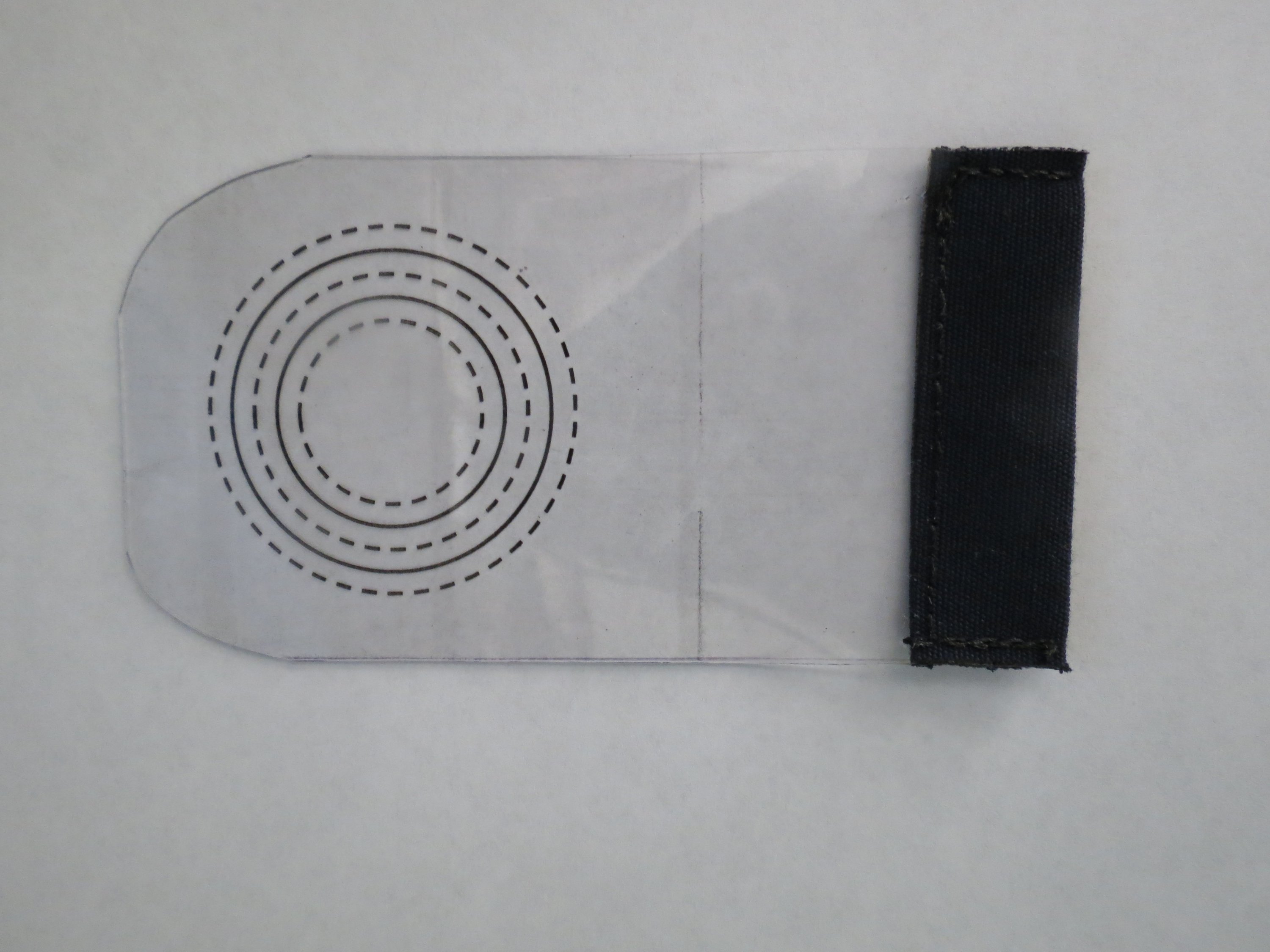
I printed some concentric circles on a piece of vinyl window material with my laser printer. Now by over-laying these circles on the chartplotter (and adjusting the charplotter scale for a suitable fit), I can clearly see that I am on the circle defined by these pieces of the arc.
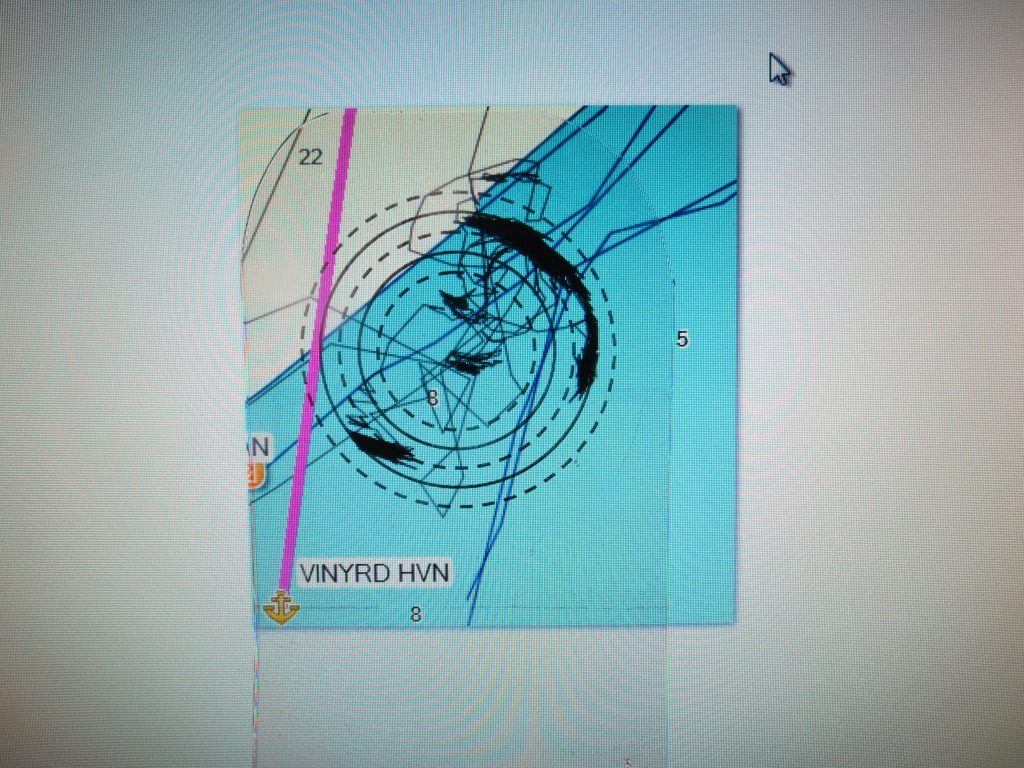
Question answered. What a relief. Now to deal with the uncomfortably close boat- Maybe I can step over and bring him a cup of coffee while discussing a solution.
I should add that when I anchor, after putting out the proper 7:1 (or more) scope with my all chain rode, and letting the anchor "settle in", I back down hard to about 2000 rpm and hold it for 30 seconds while watching for relative motion between fixed range points to be sure I am set. That generally works well unless the bottom is weedy or otherwise not conducive for anchor resetting.
BTW, I made a few of these circle tools for my buddies. I have one extra if anyone would like it. First come, first served. Send me a PM.
If you have a chartplotter and if you have left it on since you anchored, you can look at the screen and see a plot of where you have been. If you see a circle or an arc then it is a pretty good indication that you have not dragged. That doesn't address why you are uncomfortably close to another boat, but at least you know you are still set in the same spot.
But what if the chartplotter doesn't show a nice circle or an arc? What if the winds were light for a while and you kind of drifted around? Now you have a chartplotter image that is not necessarily clear.
Well, as they say, "I have an app for that".
Here is a chartplotter image-
After anchoring I was on the large arc (to the NE) and the next morning I was on the short arc (to the SW). And during the night I was dancing in the middle. But, did my anchor move? This plot is not all that difficult to analyze, but I have seen others that are not clear at all. So I made a visual tool to help answer the question.
I printed some concentric circles on a piece of vinyl window material with my laser printer. Now by over-laying these circles on the chartplotter (and adjusting the charplotter scale for a suitable fit), I can clearly see that I am on the circle defined by these pieces of the arc.
Question answered. What a relief. Now to deal with the uncomfortably close boat- Maybe I can step over and bring him a cup of coffee while discussing a solution.
I should add that when I anchor, after putting out the proper 7:1 (or more) scope with my all chain rode, and letting the anchor "settle in", I back down hard to about 2000 rpm and hold it for 30 seconds while watching for relative motion between fixed range points to be sure I am set. That generally works well unless the bottom is weedy or otherwise not conducive for anchor resetting.
BTW, I made a few of these circle tools for my buddies. I have one extra if anyone would like it. First come, first served. Send me a PM.


