AC Power Onboard and Dockside

caguy

.
Sep 22, 2006
4,004
Catalina, Luger C-27, Adventure 30 Marina del Rey

LuzSD

.
Feb 21, 2009
1,009
Catalina 30 San Diego/ Dana Point, Ca.
Thank you so much for sharing this. I remember reading about this a few years ago and when I talk about it occasionally people look at me like I have 2 heads. I see kids swimming in our marina all the time, and besides trying to maneuver around them, I worry so much about this exact thing.
I am going to share it with our yacht club and everyone else I can find to pay it some attention. Thanks again, this is vital information.
 
Jan 6, 2010
1,520
There was a post last year that talked about "ESD", electric shock drowning. I

wrote back then that this happens frequently in fresh water. The danger is not critical in saltwater as it acts like a shield. A minuscule 100 milliamp charge is fatal, 3 milliamps are painful.

To stay safe, "NEVER ALLOW ANYONE IN THE WATER AT MARINAS OR DOCKS WHERE BOATS ARE RUNNING POWER."

Here's a good informative write-up by Boat-US:

http://www.boatus.com/seaworthy/magazine/2013/july/electric-shock-drowning-explained.asp

CR
 
Feb 6, 1998
11,759
Canadian Sailcraft 36T Casco Bay, ME
That video has been out for a while and was published for public consumption at the request of many ABYC members and techs.

It also illustrates why DIY's should be very, very, very careful when rewiring their boats to understand PROPER EARTHING, and proper AC & DC wiring practices. If you don't, please find someone who does....


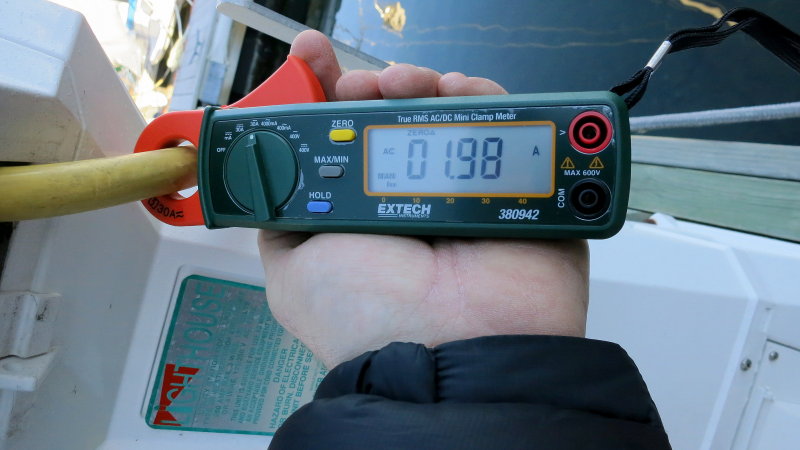
Anyone up for a swim in this marina......?? AC Shore power FAIL!!!!

In fresh water it takes approximately 0.1A or 100mA to kill a human being. Here we have AC leakage, going somewhere, most likely into the surrounding water. This is 19 times the lethal amount to kill a human in fresh water and well into the range to kill a human in salt water....... Ouch!!

This was caused by a DIY owner thinking they were smarter than the safety standards. He was asked to vacate the marina when he declined to fix his vessel and make it safe.....


walt

.
Jun 1, 2007
3,550
Macgregor 26S Hobie TI Ridgway Colorado
Besides the safety issue..

1.98 amps at 120 volts!! Yikes!

That is 237 watts just being constantly wasted. In a month running 24/7 that is 171 KWH. At .15$ per KWH, that guy was costing the marina about $25 per month (just considering the cost). Double those numbers if that at 220/240 VAC.
 

walt

.
Jun 1, 2007
3,550
Macgregor 26S Hobie TI Ridgway Colorado
by the way this brings up another question... the water shock problem pretty much goes away if the marina uses GFCI or ELCI plugs. The marina plug shown in the picture cant have a working ELCI (even in fresh water) with that current. With ELCI, if the boat owner does something dumb and dangerous, their power source just trips.. No power until you fix the problem (which also makes it safe).

I don’t know about any agencies trying to regulate electrical standards for marina’s but you can see the insurance company wanting the marina to have standards to protect liability.

I think a marina could also easily enforce boats using ELCI after throwing someone out for messing with the plug.

Seems a little bit of a no brainer regarding marina safety to have all plugs GFCI or ELCI? The one marina in fresh water I do know of has every AC output GFCI protected.
 
Jun 11, 2011
1,243
Hunter 41 Lewes
GFCIs trip at 4-6ma while the new ELCIs trip at 10, 15 or 20ma depending on which you choose. Also ELCIs are readily available in 50a 240v configurations. There is some discrepancy but it seems that about 60ma across your heart will stop it. It may take more amperage due to your body make up and a lot of other considerations but if 60ma make it across your heart it's usually bye bye time. So any of these devices set up right in the originating panel at the marina would be the best alternative and stop any issues with ESD or electrocutions dock side. The device set up as close as possible to the service would also stop an wiring faults from origination to the dock pedestal. This is the only sound way to do it as the ground on your vessel if passed through an isolation transformer is actually derived from the original dock side Neutral. When you have a fault on your boat to ground it is actually a fault to the marina's Neutral and the only proper way to monitor and open the circuit is to do so by measuring the difference between the Hot and Neutral which as we all know is what a GFCI and an ELCI device do. Ground faults as they are called are not always enough of a connection, due to resistance, to trip the breaker or blow the fuse which was the original intent. I believe that given the information and that fact that it is easily remedied with one of these moderately priced items would add up to gross negligence if an injury or death occurred. I know that people complain of "nuisance" tripping but if you can prevent a death because you are made aware of a problem on your boat it's well worth it. By not enforcing a code rule or law about this the governing bodies are responsible for death by stupidity IMHO.
 
Last edited:
Oct 24, 2010
2,405
Hunter 30 Everett, WA
I know that people complain of "nuisance" tripping but if you can prevent a death because you are made aware of a problem on your boat it's well worth it. By not enforcing a code rule or law about this the governing bodies are responsible for death by stupidity IMHO.
Actually what most people consider a "Nuisance" trip is actually a real problem. In a safe system there is no need for an alternate path other than the neural wire. There is such as thing as a "nuisance" trip, but that's a really bad design.

Ken
 

walt

.
Jun 1, 2007
3,550
Macgregor 26S Hobie TI Ridgway Colorado
One other interesting thing about marina docks having ELCI (or GFCI) outlets.

There is a corrosion issue in marinas related the ground (green) wire being bonded to the boats ground and therefore underwater components (why you need galvanic isolators for example).

The green earth wire is intended as safety only and is connected directly to the metal chassis of equipment. The green wire is never supposed to have any current on it - unless there is a fault.

However.. of course people doing there own AC wiring are going to put current on the green wire. For example, someone running a 110 air conditioner might connect both the white and green wires together. Everything still works perfectly. But.. now that green wire has current on it and because it has some resistance.. is no longer exactly at earth potential. The guy in the boat down the line a little now uses that same green wire as a safety in his boat assuming it’s actually at earth potential - but its not and contributes to galvanic corrosion.

Interesting also that the current meter clamped around the AC power cord shown earlier in this thread will NOT find this problem. Those current meters work by looking for a magnetic field around the cord and if the current going out on the cord is exactly the same as the current going in on the cord, the magnetic fields cancel each other and the meter measures nothing. There are three wires in for example a 110 AC power cord and it doesn't matter if one wire carries all the current in one direction (i.e., black wire) and the other two wires carry all the current in the other direction (i.e., both white and green), the current meter still measures zero. It is only when some of the current doesn't return on the power cord that the meter will measure anything - such as what happens when current leaks into the water.

However.. if the marina had ELCI or GFCI (and is enforced), if someone puts any current on the green wire, the ELCI trips. Once again, you have to fix the problem in order to get power. Fixing the problem both makes the electric shock problem go away and it also means that the green wire actually does not have any current on it so at least this particular corrosion problem also goes away.

I would guess that there is also a direct correlation with marinas using ELCI and having less corrosion problems from hooking up to AC power.
 
Sep 28, 2008
922
Canadian Sailcraft CS27 Victoria B.C.
The green wire is never supposed to have any current on it - unless there is a fault.

Interesting also that the current meter clamped around the AC power cord shown earlier in this thread will NOT find this problem. Those current meters work by looking for a magnetic field around the cord and if the current going out on the cord is exactly the same as the current going in on the cord, the magnetic fields cancel each other and the meter measures nothing. There are three wires in for example a 110 AC power cord and it doesn't matter if one wire carries all the current in one direction (i.e., black wire) and the other two wires carry all the current in the other direction (i.e., both white and green), the current meter still measures zero. It is only when some of the current doesn't return on the power cord that the meter will measure anything - such as what happens when current leaks into the water.

However.. if the marina had ELCI or GFCI (and is enforced), if someone puts any current on the green wire, the ELCI trips. Once again, you have to fix the problem in order to get power. Fixing the problem both makes the electric shock problem go away and it also means that the green wire actually does not have any current on it so at least this particular corrosion problem also goes away.

I would guess that there is also a direct correlation with marinas using ELCI and having less corrosion problems from hooking up to AC power.
Most if not all corrosion is caused by DC current on the AC ground (green) wire. The green wire is the path, not the cause. An ELCI doesn't trip if there is current on the green wire. It only trips if there is a difference between the current on the black (hot) wire and the white (neutral) wire.

A galvanic isolator is a good idea. An isolation transformer is a better solution, leaving no direct connection between shore power and the boat.

If you are measuring current between boat and shore measure only one wire - not all three,
 

walt

.
Jun 1, 2007
3,550
Macgregor 26S Hobie TI Ridgway Colorado
If you dont have equal current on the the hot and neutral (causing GFCI trip), the imbalance current is either in the water going to earth ground or its on the green wire going to earth ground.

Since current on the green wire is always a result of an imbalance between hot and neutral, it will cause an ELCI of GFCI trip.

Now.. you could come up with a method such as a seperate battery (with its own return to earth) to drive the green wire... but really.. why even consider this. If a marina had ELCI on every AC outlet, the issue of current on the green wire would go away,.
 
Sep 28, 2008
922
Canadian Sailcraft CS27 Victoria B.C.
If you dont have equal current on the the hot and neutral (causing GFCI trip), the imbalance current is either in the water going to earth ground or its on the green wire going to earth ground.

Since current on the green wire is always a result of an imbalance between hot and neutral, it will cause an ELCI of GFCI trip.

Now.. you could come up with a method such as a seperate battery (with its own return to earth) to drive the green wire... but really.. why even consider this. If a marina had ELCI on every AC outlet, the issue of current on the green wire would go away,.
Remember the ELCI is there for safety, not corrosion protection.

The AC ground is connected on the boat to the DC negative - or it should be. DC current can travel on the green wire without an ELCI tripping. An ELCI only concerns itself with differences between the hot ((black) and neutral(white) conductors.
 

walt

.
Jun 1, 2007
3,550
Macgregor 26S Hobie TI Ridgway Colorado
DC current can travel on the green wire without an ELCI tripping. An ELCI only concerns itself with differences between the hot ((black) and neutral(white) conductors.
Can you draw the circuit on how this happens (hand drawn is OK).. Im not seeing how you can get current on the green wire without an imbalance between hot and neutral. and that imbalance will trip the EFCI.

As I mentioned, I can come up with a way to put current on the green wire without affecting the hot and neutral with a battery that has a separate ground to earth (like a large plate in the water that is not connected to the boats ground) and then drive the green but that is not even a remote fault condition to consider.

Hope you dont mind taking the time for that diagram.. I would like to see what you are talking about.
 
Sep 28, 2008
922
Canadian Sailcraft CS27 Victoria B.C.
You shouldn't need a diagram. The DC negative is connected on the boat to the AC ground (green) wire. It is DC stray current that causes corrosion.

The ELCI (or a GCFI) works on hot/neutral imbalance only. A ground wire is not even needed for them to work properly.
 

walt

.
Jun 1, 2007
3,550
Macgregor 26S Hobie TI Ridgway Colorado
You shouldn't need a diagram. The DC negative is connected on the boat to the AC ground (green) wire. It is DC stray current that causes corrosion.

Maybe I understand what you are saying now but dont think it addresses why marina green wires have current on them.

AC green is connected to the boats DC (leaving out the details of a transformer or isolation diodes). Now in order for this to cause current on the green wire, the battery DC (ie, 12 volts) must be connected to the water. No other way to cause this. If you know of a different way, please post (I have a MS in EE so will likely understand it).

So somehow for your case, you need some device that has a bare metal structure on it that is at 12 volts and its in the water.. and this puts some current on the green wire because the battery negative is connected to the green wire.. call this case 1 This might put some milli amps on the green wire.

And... then there is the more obvious case of someone not correctly wiring the AC and using the green wire for part of the AC return. If the AC is running an air conditioner, this can put AMPS on the green wire. The current on the green wire came from the AC hot - so now the AC hot and neutral are no longer balanced (which trips ELCI). call this case 2.

Case 1 is not likely, only puts a tiny amount of current on the green wire. Case 2 is very likely, puts a huge amount of current on the green wire.

Case 1 (which doesnt really matter) doesnt trip ELCI. Case 2 (which is really the problem), does trip ELCI.
 
Sep 28, 2008
922
Canadian Sailcraft CS27 Victoria B.C.
Case 1 is more common.

Any boat in the marina with faulty wiring can add to corrosion on your boat. It is DC current that causes the corrosion and it travels on the green wire that is common to all. The ELCI or GCFI won't notice.
 

walt

.
Jun 1, 2007
3,550
Macgregor 26S Hobie TI Ridgway Colorado
Case 1 is more common.

Any boat in the marina with faulty wiring can add to corrosion on your boat. It is DC current that causes the corrosion and it travels on the green wire that is common to all. The ELCI or GCFI won't notice.

-----------------
This is case 1
a bare metal structure on it that is at 12 volts and its in the water.
I will just have to take your word that lots of boats in marina's have a bare metal structure in the water that is energized with 12 volts. I'm not sure how you would even do this,, drop your LED light in the water.. but I guess its possible.

Now the green wire CREATING currents at your boat because some other boat put a lot of current on the green wire from poor AC wiring (because the green wire run has parasitic resistance and therefore a voltage is created by the current) is very plausible. And ELCI will trip with the poor AC wiring.

edit.. one thing that may have been confusing here.. The ELCI will trip at the boat that has the issue with poor AC wiring. The problem it creates at someone else's boat because the green wire now has a parasitic voltage on it would not trip at the second boats ELCI socket. However, ELCI at the problem boat prevents problem boat from connecting to the power grid and causing a problem in the first place.

We are just wasting time now with this argument.. I vote to move on to another subject.. good points brought up.
 
Jun 11, 2011
1,243
Hunter 41 Lewes
Actually what most people consider a "Nuisance" trip is actually a real problem. In a safe system there is no need for an alternate path other than the neural wire. There is such as thing as a "nuisance" trip, but that's a really bad design.

Ken
Ken if the electricity takes an alternate path other than Neutral the GFCI or ELCI will trip. That's the point. There is not only not a need for an alternate path but if, through a fault of any kind, it takes a path other than Neutral it will trip. Tripping is what people call a nuisance, it's what I call a fault indication. Either way no one is dead if there is a GFCI or ELCI in the circuit.