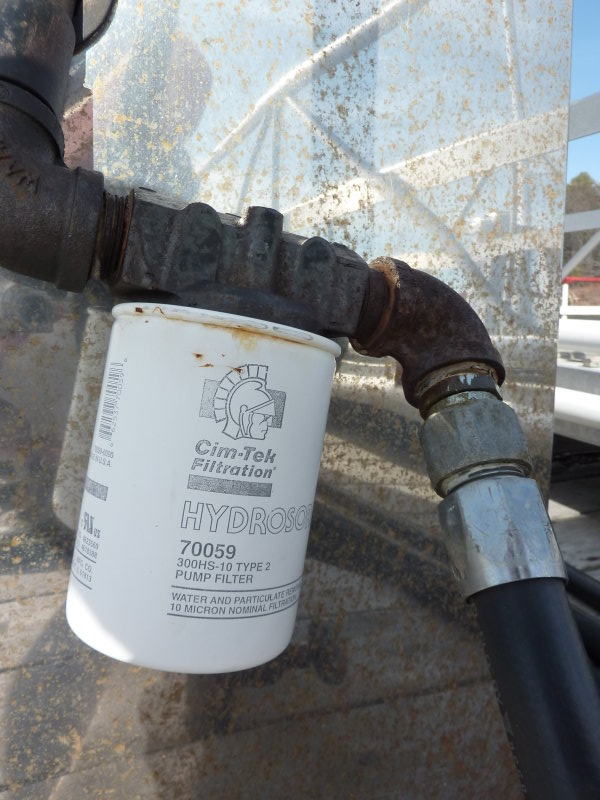
A lot of people will be soon starting up their engines for the first time this year after a long and hard winter. Here are a few thoughts about fuel and filters for your consideration:
My guess is that over half of all diesel engine problems or issues stem from poor fuel quality and/or dirt or water in the fuel. I think extra effort to keep the fuel in the boat as fresh and clean as possible has really paid dividends for me as I've never had a fuel - related engine issue in the 10 years (+/- 600 hours) I've owned the boat. So here are some suggestions:
-- Keep dirt and water out the fuel by triple straining all fuel going into the tank. Buy a dirt and water separating filter from West Marine (+/-$30), or better yet, a BaHa (+/-$100) if you can afford it, and use it every time you buy fuel or put fuel into the tank.
-- Buy fuel in small quantities and from busy sellers, like busy truck stops, who sell a lot of diesel. Many sailing marinas do not sell much diesel and I think that may cause contamination problems (oxidation and water). Just be sure of your source. I buy diesel in 2-gal quantities whenever the fuel level goes below 9 gallons in the tank.
-- Use "Startron Diesel Additive" (http://shop.sailboatowners.com/prod.php?17884/StarTron Gasoline Diesel Additive) to stabilize fuel, reduce fuel oxidation, and reduce emssions. Also use a commercial diesel Cetane Booster. Most diesel fuel being sold these days has 40 cetane rating. The '86 Yanmar 2GM20F engine in my boat calls for a 45 cetane rating. Adding the cetane booster will improve starting and engine efficiency.
-- I tended to keep the tank relatively full to minimize condensation (I know the arguments against this...) and to keep the relative age of the fuel as new as possible. Diesel does go bad over time. With a smallish 11.5 gal tank, I cannot think of a good reason not to keep the tank relatively full unless you race a barebones boat.
-- Check the "O" ring on the diesel fuel deck fill regularly to make sure no water can get into the tank from the deck. Replace the "O" ring before it looks like it is drying out or cracking. Keep some extras on board as they are cheap insurance.
-- Change the primary fuel filter/cartridge at least once a year. I usually did it in mid-season. Change the secondary fuel filter cartridge about once every 3 years. Do this more often if you use the engine a lot. The first time you change your filters you'll know by looking at them, and the color of the fuel in them, how often you need to change yours. In this case, black is not beautiful.
-- Take care of your engine's fuel and the engine will take care of you.
My guess is that over half of all diesel engine problems or issues stem from poor fuel quality and/or dirt or water in the fuel. I think extra effort to keep the fuel in the boat as fresh and clean as possible has really paid dividends for me as I've never had a fuel - related engine issue in the 10 years (+/- 600 hours) I've owned the boat. So here are some suggestions:
-- Keep dirt and water out the fuel by triple straining all fuel going into the tank. Buy a dirt and water separating filter from West Marine (+/-$30), or better yet, a BaHa (+/-$100) if you can afford it, and use it every time you buy fuel or put fuel into the tank.
-- Buy fuel in small quantities and from busy sellers, like busy truck stops, who sell a lot of diesel. Many sailing marinas do not sell much diesel and I think that may cause contamination problems (oxidation and water). Just be sure of your source. I buy diesel in 2-gal quantities whenever the fuel level goes below 9 gallons in the tank.
-- Use "Startron Diesel Additive" (http://shop.sailboatowners.com/prod.php?17884/StarTron Gasoline Diesel Additive) to stabilize fuel, reduce fuel oxidation, and reduce emssions. Also use a commercial diesel Cetane Booster. Most diesel fuel being sold these days has 40 cetane rating. The '86 Yanmar 2GM20F engine in my boat calls for a 45 cetane rating. Adding the cetane booster will improve starting and engine efficiency.
-- I tended to keep the tank relatively full to minimize condensation (I know the arguments against this...) and to keep the relative age of the fuel as new as possible. Diesel does go bad over time. With a smallish 11.5 gal tank, I cannot think of a good reason not to keep the tank relatively full unless you race a barebones boat.
-- Check the "O" ring on the diesel fuel deck fill regularly to make sure no water can get into the tank from the deck. Replace the "O" ring before it looks like it is drying out or cracking. Keep some extras on board as they are cheap insurance.
-- Change the primary fuel filter/cartridge at least once a year. I usually did it in mid-season. Change the secondary fuel filter cartridge about once every 3 years. Do this more often if you use the engine a lot. The first time you change your filters you'll know by looking at them, and the color of the fuel in them, how often you need to change yours. In this case, black is not beautiful.
-- Take care of your engine's fuel and the engine will take care of you.