Fiberglass hull storm damage repairs

Apr 22, 2025
38
Morgan 321 0 Fair Haven
I have a 1982 Morgan 321. Before I splash for the summer, I'm looking for the best method to refinish some hull damage from a storm that went through years ago. The PO just ignored it. The only thing about the hull layup in the owner's manual said the hull had 18-25 mils of isopthalic or NPG-type gelcoat.

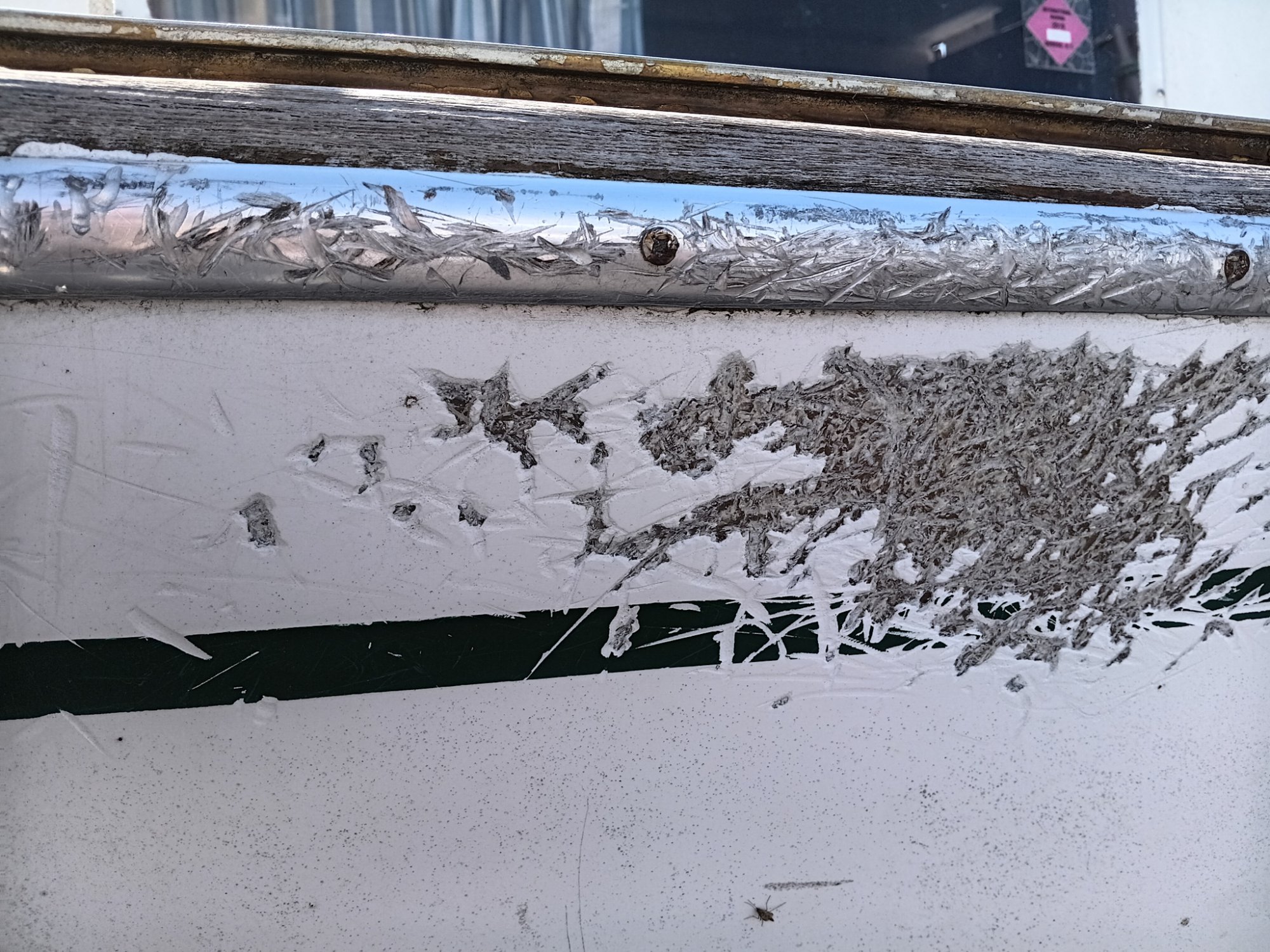
This is the topside at the widest section of hull just below the cap rail. It was gouged down to the fiberglass layup as can be seen. It's about 1/8" to 3/16" deep.
Topside gouges.jpg


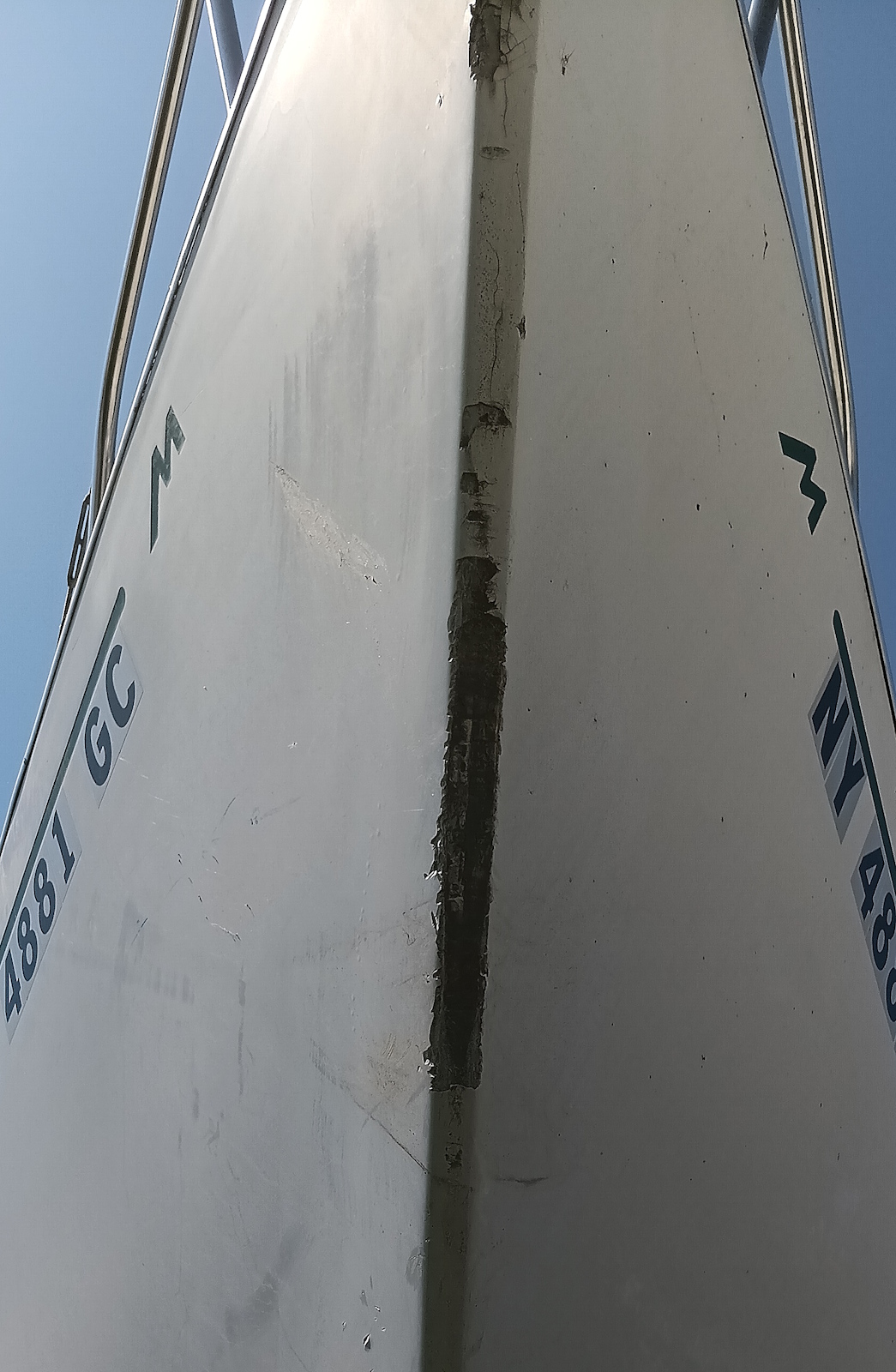
The bow has a little deeper damage in a few spots.
Bow damage.jpg


I'm thinking grinding/sanding to clean the areas up. Probably a 3-6" area beyond the damage and then build back with either 6oz cloth or a couple layers of chopped strand mat and then 2 or 3 coats of gelcoat.

Your thoughts on this repair. I've not worked with gelcoat before and asking for recommendations on brand or kit type I should look at. I'm not expecting a perfect match color-wise although it may be nice to try to get it close to the color after 40 years of sunshine.

Would the gelcoat smooth the finish of the cloth or would I need to cover the cloth with mat?

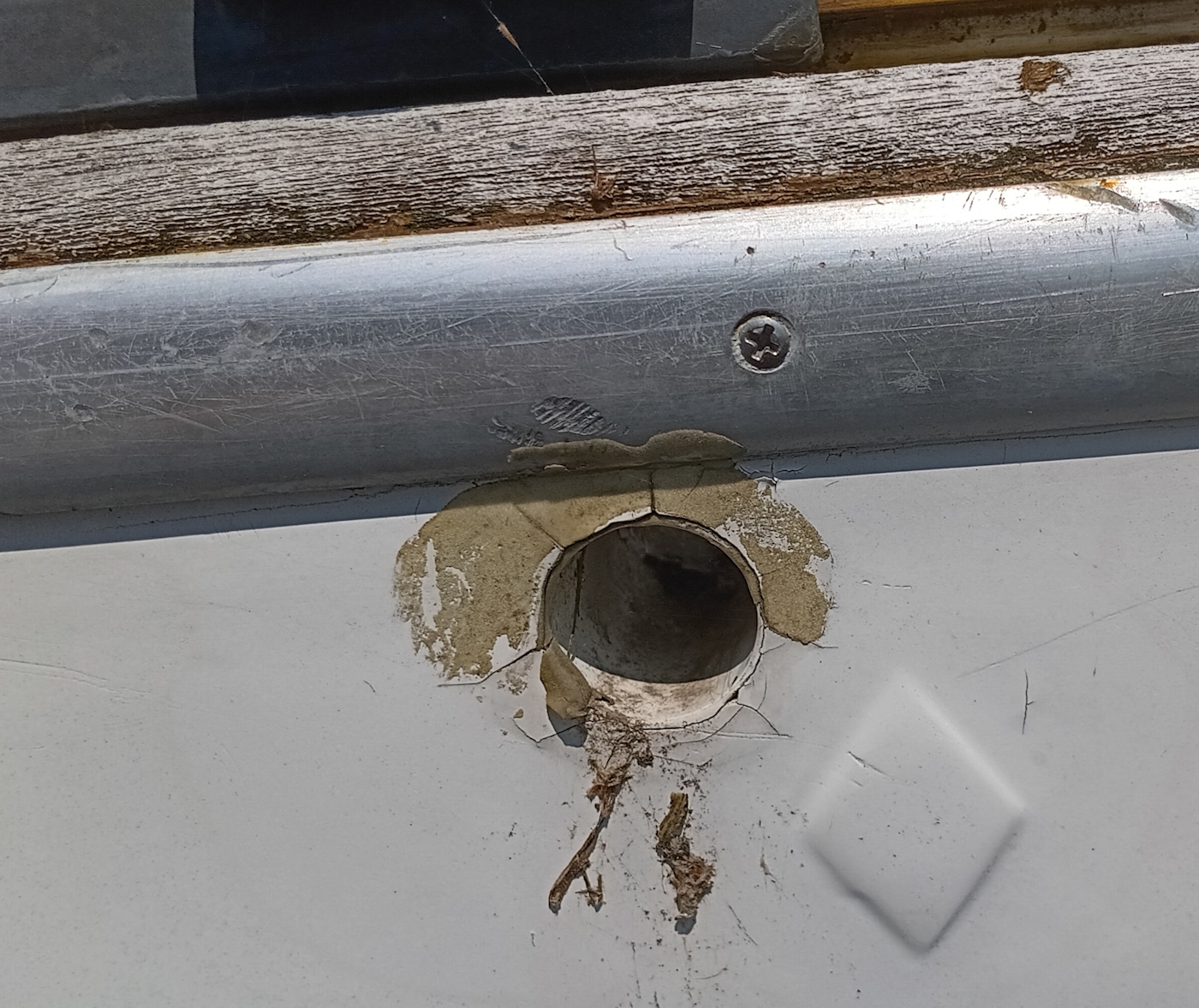
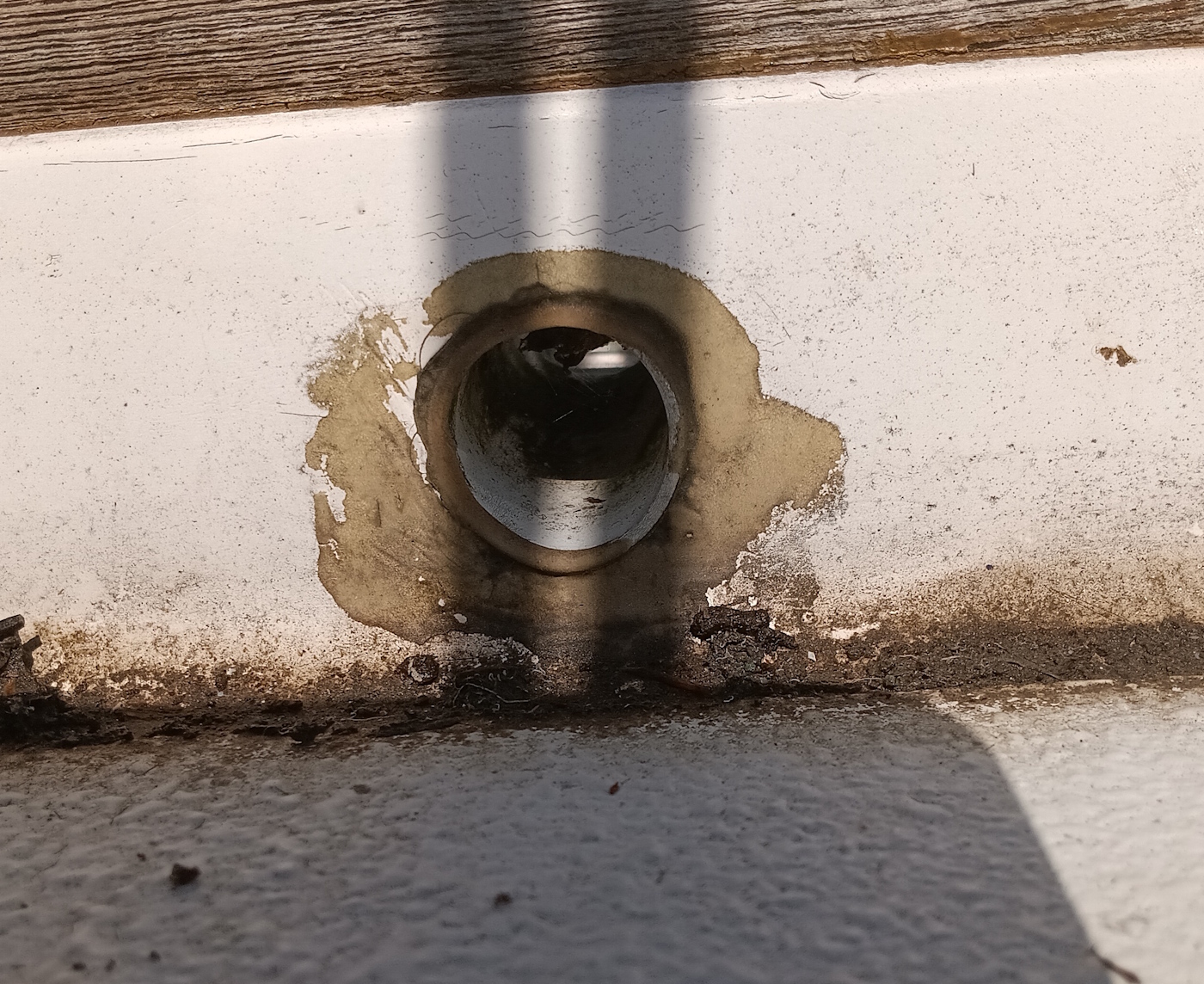
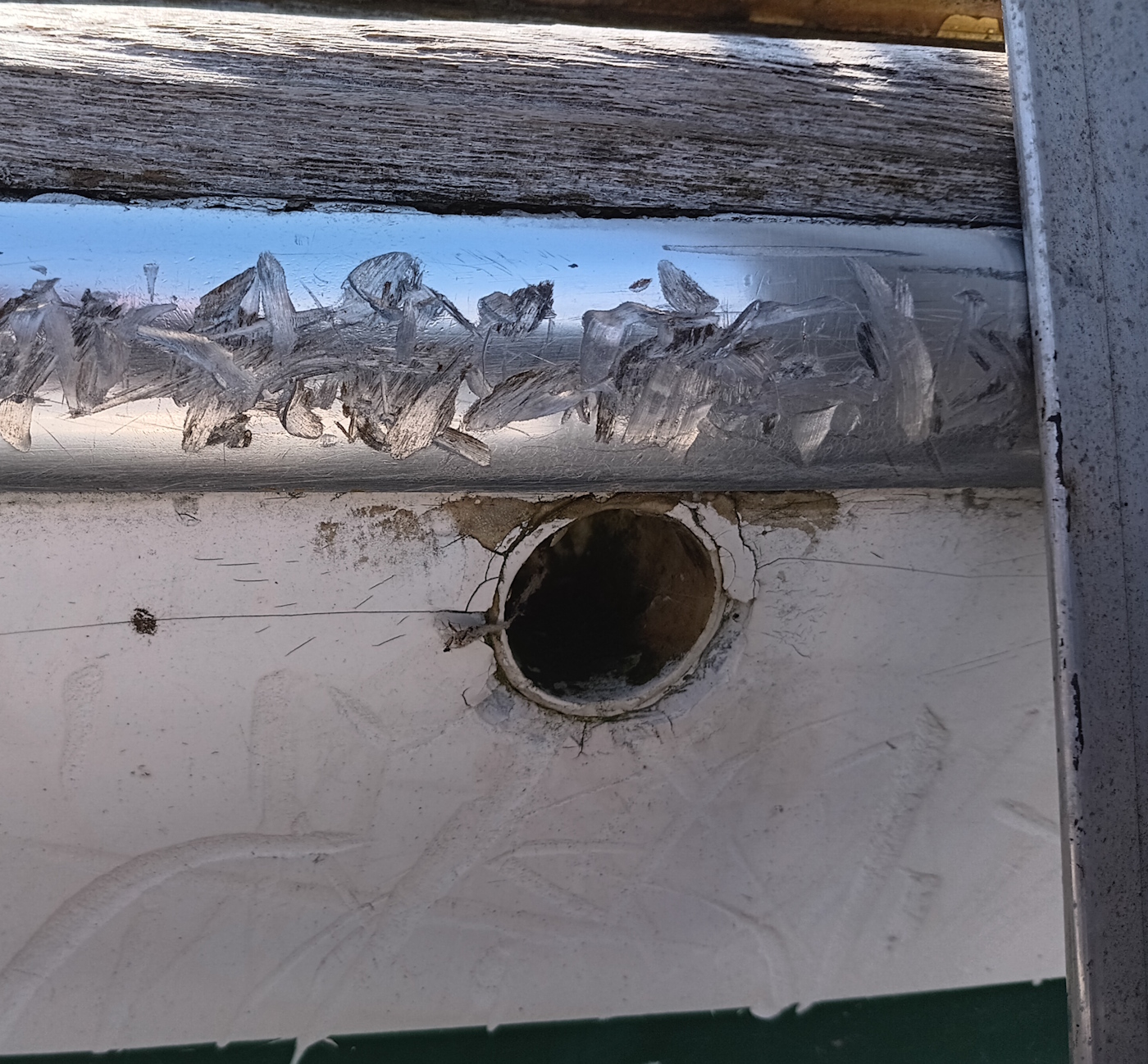
On a related (future) project, I need to repair/replace the deck drains that go through the 2" high bulwarks. (Excuse the dirt, haven't cleaned up the deck yet.) Here's some samples:
Deck Drain 1.jpg

Deck Drain 2.jpg

Deck Drain Inboard.jpg


When installed, it appears they just used epoxy to bed them in place. Seems the epoxy has yellowed from UV exposure. They piping itself appears to be some PVC piping. I'd like to remove them and replace with a cloth/mat layup and then gelcoat over that. If possible, I'd like to make them a little wider/bigger. Looks like a bigger job and haven't looked at access inside the hull yet.

Appreciate any thoughts or ideas?
 

jssailem

SBO Weather and Forecasting Forum Jim & John
Oct 22, 2014
24,454
CAL 35 Cruiser #21 moored EVERETT WA
Both Chopstrand and mat will tend to imprint through your gelcoat layers. You will want to use a filler and sand it smooth before gelcoat.
 
May 17, 2004
6,110
Beneteau Oceanis 37 Havre de Grace
This is the topside at the widest section of hull just below the cap rail. It was gouged down to the fiberglass layup as can be seen. It's about 1/8" to 3/16" deep.
For that section I’d just sand the area smooth, fair with polyester fairing compound, sand more, and then apply gelcoat. That doesn’t look deep enough to need anything more.

The bow has a little deeper damage in a few spots.
For that section you could use some glass to bull build it back up after sanding. Chopped strand will probably be fine, assuming you’re using polyester resin. Then fair and gelcoat.

Check out the Boatworks Today YouTube channel for lots more details on hours to do that type of work, including gelcoat color matching. He’s got some playlists dedicated to repairs like this.
 
Jan 11, 2014
13,951
Sabre 362 113 Fair Haven, NY
Ed and I have our boats in the same yard, I was there today so I stopped and took a closer look.

The exposed glass looks like it is from a chopper gun and is not mat and it looks a little resin starved.

One repair option is to use fairing compound to fill in the gouges and build a smooth surface. That might work if the boat was being painted, however, if gelcoat is the finish coat more work needs to be done. The gelcoat gouges are pretty deep and in places extends into the fiberglass. To get a smooth surface it will be necessary to remove most of the gelcoat, fair, and then add more gelcoat.

A better approach would be to sand the gelcoat and chopper gun mat on a taper out to the pencil line. That will yield around a 12:1 bevel. Some gouges are about ¼" below the finished surface. A couple of layers of 1708 would fill the area and provide a good surface for the gelcoat with minimal fairing.

Ed and I also looked at the bow, the damage extends into the fiberglass, that is going to need new glass.

The deck drain sits on top of the hull to deck joint. Enlarging the drain runs the risk of damaging the joint and providing a new source of leaks. If more drainage is needed, then an additional drain could be installed, or Ed could just sailing. ;)


IMG_2869.jpeg
 
Jun 17, 2022
519
Hunter 380 Comox BC
Anywhere there's displacement in the gel coat crack (you can feel a fingernail catch), usually means there's structural failure of the underlying glass. We see this in the bow damage and near the scupper (piping?) ... in this case, it needs to be ground down (angle grinder with a 40 grit sanding pad) to remove all damaged glass, then re-built.

To repair the scupper exit hole, the stainless trim has to come off.

How wide on the side of the hull is the area that is damaged? 2-3 square feet is manageable. More than that and it might be worthwhile to just repaint the hull after completing the repair and fairing it smooth. It can be repaired with gelcoat but color matching an old hull is extremely difficult, so it really depends on your expectations.

I have no real experience based advise to give on the stainless, can you order a matching trim piece? It might be possible to remove it and use a sanding disk to grind and polish it or at least smooth out the dings. A sanding disk on an angle grinder works, but you'll need lower RPM (like a drill or orbital sander) for the final polish. Expect broken fasteners, stripped holes, signs of water intrusion that will need to be addressed after removing the trim.

Without exploring further, I'm guessing about 7 to 14 days of work for an experienced fiberglasser (damaged hull sides, bow, scuppers), assuming we're just re-gelcoating the damaged areas (not the whole hull) and not accounting for any surprises or deeper issues that will certainly pop up.

Then you'll probably want someone to compound, polish and wax the hull so the rest matches the newly repaired area, another $2000-$4000 depending on where you are.

You can probably re-do the stripe yourself, that's a good project to learn how to paint a boat... you're looking at about $300 in materials to do that, a bit of sanding and lots and lots of time spent applying tape, removing tape, applying tape, removing tape, etc.... between coats.

That being said, has a surveyor gone through the boat? With that amount of damage on the side, I'd wonder about the state of the bulkheads and grid...

Fiberglass/gelcoat is a little like drywalling. Anyone can do it. But unless you do it a lot, it will take you 10 times longer and you'll waste 4 times more material doing it.... Usually small gel coat chip repairs are worthwhile for owners but once you get to grinding down the hull, fiberglass, inspecting for structural damage, making the proper layup to achieve the structural requirements and making the surface fair and smooth, this is not a good 1st time fiberglass repair project. Contract it out, live with it, or sell the boat. .... my 2 cents.
 
Last edited:
  • Helpful
Likes: jssailem
Jan 11, 2014
13,951
Sabre 362 113 Fair Haven, NY
Anywhere there's displacement in the gel coat crack (you can feel a fingernail catch), usually means there's structural failure of the underlying glass. We see this in the bow damage and near the scupper (piping?) ... in this case, it needs to be ground down (angle grinder with a 40 grit sanding pad) to remove all damaged glass, then re-built.

To repair the scupper exit hole, the stainless trim has to come off.

How wide on the side of the hull is the area that is damaged? 2-3 square feet is manageable. More than that and it might be worthwhile to just repaint the hull after completing the repair and fairing it smooth. It can be repaired with gelcoat but color matching an old hull is extremely difficult, so it really depends on your expectations.

I have no real experience based advise to give on the stainless, can you order a matching trim piece? It might be possible to remove it and use a sanding disk to grind and polish it or at least smooth out the dings. A sanding disk on an angle grinder works, but you'll need lower RPM (like a drill or orbital sander) for the final polish. Expect broken fasteners, stripped holes, signs of water intrusion that will need to be addressed after removing the trim.

Without exploring further, I'm guessing about 7 to 14 days of work for an experienced fiberglasser (damaged hull sides, bow, scuppers), assuming we're just re-gelcoating the damaged areas (not the whole hull) and not accounting for any surprises or deeper issues that will certainly pop up.

Then you'll probably want someone to compound, polish and wax the hull so the rest matches the newly repaired area, another $2000-$4000 depending on where you are.

You can probably re-do the stripe yourself, that's a good project to learn how to paint a boat... you're looking at about $300 in materials to do that, a bit of sanding and lots and lots of time spent applying tape, removing tape, applying tape, removing tape, etc.... between coats.

That being said, has a surveyor gone through the boat? With that amount of damage on the side, I'd wonder about the state of the bulkheads and grid...

Fiberglass/gelcoat is a little like drywalling. Anyone can do it. But unless you do it a lot, it will take you 10 times longer and you'll waste 4 times more material doing it.... Usually small gel coat chip repairs are worthwhile for owners but once you get to grinding down the hull, fiberglass, inspecting for structural damage, making the proper layup to achieve the structural requirements and making the surface fair and smooth, this is not a good 1st time fiberglass repair project. Contract it out, live with it, or sell the boat. .... my 2 cents.
There is no evidence of a significant impact to the hull, the damage is all from abrasion and rubbing against a dock. The gel coat is deeply gouged, there are no visible cracks or soft spots. On the photo I posted the line that could appear to be a crack is actually a pencil line I drew when I looked at the boat.

The deck scupper is a straight piece of PVC pipe that pierces the toe rail. On inspection it appears to be set in some polyester fairing. I don't think there is any structural damage to the boat, the damage is likely due to the PVC pipe moving while rubbing against the dock. I'll be at the marina later this morning and take a closer look at the scupper.

The bow is going to be a big project. There is a lot of gelcoat damage and glass damage. Once the gelcoat and loose material is removed we'll have a better idea on what's involved with the repair.
 
Jan 11, 2014
13,951
Sabre 362 113 Fair Haven, NY
Morning update: This morning I sounded the hull at and near the abrasion damage, all the taps were sharp and clear, confirming my earlier assessment.

The boat has 4 scuppers all 4 have evidence of some kind of repair even when there is no evidence of damage in the vicinity. My best guess is the damage is due to poor adhesion between the polyester resin and the PVC pipe. After 40 years time and winter weather have taken their toll. If the boat was stored uncovered water and ice could have easily damage the fairing around the pipes.
 
Apr 22, 2025
38
Morgan 321 0 Fair Haven
Thanks for all your replies. I learned a little more as I was starting to plan this project. Dave has also been an invaluable resource showing me things and giving me ideas as I plan my course of action.

I bought this boat for a very reasonable price knowing it was going to take some (actually, a lot of) work. The surveyor did mention the dock rash but didn't seem concerned by it other than mentioning it needed to be patched eventually. As to bringing it back to showroom beauty, that's not my goal. He didn't mention the bow.

Pulling the rub rail should expose the hull to deck joint and then I can inspect & repair as necessary but I'll probably skip that this year. I found replacements on Defender a couple years ago when I was originally contemplating buying it. Maybe I'll have to look at replacing the whole thing when I get to that point but seems that shouldn't be an impediment. The scuppers may have to live with patches if I run out of time. After all, I do need to get back in the water and test out my new reefing set up we discussed here last winter.

If anyone else has more ideas, I'd be glad to hear them. I'll try to remember to get pictures and post the project when I'm done so someone else can learn as I am doing.

Thanks again!
 
  • Like
Likes: dLj