
Bightworks - varnish vs polyuerathane
- Thread starter RickS
- Start date
- Status
- Not open for further replies.

Brightworks
Hey Rick,
Do you have a lot of stuff to "Varnish"? If you mean the seats on a Beneteau I would go with sanding the seats to bare wood then 3 coats of Cetol. Works great and lasts at least 2 seasons here in the hot Southern sun. Neat part is if it stars to show some bare spots lightly sand and recoat.
Works for me.
Weasel
Hey Rick,
Do you have a lot of stuff to "Varnish"? If you mean the seats on a Beneteau I would go with sanding the seats to bare wood then 3 coats of Cetol. Works great and lasts at least 2 seasons here in the hot Southern sun. Neat part is if it stars to show some bare spots lightly sand and recoat.
Works for me.
Weasel
- Oct 6, 2008
- 857
We used "Bristol" 2 part finish on our Island Packet. The previous owner put it on 4 years before in Italy and returned via the BVI and Keys. I touched it up after 1 more year for a total of 5 years in the Southern sun. I have used it on 2 more boats here in the Pacific NW with excellent results lasting better than 5 years.
It exceeds Cetol by a huge amount. It was no harder to apply than Cetol.
It is expensive at about $90 a qt. but that would do the 38 foot IP twice. I value my sailing time and this produce reduced our staining/varnishing time by 3 times.
Ray
It exceeds Cetol by a huge amount. It was no harder to apply than Cetol.
It is expensive at about $90 a qt. but that would do the 38 foot IP twice. I value my sailing time and this produce reduced our staining/varnishing time by 3 times.
Ray

Bristol is good but Honey Teak is better than Bristol.
I get 10-12 yrs. out of Honey teak ... if the base coat is applied 'Thick' www.signaturefinish.com
I used to be a varnishaholic .... nothing you can to do to any varnish to make it 'stick' to exterior brightwork ... moisture is going to come 'from' inside the wood and the UV will destroy the surface cells under the varnish and then is GOING to peel, etc. If you want it to 'look like' varnish then consider Bristol or Honey Teak ... both are 2 part catalyzed base coat + 2 part catalyzed 'clear coat' ... they are urethane/acrylic copolymers and thus can be flat sanded and power-buffed into a 'mega-gloss' 'museum type finish' that will make a freshly varnished Hinckley blush with envy. Thick coatings of the base coat will prolong the life ... lay them on 'thick'. HT finishes to the same amber hue as a prime oil based varnish.
I get 10-12 yrs. out of Honey teak ... if the base coat is applied 'Thick' www.signaturefinish.com
I used to be a varnishaholic .... nothing you can to do to any varnish to make it 'stick' to exterior brightwork ... moisture is going to come 'from' inside the wood and the UV will destroy the surface cells under the varnish and then is GOING to peel, etc. If you want it to 'look like' varnish then consider Bristol or Honey Teak ... both are 2 part catalyzed base coat + 2 part catalyzed 'clear coat' ... they are urethane/acrylic copolymers and thus can be flat sanded and power-buffed into a 'mega-gloss' 'museum type finish' that will make a freshly varnished Hinckley blush with envy. Thick coatings of the base coat will prolong the life ... lay them on 'thick'. HT finishes to the same amber hue as a prime oil based varnish.
Last edited:

Will the Bristol or Honey Teak darken with age as bad as Sikkens ?
I am excited to try these products. In construction, Sikkens is used extensively up here in Whistler on the many log homes and cedar or fir siding and details.It looks especially good on dense fir beams. Owners are tired of grinding off and re finishing their log homes when the bill can reach 50k for multi coats. The shift is to low V.O.C. products up here but U.V. damage from reflected light of wdws and roofs just help kill any product. The application must be done on bone dry product and applied in the sun or too hot will doom it to failure. 5 to 7 years and Sikkens has darkened too much for me to enjoy looking at.
Have Bristol and Honey Teak faired better ?
I am excited to try these products. In construction, Sikkens is used extensively up here in Whistler on the many log homes and cedar or fir siding and details.It looks especially good on dense fir beams. Owners are tired of grinding off and re finishing their log homes when the bill can reach 50k for multi coats. The shift is to low V.O.C. products up here but U.V. damage from reflected light of wdws and roofs just help kill any product. The application must be done on bone dry product and applied in the sun or too hot will doom it to failure. 5 to 7 years and Sikkens has darkened too much for me to enjoy looking at.
Have Bristol and Honey Teak faired better ?

Want to believe that the 2-parts are that good. Would be great for the teak handrails that I am bringing home this week. But some of the guys over on the "Wooden Boat" forum are not in agreement: http://forum.woodenboat.com/showthread.php?1078-Bristol-Finish-vs-Varnish .
Ive seen many failures with Bristol ... mostly from 'thin' applications.
The discussion issues on the woodboat forum do itemized the cracking of such coatings at scarf, etc. joints - true and Bristol being one of the 'hardest' coatings will easily crack when the joints 'work'. Honey teak is also subject to cracking at scarfs but so too does more 'flexible' varnish. For scarfs and joints I find Honey Teak a bit more 'flexible' and similar to spar varnish, but unlike all the other coating systems its probably the Easiest to Repair and regain 'color match'.
FWIW - Once Cetol becomes thick due to successive over-coats it becomes very brittle and is more apt to become 'alligator cracked' ... and not necessarily on the joints but also on the flat surfaces. Nowadays any coating system that when needing 'repair' also needs 'total stripping' back to bare wood is 'out' in my book: Varnish, Bristol, Regular Cetol, 'resinated' oil finish, etc.
FWIW - I have had success with multiple product layup schedules: epoxy seal, then 6+coats of oil based varnish, followed by 2 coats of urethane varnish over that, etc. and then occasionally rubbing on SPF 50 sunscreen over that ... but ultimately such will lift or develop the 'blacks' under the coating due to moisture intrusion ... and you always wind up doing a complete strip to bare wood and start all over again.
Like I stated in my previous post ... Ive found HT to last 10-12 yrs with only moderate repair but does need at least a thick 'clear maintenance coat' at least every 2 years. Its probably the MOST expensive of all the coating systems but when you amortize over that time it really comes out the cheapest in money and TIME ... and I can 'finish' it to look like it belongs on a mega-yacht or private multi-engine jet aircraft. HT has a very high 'learning curve'.
I admit that Im still a fanatic and probably one of the very few that actually 'finish' a finish - flat sanding, hand-rubbing or power-buffing AFTER the finish goes on for - glowing irridescent patina of the wood, totally flat and unbelievable gloss.
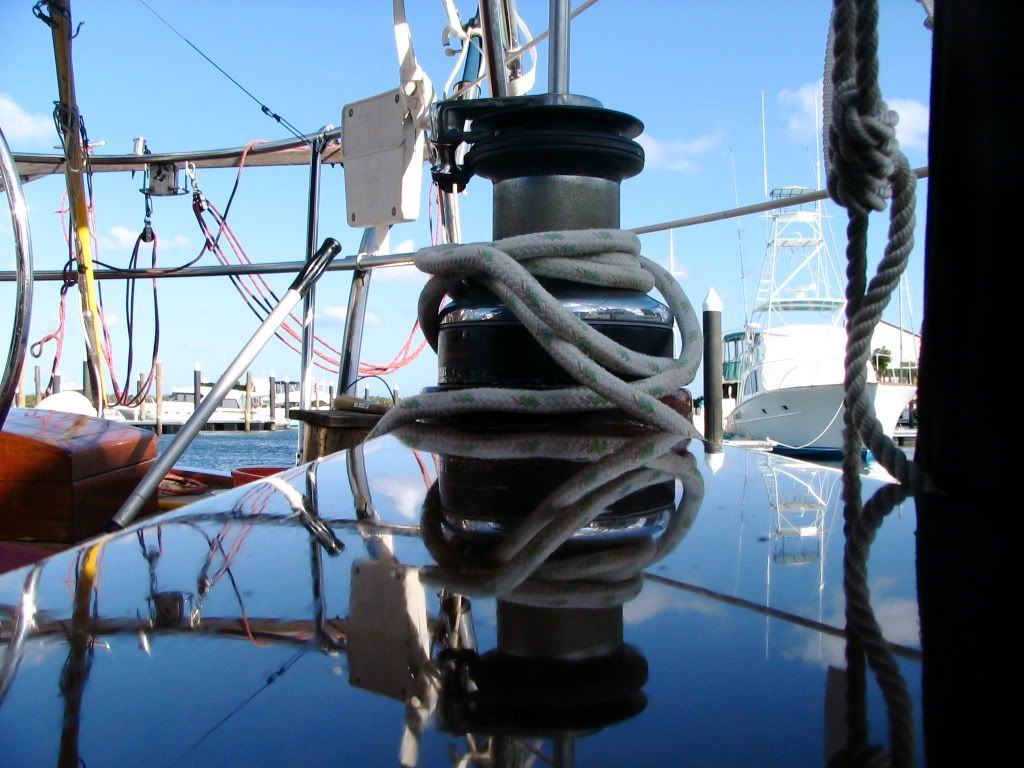
The discussion issues on the woodboat forum do itemized the cracking of such coatings at scarf, etc. joints - true and Bristol being one of the 'hardest' coatings will easily crack when the joints 'work'. Honey teak is also subject to cracking at scarfs but so too does more 'flexible' varnish. For scarfs and joints I find Honey Teak a bit more 'flexible' and similar to spar varnish, but unlike all the other coating systems its probably the Easiest to Repair and regain 'color match'.
FWIW - Once Cetol becomes thick due to successive over-coats it becomes very brittle and is more apt to become 'alligator cracked' ... and not necessarily on the joints but also on the flat surfaces. Nowadays any coating system that when needing 'repair' also needs 'total stripping' back to bare wood is 'out' in my book: Varnish, Bristol, Regular Cetol, 'resinated' oil finish, etc.
FWIW - I have had success with multiple product layup schedules: epoxy seal, then 6+coats of oil based varnish, followed by 2 coats of urethane varnish over that, etc. and then occasionally rubbing on SPF 50 sunscreen over that ... but ultimately such will lift or develop the 'blacks' under the coating due to moisture intrusion ... and you always wind up doing a complete strip to bare wood and start all over again.
Like I stated in my previous post ... Ive found HT to last 10-12 yrs with only moderate repair but does need at least a thick 'clear maintenance coat' at least every 2 years. Its probably the MOST expensive of all the coating systems but when you amortize over that time it really comes out the cheapest in money and TIME ... and I can 'finish' it to look like it belongs on a mega-yacht or private multi-engine jet aircraft. HT has a very high 'learning curve'.
I admit that Im still a fanatic and probably one of the very few that actually 'finish' a finish - flat sanding, hand-rubbing or power-buffing AFTER the finish goes on for - glowing irridescent patina of the wood, totally flat and unbelievable gloss.
- Oct 6, 2008
- 857
I have only used and seen the Bristol and not Honey Teak. The Bristol never darkened over the 5+ years it was on. I did have to touch up areas that had been damaged over time and it matched perfectly.
Depth of product is everything with Bristol with 5 to 6 coats recommended. The working life is better that 5 to 6 hours when mixed as required. In 75 to 80 degrees I applied a coat every 20 to 30 minutes so finishing in the "pot life time" was very easy. I always put on 6 coats. Work only enough area as you can cover in 1/2 hour and then start over. Once I applied it early in the year when it was about 55 to 60 degrees and I learned why you wait for warmer times as it didn't dry for 4+ hours.
These both sound like good products.
Ray
Depth of product is everything with Bristol with 5 to 6 coats recommended. The working life is better that 5 to 6 hours when mixed as required. In 75 to 80 degrees I applied a coat every 20 to 30 minutes so finishing in the "pot life time" was very easy. I always put on 6 coats. Work only enough area as you can cover in 1/2 hour and then start over. Once I applied it early in the year when it was about 55 to 60 degrees and I learned why you wait for warmer times as it didn't dry for 4+ hours.
These both sound like good products.
Ray

There are some real drawbacks to Bristol. My stomach turned over when I found out my entire boat has Bristol vs cetol. The stuff lasts like iron but it's incredibly hard to get off. Bristol's two real weaknesses that I know of are 1. It has to be put on under near perfect conditions. If it's too hot or sunny you can end up with a boat full of ugly blisters. I've seen many examples at our marina of people going to a boat show and seeing these incredible examples of what it can do. Then then come back and don't prepare the wood properly and a lot of non-family friendly language fills the air sometime in the near future. The second is Bristol hates mechanical connections. Any place you have two boards with a small space (even properly caulked) it seems to separate underneath. One the hard bristol finish shell separates from the wood surface there's really no practical way to fill in underneath. This spring I'm faced with sanding off about 100 linear feet of rails so if anyone knows an easy way to get the stuff off please let me know. I have to admit it wears like iron. i'm still a big fan of original cetol (the orange tinted one). Before I sold my island packet I stripped it and used natural cetol. within a year it disintegrated and I was really peeved after 40 hours of stripping and a half dozen careful coats of cetol.
Good luck. I'll post my results in the spring.
Good luck. I'll post my results in the spring.

This is not very helpful regarding what product to use but it sure encourages you to do it right to achieve results like this.....
I took this shot two weeks ago in Auckland, she was only just finished.
I think "Alloy Yachts" built her, Might be worth an email to find out what they use!
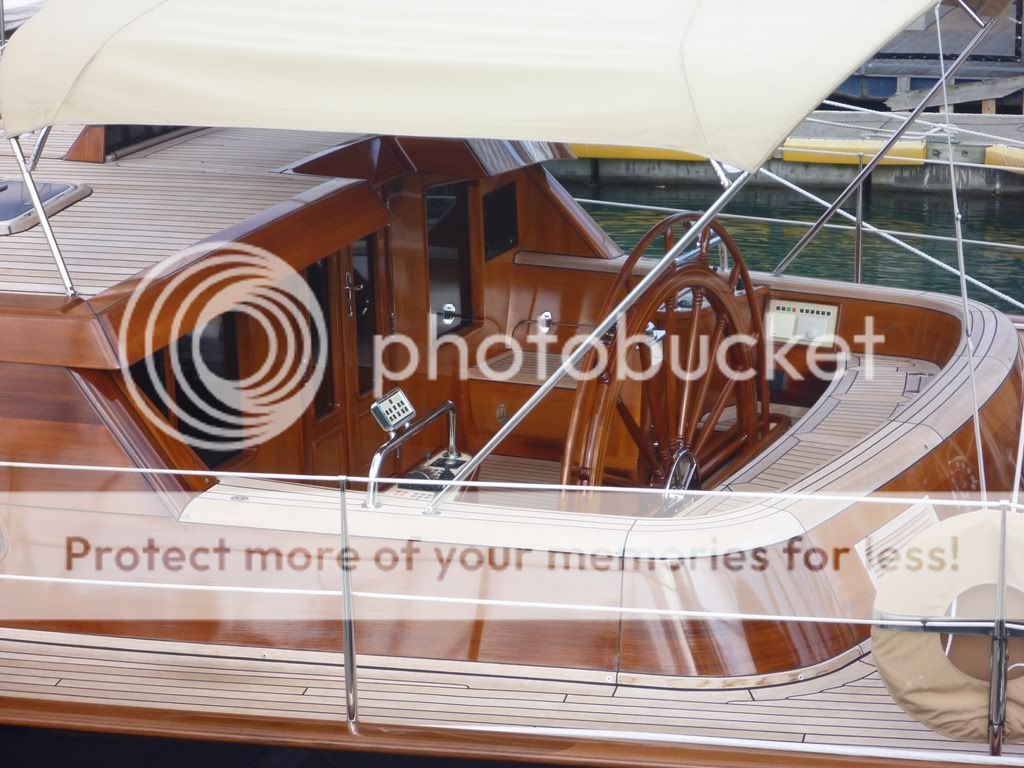


I took this shot two weeks ago in Auckland, she was only just finished.
I think "Alloy Yachts" built her, Might be worth an email to find out what they use!
Before you spend all the time and money on reapplying the latest hi-tech varnish, why not just leave it bare?
Last season I had the same issue with our teak seats as the Cetol was starting to fail. I sanded it all off and then once a week washed it using a concentrated salt water solution. I allow the salt water to sit for 15 minutes, then scrub it quickly with a 3M scotch pad. Finally I rinse it with plenty of fresh water and when the sun dries it the teak always looks like it just came from the factory.
Last season I had the same issue with our teak seats as the Cetol was starting to fail. I sanded it all off and then once a week washed it using a concentrated salt water solution. I allow the salt water to sit for 15 minutes, then scrub it quickly with a 3M scotch pad. Finally I rinse it with plenty of fresh water and when the sun dries it the teak always looks like it just came from the factory.

Only problem with that method is the cost of replacement teak is now approaching $50 per board FOOT.Before you spend all the time and money on reapplying the latest hi-tech varnish, why not just leave it bare?
Last season I had the same issue with our teak seats as the Cetol was starting to fail. I sanded it all off and then once a week washed it using a concentrated salt water solution. I allow the salt water to sit for 15 minutes, then scrub it quickly with a 3M scotch pad. Finally I rinse it with plenty of fresh water and when the sun dries it the teak always looks like it just came from the factory.

Considering the age and condition of the teak on our boat, the Cetol gives great results with the least effort. Which is not to say that I don't appreciiate the talent and hard work of boaters like RichH. You have more patience and higher standards than me.
I will however also sing the praises of 2-part topcoats. I filled and refinished our mahogany rudder about 4 years ago, and coated it with one coat of epoxy and two coats of Epiphanes 2-part finish, and it has held up well.
I will however also sing the praises of 2-part topcoats. I filled and refinished our mahogany rudder about 4 years ago, and coated it with one coat of epoxy and two coats of Epiphanes 2-part finish, and it has held up well.
Good discussion. I ended up with Bristol, mostly because they didn't have Honey Teak. I just spent the last two days sanding off the red Rustoleum a previous owner had applied to the teak! Fortunately, the teak is a fairly dense wood so the Rustoleum didn't soak in too deep. (I guess they thought it was a picnic table, not a boat!)
Can't wait to see how the wood looks with a glossy finish.
Can't wait to see how the wood looks with a glossy finish.
One thing we might want to discuss is the choice of brushes. I started out with sponge brushes, but they kept leaving tiny little bubbles in the varnish and the Bristol destroyed these brushes. The head came off before the second coat. I moved to a conventional brush, but kept losing bristles into the varnish. Fewer problems with the conventional brushes, but not perfect.

you didnt say what kind of conventional brush you bought ...One thing we might want to discuss is the choice of brushes. I started out with sponge brushes, but they kept leaving tiny little bubbles in the varnish and the Bristol destroyed these brushes. The head came off before the second coat. I moved to a conventional brush, but kept losing bristles into the varnish. Fewer problems with the conventional brushes, but not perfect.
in order to have a good brush you need a china bristl brush and they are not cheap....will prolly run around $15.00 depending on how wide you get...go to a furniture refinishing supply to find the good ones or maybe an art supply...when you get through useing it clean it with the recomended thinner that bristol recomends...after that rinse it out with soapy water and then just water .....then wrap it in a brown paper towel like you clean your windshield with making a kind of envolepe and secure it on the brush with a rubber band around the metal binding...and hang it up untill the next time you use it
regards
woody
I didn't know what type of bristle brush to try, so I just picked one. I'll try the brush you recommend. Thanks.
After days of sanding a $15.00 brush is OK with me.
All the best,
Pat
After days of sanding a $15.00 brush is OK with me.
All the best,
Pat
My favorite 'brush' --- a $6.00 aerosol powered spray gun
http://www.jamestowndistributors.co...t.do?pid=2155&familyName=Preval+Spray+Gun+Kit
http://www.jamestowndistributors.co...t.do?pid=2155&familyName=Preval+Spray+Gun+Kit
- Status
- Not open for further replies.