12V Gurus -- Need your help!

Status
Not open for further replies.

weinie

.
Sep 6, 2010
1,297
Jeanneau 349 port washington, ny
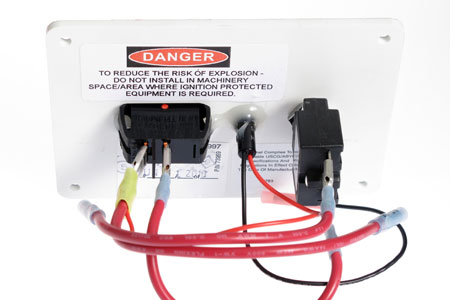
I recently installed a Seaward LPG propane locker with included solenoid.
I have the solenoid hooked up to an unused switch on my panel. I want to use a red LED indicator to tell me when the solenoid is powered up so I crimped the positive end of a radio shack LED onto one wire running to the solenoid and connected it to the terminal on the switch. I crimped the negative side of the LED to the other solenoid wire and connected it to the ground bus.

When I throw the switch, the LED lights up and the solenoid clicks open. After toggling the switch a few times, the solenoid continues to work, but the LED blows out. I replaced the LED twice... same thing happens.

My theory is that when the solenoid closes, it induces a current flowing in reverse which is burning out the LED.

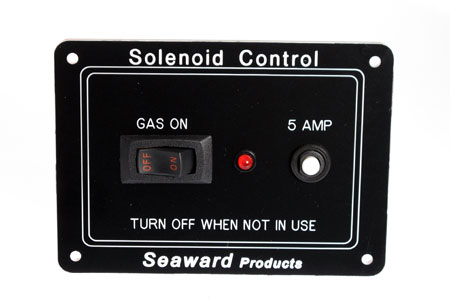
Seaward makes a small switch panel with an LED exactly for this purpose. My setup is wired exactly the same way.

What gives?
 

Erieau

.
Apr 3, 2009
209
Oday 25 Erieau
Did you buy a "12 volt" LED? A standard LED works indefinitely under 2-5 volts, but will burn out with higher voltage. The "12-volt" LED has a resistor in line with the anode that makes it compatible with a 12 volt system. It's not much more $ than a standard LED.
How to tell: If the stiff wire leads of the LED are bare, with no wire or shrink wrap attached, it is a standard LED and will burn out.

Joe
 

RAD

.
Jun 3, 2004
2,330
Catalina 30 Bay Shore, N.Y.
what is the voltage rating for the LED....if its OK you might want to try a small diode in between the power and the LED lead....pay attention to the arrow or mark on the diode cause its directional
 
Feb 6, 1998
11,760
Canadian Sailcraft 36T Casco Bay, ME
I recently installed a Seaward LPG propane locker with included solenoid.
I have the solenoid hooked up to an unused switch on my panel. I want to use a red LED indicator to tell me when the solenoid is powered up so I crimped the positive end of a radio shack LED onto one wire running to the solenoid and connected it to the terminal on the switch. I crimped the negative side of the LED to the other solenoid wire and connected it to the ground bus.

When I throw the switch, the LED lights up and the solenoid clicks open. After toggling the switch a few times, the solenoid continues to work, but the LED blows out. I replaced the LED twice... same thing happens.

My theory is that when the solenoid closes, it induces a current flowing in reverse which is burning out the LED.

Seaward makes a small switch panel with an LED exactly for this purpose. My setup is wired exactly the same way.

What gives?
The LED is not meant to carry any load and it could be that you've wired it is "series" and it is trying to pass through the 1A +/- of the solenoid.. One leg of the LED goes to the "on" side of the breaker and the other leg goes to the neg bus.

The other points that you may not have a 12V LED may also be correct.....
 
Apr 18, 2007
53
Jeanneau Sun Oddysey 40.3 Chicago, IL, USA
Joe has the right idea, and you may be able to buy an already configured LED to meet your needs, but this is an easy fix. Maine has the basic instructions right, but to be more specific, with a standard red LED you need a resistor between 560 ohms (for 12 volts) and 680 ohms (for 14.5 volts while charging). You can experiment with these values (since these components cost pennies) or just buy the 680 ohm item.

It will go in series with the LED - on either the positive or negative lead.

By the way, I found the resistor values here: http://led.linear1.org/1led.wiz
 
Jun 14, 2011
277
Hunter 22 Fin Keel Lake Martin
Sounds like you've got too much voltage to the LED. as stated above they run at no more than 5v dc. A resistor in series with the LED will fix this. 680 ohm will work perfectly and as stated is a few cents.
 

bria46

.
Jan 15, 2011
286
Oday 272 Waukegan, IL, Sarasota, FL
Check out SuperBrightLED.com for Automotive (14.4 VDC) LEDs and Holders.
 

kenn

.
Apr 18, 2009
1,271
CL Sandpiper 565 Toronto
My theory is that when the solenoid closes, it induces a current flowing in reverse which is burning out the LED.
I think your theory is spot on.

Solenoids are inductors, and when you break the current flow through an inductor, the collapsing field generates a quite high transient voltage across the inductor. This could be 40v or more, and more than sufficient to blow an unprotected LED even with it's correct dropping resistor. LEDs are hypersensitive to reverse voltages.

In my electronics days of 20+ years ago, we used alot of DC relays, and we'd always connect a reversed 1N4001 diode right across the relay coil (the banded end of the diode to the positive terminal of the relay/solenoid). This diode doesn't conduct when the relay is energized normally, but when voltage is removed, the diode eats the generated transient.

In your situation, I would first try this diode across the solenoid coil. If that fails to save the LED, then you might need to use more elaborate protection like a zener diode with the LED circuit itself. Or just use a normal vanilla 12 v incandescent bulb as indicator light.

Related subject - I've had some experimental home-grown LED nav lights fail apparently due to transients from switching or lightning, so I'm currently experimenting with ways to protect the LEDs. Watch for the patent ;)
 

weinie

.
Sep 6, 2010
1,297
Jeanneau 349 port washington, ny
I definitely bought 12V LEDs. In fact, they have the resistor built in. And, they are wired in parallel as I described above.

I bought a pack of those diodes today and will give it a shot.

The only thing that dosn't make sense is why Seaward would put a solenoid in their locker that didnt have this "reverse" surge protection in it. Nor does it have it in the wiring for the panel that they do recommend to go with it. Here an image from catalina direct... See? No diode!
 

kenn

.
Apr 18, 2009
1,271
CL Sandpiper 565 Toronto
The only thing that dosn't make sense is why Seaward would put a solenoid in their locker that didnt have this "reverse" surge protection in it.
The ideal place for this diode is right across the solenoid or relay coil. The main reason to put in those diodes, in the pre-LED era, was to reduce the vicious -SNAP!- that the release transient would otherwise generate in nearby audio and video equipment.
 

weinie

.
Sep 6, 2010
1,297
Jeanneau 349 port washington, ny
The ideal place for this diode is right across the solenoid or relay coil. The main reason to put in those diodes, in the pre-LED era, was to reduce the vicious -SNAP!- that the release transient would otherwise generate in nearby audio and video equipment.
My point is, if it was wired without a diode, the LED in the front of the panel should theoretically blow out, just like the one in my wiring did.


Seaward sells the LPG locker preinstalled with the solenoid as well as the switch. If one were to hook it up without knowing the first thing about diodes, it wouldn't last past the first turn on!

I took the diode I purchased and soldered two pieces of 14 gauge wire to either side. I will hook it up to the ground side of the LED and see what happens.
It's much easier to just put the diode near the panel rather than near the solenoid and since there is nothing else on the circuit, I imagine I should be okay. I suppose since every piece of equipment on the boat is connected to the same ground, there might be a "snap" like you mentioned. I'll turn on my XM radio and VHF and let you know.

Here's how I plan to wire it.


weinie

.
Sep 6, 2010
1,297
Jeanneau 349 port washington, ny
On a second thought, I think I'll just wire the diode in parallel at the solenoid.
 

kenn

.
Apr 18, 2009
1,271
CL Sandpiper 565 Toronto
On a second thought, I think I'll just wire the diode in parallel at the solenoid.
exactly.


Seaward might be using a LED pilot light assembly with sufficient built-in protection.
 

weinie

.
Sep 6, 2010
1,297
Jeanneau 349 port washington, ny
It works! I bought the above mentioned diode, soldered wire to each end and then covered it with heat shrink. Then I used butt connectors to pop it in parallel to the solenoid leads right at the propane locker.
Time to celebrate with a fresh brewed tea on my new lpg stove.
 
Status
Not open for further replies.